Why Tomato Pie Belongs on a Southern Table
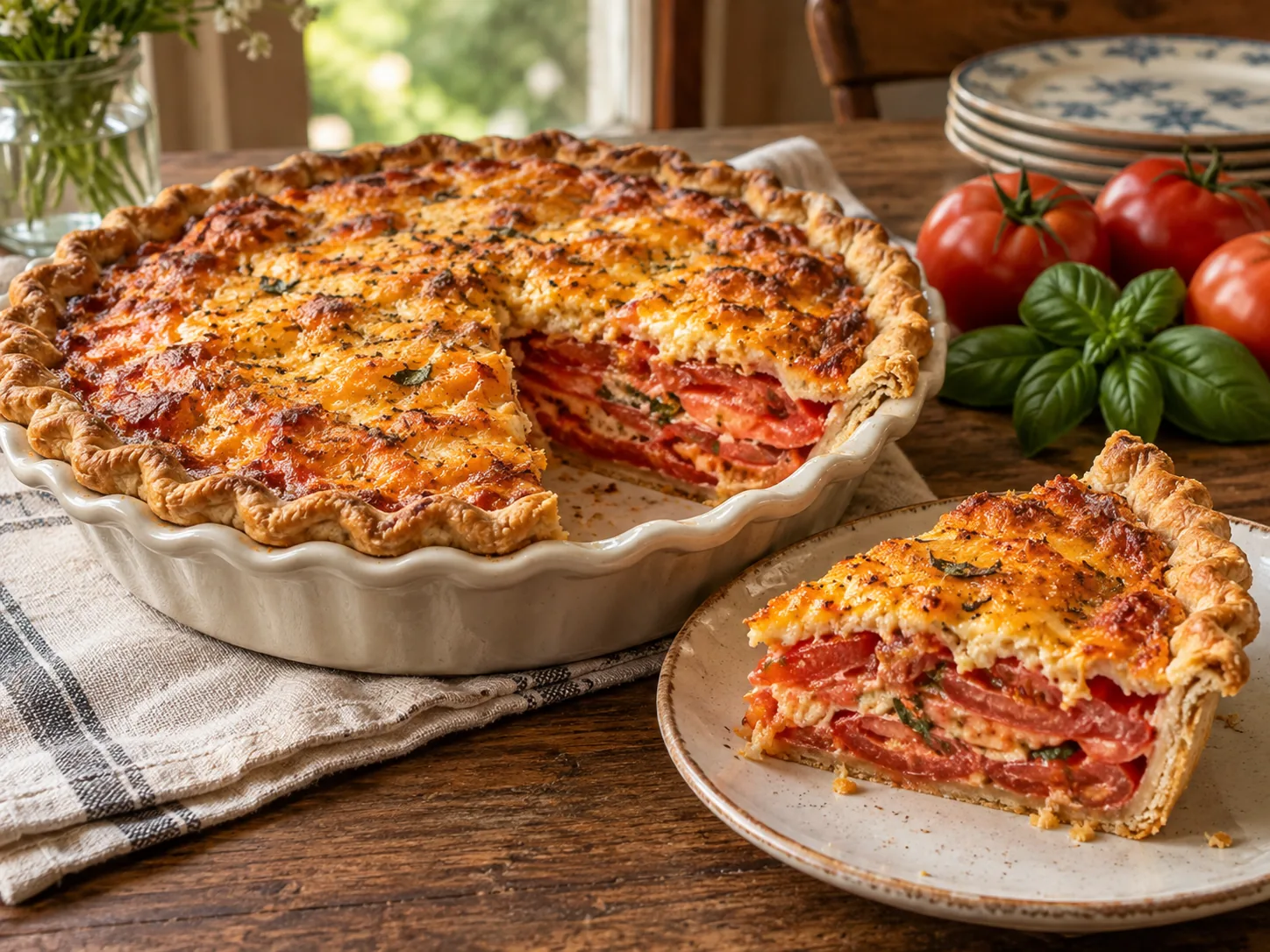
Southern tomato pie captures the flavor of ripe summer tomatoes in a savory dish substantial enough for lunch or a light supper. Beneath its browned cheese topping are layers of tomato and basil held in a flaky crust. The ingredients are familiar, but managing their moisture is what separates a clean slice from a watery pie.
This recipe uses sharp cheddar for tang, Parmesan for savory depth, mayonnaise to bind the topping, and fresh basil for fragrance. It is rich, so the tomatoes must remain the star. Careful draining, a properly blind-baked crust, and a resting period after baking create that balance.
Choose Tomatoes for Flavor and Structure
Use ripe slicing tomatoes that smell fragrant near the stem and yield slightly to pressure without feeling soft. Beefsteak, heirloom, and other garden tomatoes bring excellent flavor. Avoid underripe fruit, which lacks sweetness, and overripe tomatoes with loose, watery flesh that can overwhelm the crust.
Four medium tomatoes generally fill a nine-inch pie, but size and water content vary. Slice them about ¼ inch thick. Very thin slices disappear into the filling, while thick slabs release more liquid and make the finished pie harder to cut. A serrated knife glides through delicate ripe tomatoes without crushing them.
Salt and Drain the Tomatoes
Arrange the slices in a single layer on wire racks or paper-towel-lined sheet pans and season both sides lightly with the measured salt. Let them stand for 30 minutes. Salt draws moisture to the surface and seasons the tomato flesh at the same time.
Blot both sides firmly with fresh towels after draining. This step removes far more liquid than simply tipping a colander. Do not rinse the slices, which returns water to the surface and washes away flavor. If using extremely juicy heirlooms, replace wet towels midway through the draining time.
Why Blind-Baking the Crust Matters
An unbaked crust placed beneath tomatoes struggles to become crisp. Blind-baking gives the dough a head start before the moist filling is added. Fit the crust into a nine-inch plate, crimp the edge, prick the base lightly, and chill it while the oven heats. Cold fat produces a flakier texture.
Line the crust with parchment and fill it with pie weights or dry beans, pressing them toward the sides to prevent slumping. Bake until the edge begins to color, remove the weights and parchment, and return the crust to the oven until the base looks dry and lightly golden. A pale, damp bottom at this stage is likely to remain soft later.
Let the shell cool for several minutes before layering. For extra insurance, brush the hot base with a thin layer of beaten egg white and bake for two more minutes; this creates a subtle moisture barrier without changing the flavor.
Build a Topping That Browns, Not Separates
Grate cheese from a block rather than using pre-shredded cheese coated with anti-caking powder. Freshly grated cheddar melts more smoothly, while Parmesan contributes salt and nuttiness. Mix both with mayonnaise, basil, and black pepper until evenly combined.
The mixture should be thick enough to spread but not packed into a solid paste. Mayonnaise brands vary, so if it seems excessively loose, add a little cheddar. Taste cautiously because Parmesan and mayonnaise may already supply enough salt. The drained tomatoes have also been salted.
Layer for an Even Slice
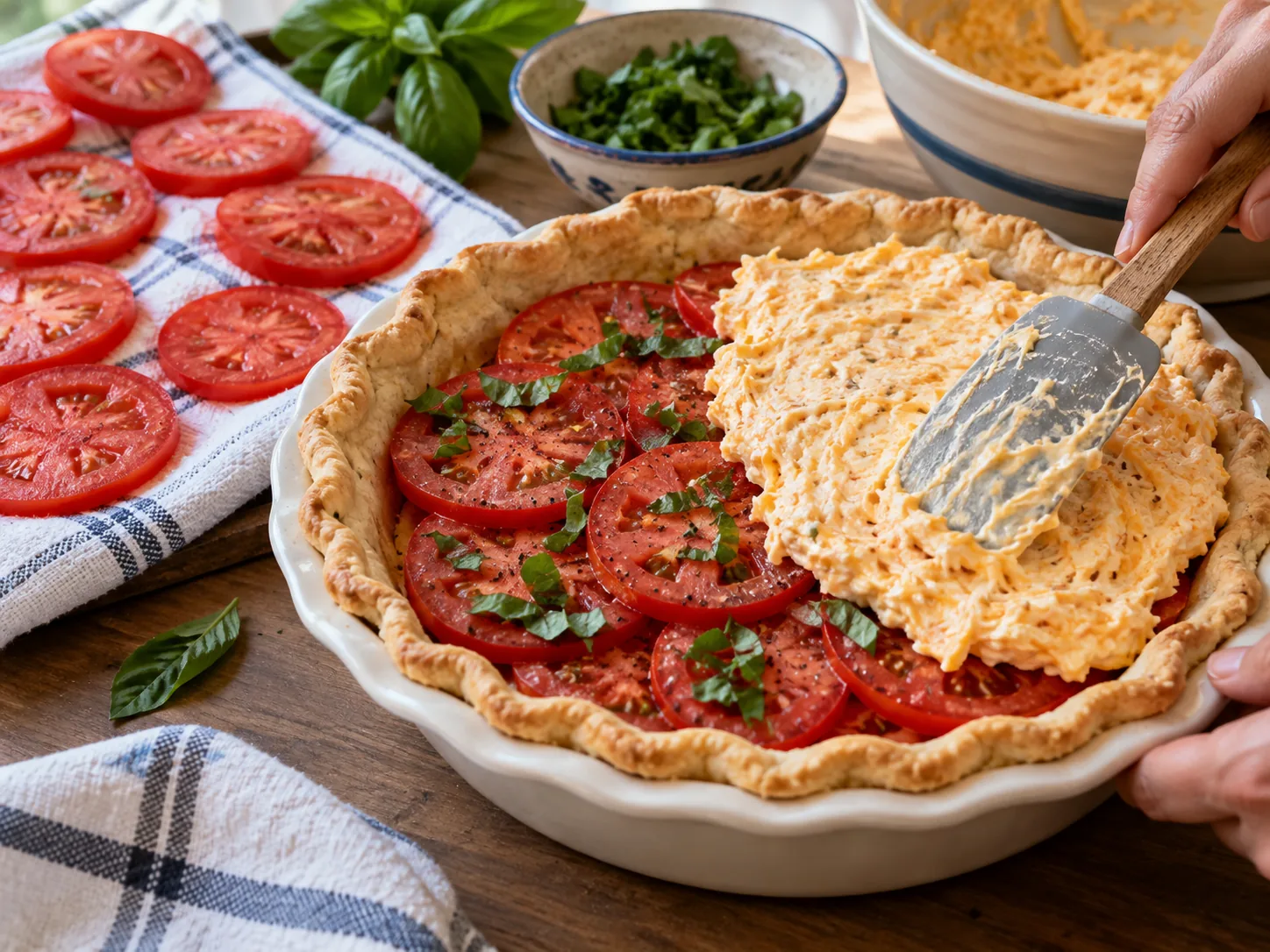
Arrange tomatoes in overlapping circles, filling gaps with smaller pieces but avoiding tall piles in the center. If liquid appears while layering, blot again. Scatter a little basil between layers if desired, keeping most in the protected filling so it does not scorch.
Spread the cheese mixture carefully to the edge, sealing the tomatoes beneath it. Small spoonfuls distributed across the surface are easier to join than one large mound, which can shift the slices. Keep the topping inside the crust rim so melting cheese does not burn onto the pie plate.
Bake Until Golden and Bubbling
Place the pie on a rimmed sheet pan to catch any drips and bake until the topping is deeply golden in spots and bubbling near the center, about 30 to 35 minutes. If the crust edge darkens too quickly, shield it loosely with foil while leaving the center exposed.
A pie that looks done only around the rim needs more time; bubbling in the center shows that the filling is heated through. If the top needs additional color, use the broiler only briefly and watch continuously because cheese can move from golden to burned in seconds.
Rest Before Slicing
Let the pie rest for at least 20 minutes. Straight from the oven, melted cheese and hot tomato juices flow freely. Cooling allows the filling to settle, protects diners from scalding slices, and makes the tomato flavor easier to appreciate. Use a sharp serrated knife and wipe it between cuts.
What to Watch For
A soggy bottom usually comes from insufficiently drained tomatoes or an underbaked shell. If the pie releases a little liquid after cutting, spoon it away rather than allowing the crust to soak. A greasy top may result from excessive mayonnaise, oily pre-shredded cheese, or overheating.
A cracked or shrunken crust usually was not chilled or supported by enough weights. Patch small raw cracks with a scrap of dough before baking. For the cleanest outcome, complete every moisture-control step rather than trying to compensate with extra flour or breadcrumbs in the filling.
Serving Ideas
Serve tomato pie warm or at room temperature with a crisp green salad, coleslaw, green beans, grilled corn, or fresh cucumber salad. It works well at brunch beside eggs and fruit, or at supper alongside grilled chicken or ham. Small wedges also make an appealing summer appetizer.
Make It Your Own
Replace some cheddar with Monterey Jack for a milder topping, or use a small amount of smoked cheddar for depth. Chives, thyme, or parsley may join the basil. Thinly sliced scallions add bite. Avoid loading the pie with multiple wet vegetables unless they are cooked and drained first.
For gentle heat, add cayenne or minced pickled jalapeño to the cheese mixture. A thin sprinkle of crisp bacon works well, but keep it restrained so the fresh tomato flavor remains prominent.
Make Ahead, Store, and Reheat
The crust can be blind-baked one day ahead and kept covered at room temperature. Slice and drain the tomatoes shortly before assembly; storing salted slices overnight causes them to soften excessively. The cheese topping can be mixed and refrigerated for one day.
Refrigerate baked tomato pie within two hours and use within three days. Reheat individual slices on a baking sheet in a 325°F oven until warm, which restores more crust texture than a microwave. Freezing is not recommended because tomatoes release water and the mayonnaise-cheese topping can separate after thawing.
Jump-to-Recipe Card
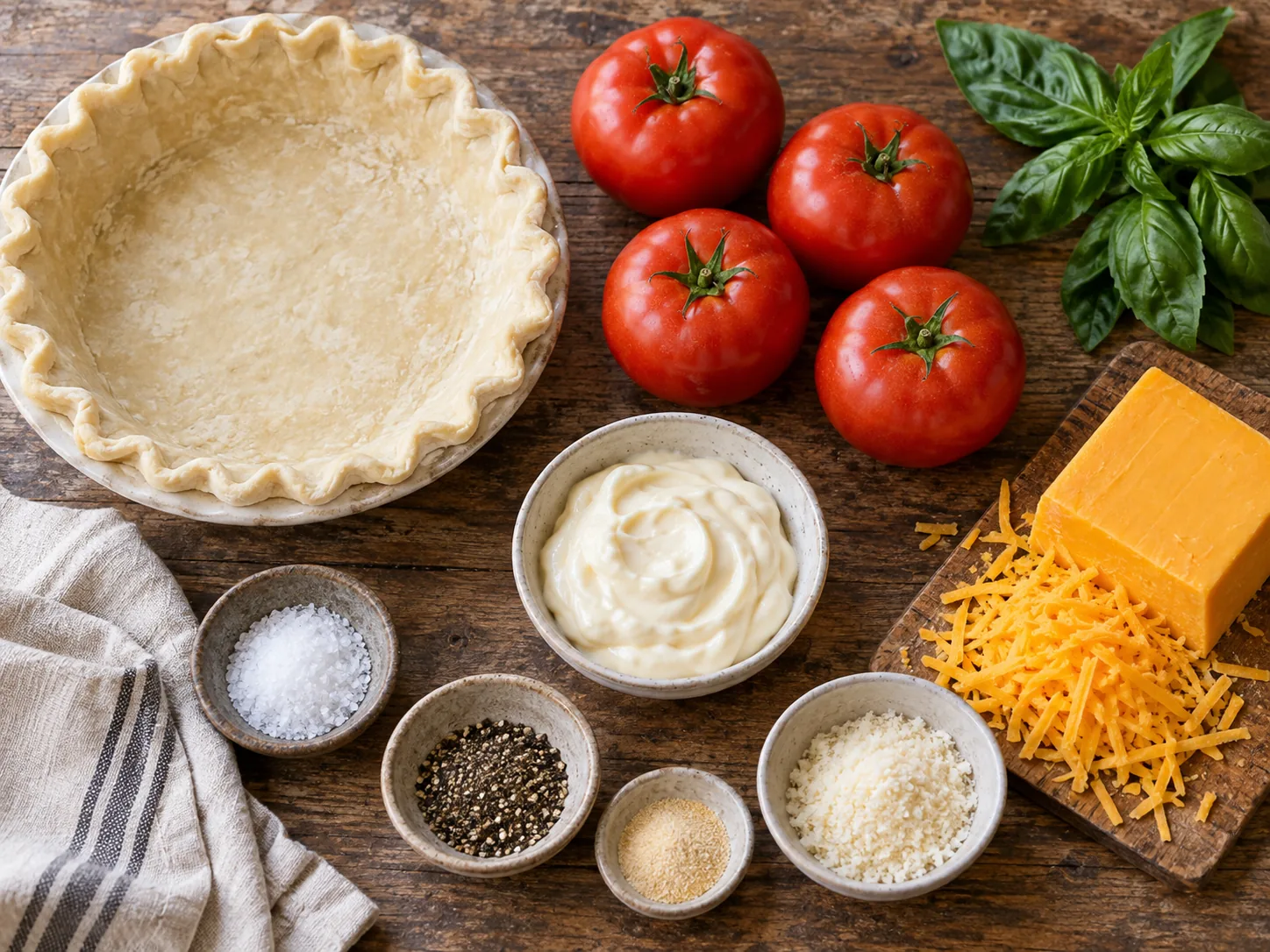
Ingredients
- 1 9-inch pie crust
- 4 ripe tomatoes
- 1 teaspoon salt
- 1½ cups freshly grated sharp cheddar
- ¼ cup grated Parmesan
- 1/2 cup mayonnaise
- 2 tablespoons chopped basil
- 1/2 teaspoon black pepper
Instructions
- Slice the tomatoes ¼-inch thick, spread on towels, sprinkle with salt, and drain for 30 minutes. Blot both sides very dry.
- Heat the oven to 375°F. Line the crust with parchment and weights; bake 15 minutes, remove the weights, and bake 5 minutes more.
- Mix cheddar, Parmesan, mayonnaise, basil, and pepper. Layer the dried tomatoes in the warm crust, blotting again as needed.
- Spread the cheese mixture evenly over the tomatoes without pressing out their juices. Shield the crust edge if already well browned.
- Bake 30–35 minutes until golden and bubbling. Cool on a rack for at least 20 minutes before cutting.
Calculate
Calculate
Calculate
Calculate
Nutrition values should be calculated from the final tested recipe quantities before publication.