Why Meatloaf Belongs on a Southern Table
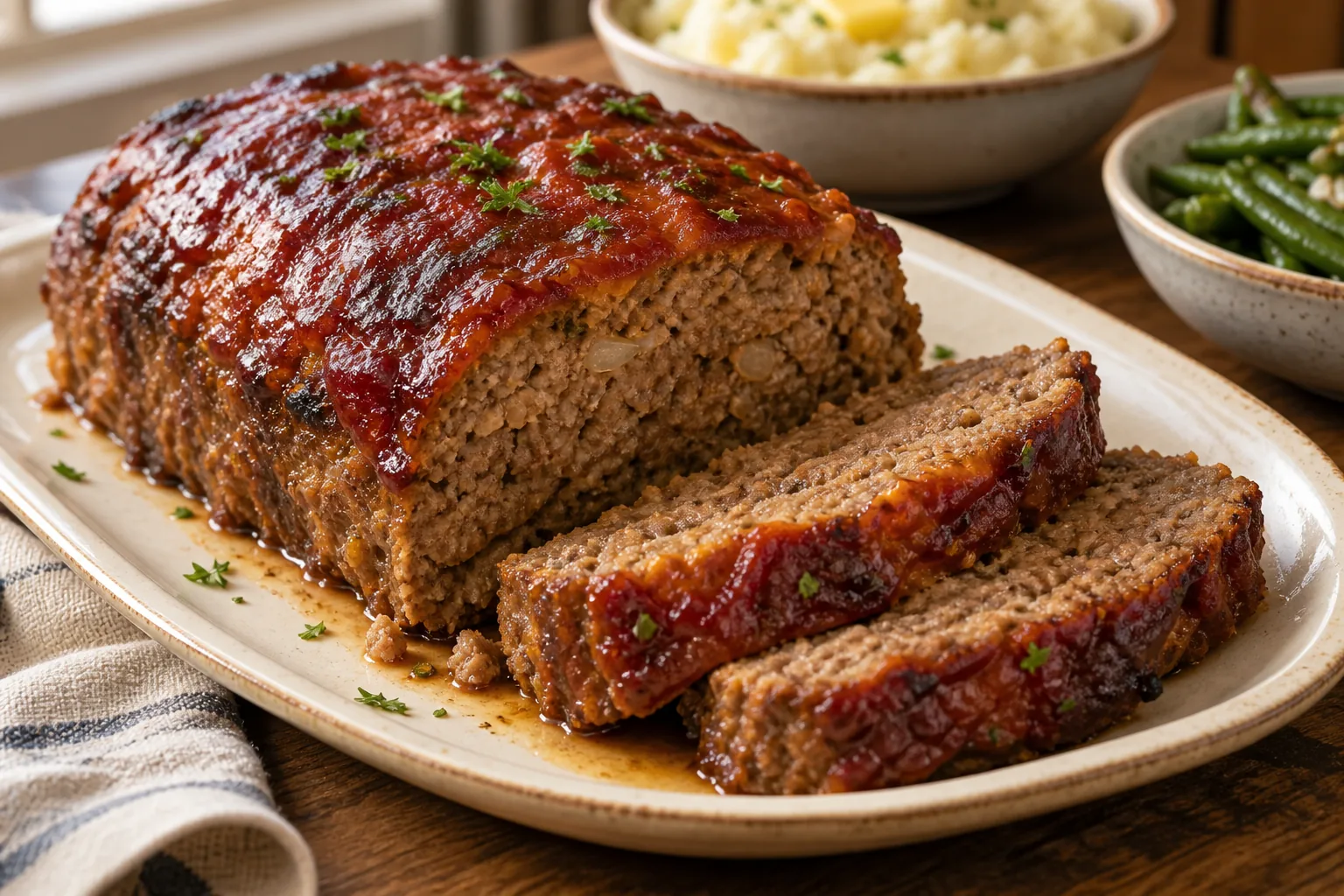
Meatloaf turns everyday ingredients into a supper that slices generously, welcomes gravy or glaze, and makes excellent sandwiches the next day. The best version is moist but not loose, tender rather than springy, and seasoned throughout. A shiny sweet-tangy tomato glaze gives the familiar finishing contrast.
This independent Southern-inspired Gantt Fans recipe is not an official Brenda Gantt recipe. It emphasizes a panade, cooled vegetables, gentle mixing, accurate internal temperature, and a proper rest—the details that prevent a dry, dense loaf.
Choose Beef With Enough Fat
Ground beef around 80 to 85 percent lean offers the best balance. Very lean beef lacks lubrication and dries before the loaf develops flavor; extremely fatty beef shrinks dramatically and leaves the pan greasy. A mixture of beef and pork can be used for an even more tender result, but beef alone works reliably at the specified fat level.
Keep the meat refrigerated until the other ingredients are ready. Cold meat is easier to mix without smearing its fat. Break it loosely into the bowl rather than compressing the package into a solid mass.
The Panade Protects Moisture
A panade is simply breadcrumbs soaked in milk. Let the two stand for five minutes until the crumbs soften, then blend with egg and seasonings. During baking, this mixture holds moisture and interrupts the network of meat proteins, making slices tender rather than rubbery.
Plain fresh or dry breadcrumbs work. Strongly seasoned crumbs can obscure the glaze and make salt difficult to control. If using panko, crush the large flakes slightly so they distribute evenly.
Cook the Onion Before Mixing
Raw onion may remain crunchy and release sharp juice inside a tightly packed loaf. Sauté finely diced onion in butter until translucent, add garlic for the final 30 seconds, and cool the mixture. Cooling matters because hot vegetables begin cooking the egg and warm the beef fat.
Small, even pieces disappear into the finished texture while contributing sweetness. Celery or bell pepper may be added, but cook them until tender and keep the total vegetable quantity moderate.
Mix With a Light Hand
Combine the panade, cooled onion, egg, Worcestershire sauce, mustard, salt, pepper, and herbs first. Add beef last and fold with spread fingers only until the mixture looks uniform. Repeated squeezing compacts proteins and produces a bouncy, dense loaf.
To check seasoning safely, fry a teaspoon of mixture in a small skillet and taste it. Adjust the bowl before shaping. This small test is more reliable than guessing and avoids tasting raw meat.
Free-Form Loaf or Loaf Pan?
Shape a loose loaf about nine inches long on a parchment-lined rimmed sheet pan. Free-form baking exposes more surface for browning and lets excess fat drain away. Keep the thickness even from end to end so the center cooks uniformly. Smooth only major cracks without pressing hard.
A loaf pan creates straighter slices but traps rendered fat and gives softer sides. If using one, avoid packing the mixture and carefully drain excess fat before glazing. Never use a flat, rimless sheet because juices can spill into the oven.
Apply the Glaze in Two Layers
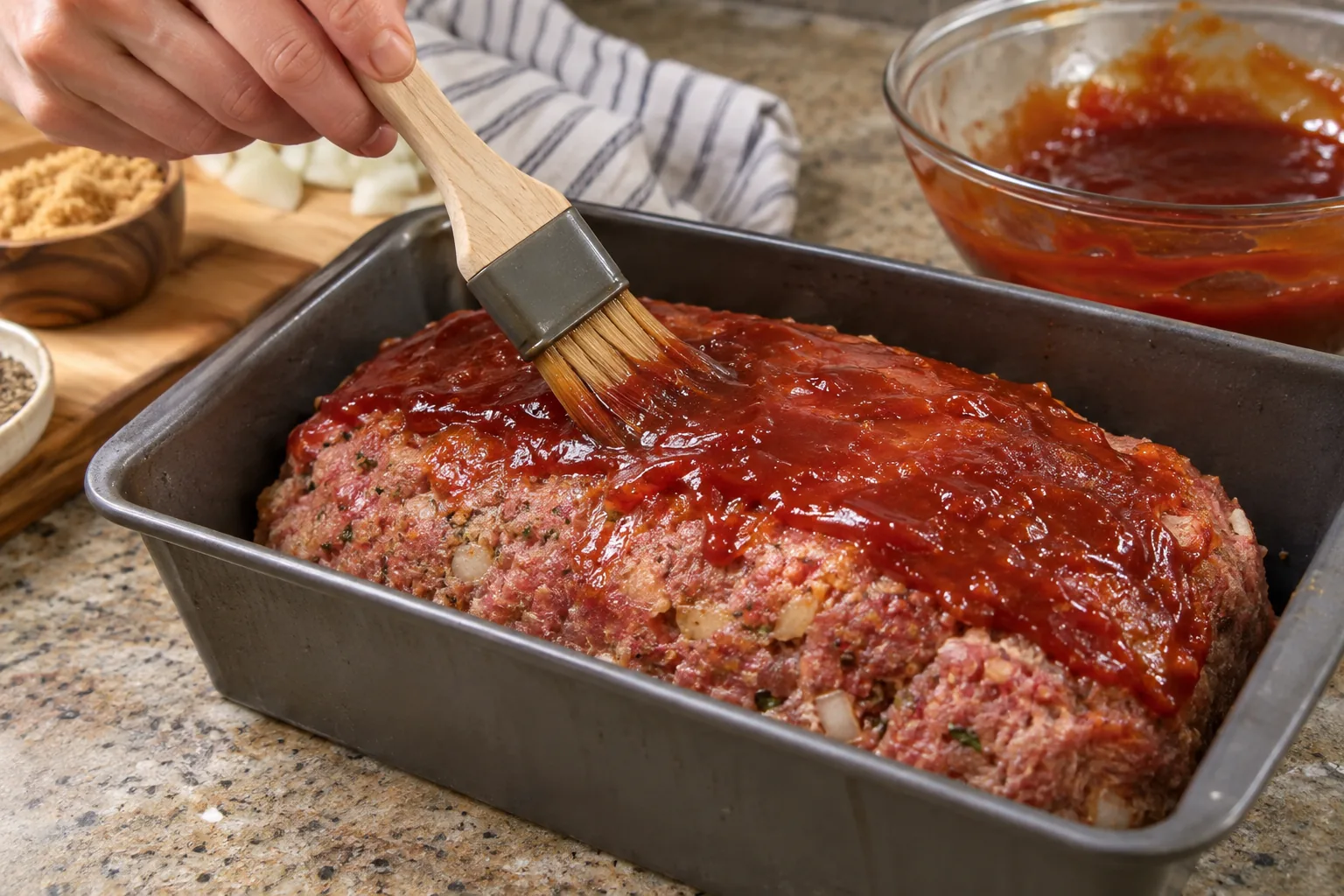
Stir ketchup, brown sugar, apple cider vinegar, and mustard until smooth. Brush half over the loaf before baking; it sets into the surface. Add the remainder during the final 20 minutes for a glossy layer that does not scorch. The vinegar keeps the topping lively instead of candy-sweet.
Bake at 350°F until the center reaches 160°F, generally 55 to 70 minutes depending on shape. Insert an instant-read thermometer into the center from the side. Color and clear juices are not dependable safety tests.
Rest Before Slicing
Move the loaf from the oven and rest it for 10 to 15 minutes. Carryover heat finishes evening the temperature and juices settle into the meat. Slicing immediately lets moisture flood the board and causes portions to crumble. Use a sharp serrated knife with light sawing motions.
The finished slice should hold together on a fork but yield easily, with no rubbery resistance. A small amount of juice on the pan is normal; a large pool suggests beef that was too fatty or a loaf packed too tightly.
What to Watch For
Crumbly meatloaf may need more panade or rest, while dense meatloaf was overmixed. A crack along the top is harmless but can indicate a tightly shaped loaf. Pink color alone does not prove undercooking, especially with certain seasonings; use 160°F as the reliable cue.
If the glaze darkens early, tent loosely with foil. If the loaf finishes before the glaze sets, broil briefly while watching continuously.
Serving Ideas
Serve with mashed potatoes, green beans, macaroni and cheese, collard greens, glazed carrots, or a crisp salad. Spoon pan juices or gravy over the potatoes rather than hiding the tangy glaze. Leftover slices make superb sandwiches with toasted bread, pickles, and mustard.
Make It Your Own
Replace up to half the beef with ground pork, add thyme or smoked paprika, or tuck grated carrot into the softened onion. Barbecue sauce can replace part of the ketchup. Keep the meat, panade, and egg proportions stable so flavor changes do not compromise structure.
Make-Ahead and Storage
Shape the loaf up to one day ahead, cover tightly, and refrigerate. Add the first glaze just before baking and allow extra time because the center begins cold. Alternatively, bake completely, cool, and reheat covered at 325°F with a spoonful of broth.
Refrigerate leftovers within two hours and use within four days. Reheat slices to 165°F. Wrap individual portions for freezing up to three months; thaw overnight before reheating so the glaze and crumb stay intact.
Jump-to-Recipe Card
Ingredients
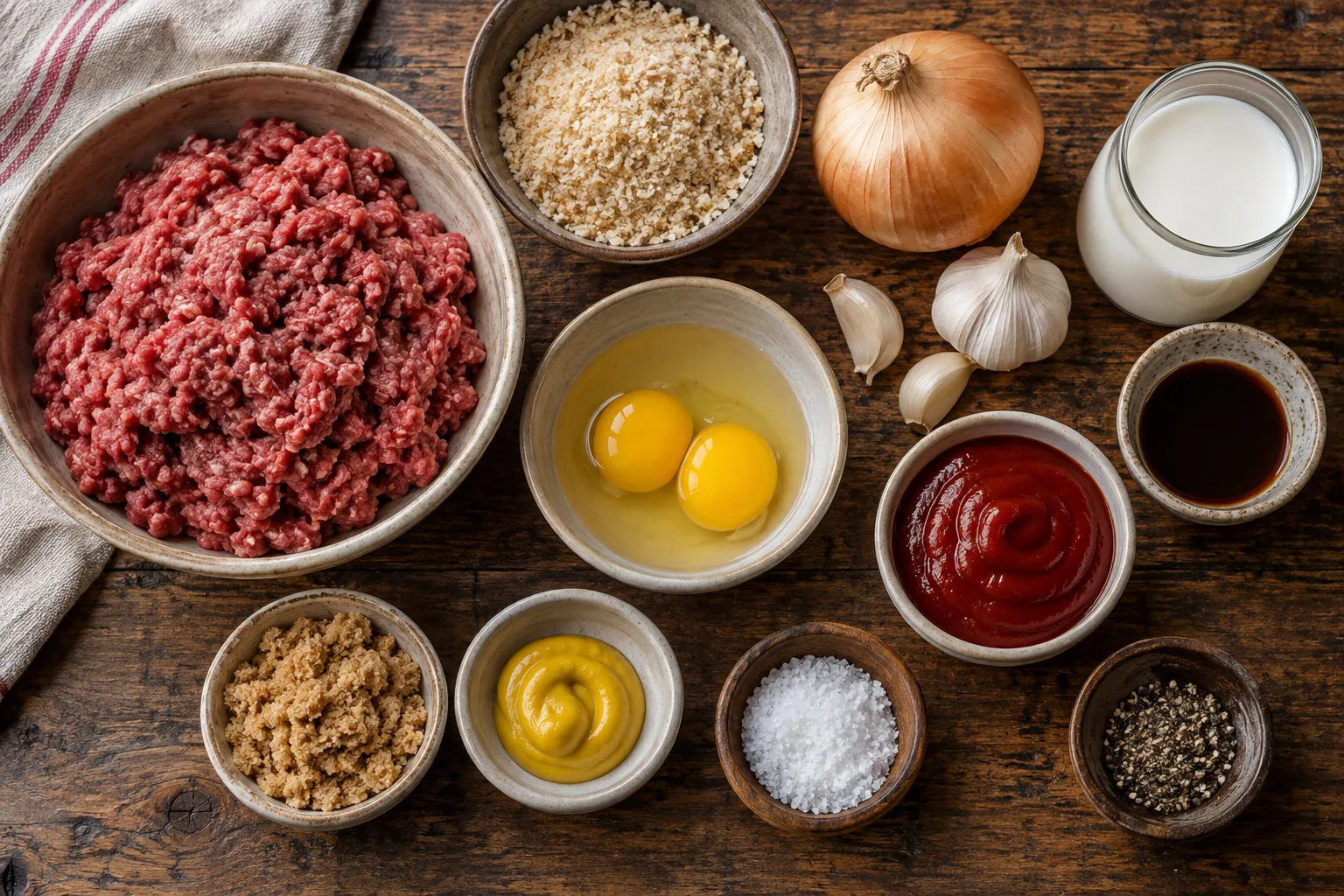
- 2 lb ground beef
- 1 small onion, finely diced
- 2 garlic cloves, minced
- 1 tablespoon butter
- 2 large eggs
- 1 cup breadcrumbs
- 1/2 cup milk
- 1 teaspoon Worcestershire sauce
- 1 teaspoon salt
- 1/2 teaspoon black pepper
- 1/2 cup ketchup
- 2 tablespoons brown sugar
- 1 tablespoon apple cider vinegar
- 1 teaspoon yellow mustard
Instructions
- Heat oven to 350°F and line a rimmed sheet pan. Soften onion in butter, add garlic for 30 seconds, and cool.
- Soak breadcrumbs in milk for 5 minutes. Mix with eggs, onion, Worcestershire, salt, and pepper.
- Add beef and fold gently just until combined. Shape a loose 9-inch loaf without packing.
- Mix ketchup, brown sugar, vinegar, and mustard. Brush half over the loaf and bake 40 minutes.
- Add remaining glaze and bake 15 to 30 minutes more, until the center reaches 160°F.
- Rest 10 to 15 minutes before cutting into 8 slices.
Calculate
Calculate
Calculate
Calculate
Nutrition values should be calculated from the final tested recipe quantities before publication.