Why Fried Pork Chops Belongs on a Southern Table
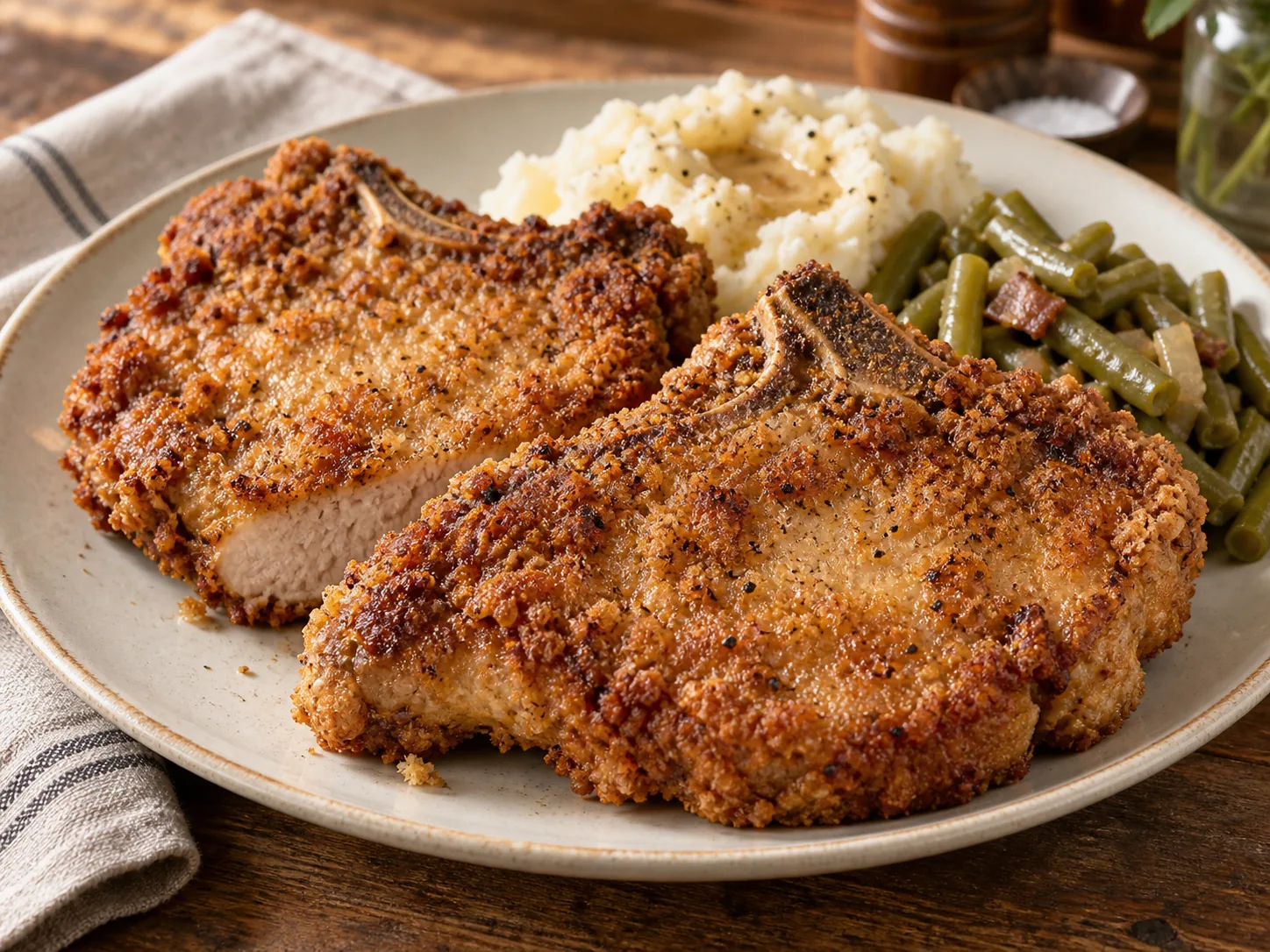
Country-style pork chops bring a crisp seasoned crust and juicy pork together in one quick skillet supper. Bone-in center-cut chops have enough thickness to brown beautifully without drying out. Unlike a heavy restaurant batter, this home-style version uses seasoned flour and a shallow skillet of oil for a delicate, craggy coating.
The method is fast, but pork thickness, oil temperature, skillet size, and resting all matter. When those details work together, the crust stays attached, the center remains moist, and each bite tastes of well-seasoned pork rather than frying oil.
Choose the Right Pork Chops
Bone-in center-cut rib or loin chops about ¾ inch thick are ideal. The bone helps shield part of the meat from direct heat, while moderate marbling supplies flavor. Very thin chops can finish before the flour becomes deeply golden; chops thicker than one inch may need a short finish in the oven.
Choose four chops of similar thickness so they cook at the same rate. Trim only large, hard flaps of exterior fat. A narrow fat edge is desirable and can be held against the skillet with tongs for a minute to brown. Do not pound the chops thin, because their natural thickness protects the juicy center.
Why Use a Short Buttermilk Soak?
Buttermilk lightly seasons and moistens the surface, giving flour something to grip. Its gentle acidity softens the exterior without making it mushy during the 20-to-30-minute soak. This is not intended as an all-day marinade; very long soaking can soften the surface too much and make the coating less secure.
Season the pork itself before adding buttermilk so the meat tastes good beneath the crust. Keep the bowl refrigerated. When ready to dredge, lift each chop and allow excess buttermilk to drip away for several seconds. A wet coating forms patches of paste that may slide away in the oil.
Build a Crisp, Well-Seasoned Coating
Whisk flour thoroughly with paprika, garlic powder, onion powder, salt, black pepper, and optional cayenne. Paprika adds warm color and mild earthiness rather than intense heat. Use one hand for damp pork and the other for flour to avoid coating your fingers with thick lumps.
Press flour onto both faces and around the edges, then shake away loose excess. Complete, even coverage is more useful than an overly thick shell. Set each dredged chop on a wire rack for five minutes. This brief pause hydrates the flour and helps it bond to the buttermilk before frying.
Choose the Skillet and Oil
A cast-iron or other heavy skillet retains heat when the cool chops are added. Pour in about half an inch of neutral oil such as peanut, canola, or vegetable oil. Olive oil is less suitable because its flavor and smoke point do not fit this frying temperature. The oil should reach partway up the chops rather than submerge them.
Heat the oil to 350°F and monitor it with a thermometer when possible. Without one, a pinch of flour should sizzle immediately but should not smoke or turn dark at once. Cool oil creates a greasy coating; excessively hot oil burns the flour before the meat cooks safely.
Fry in Small Batches
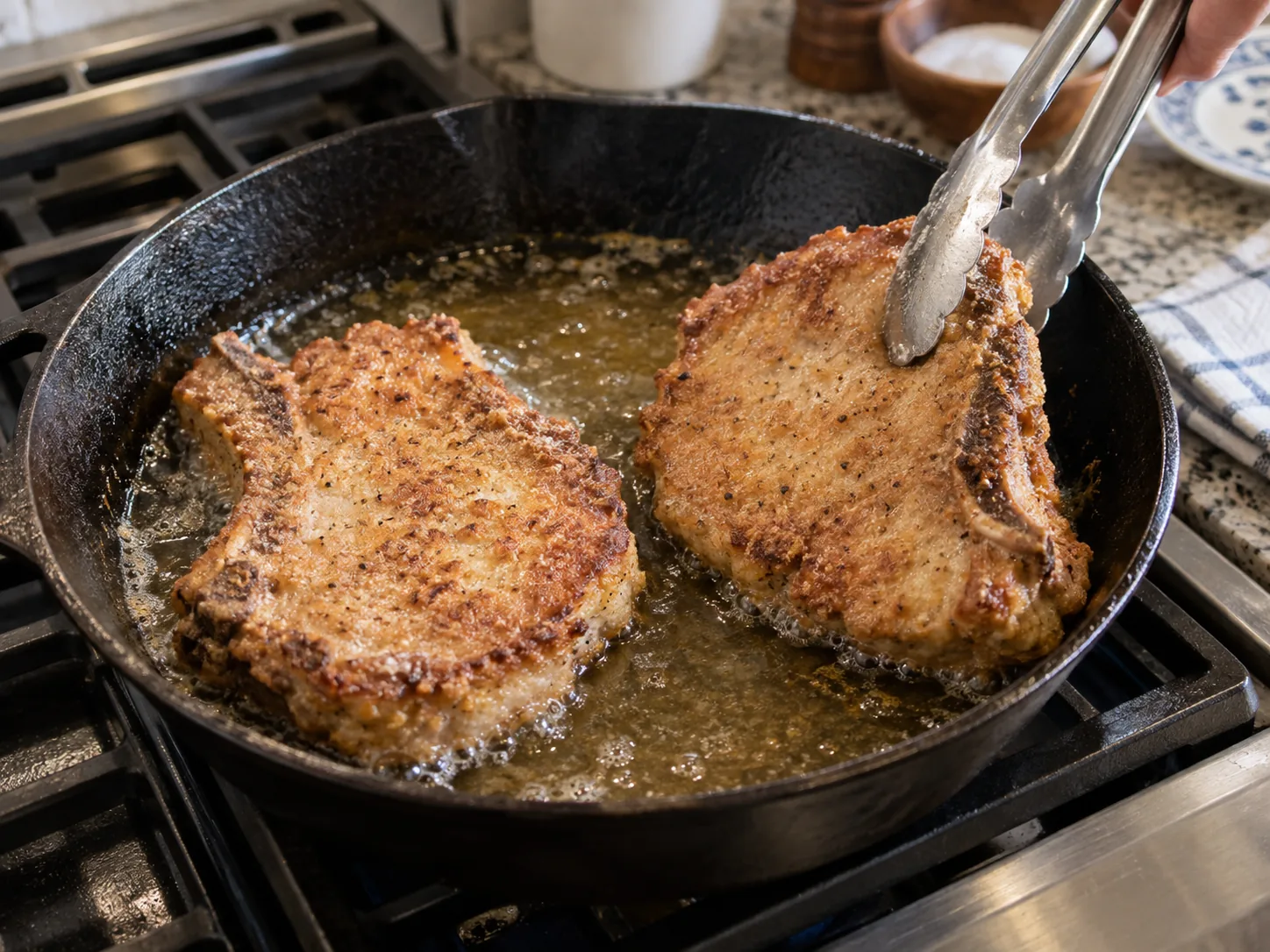
Lower the chops into the oil away from your body to limit splashing. Do not crowd the skillet; fry two at a time if four will not fit with space around them. Too much cold meat makes the oil temperature fall sharply. Adjust the burner in small increments to maintain approximately 325–350°F.
Leave the first side undisturbed for four to six minutes so its crust can set. Turn only once with tongs, avoiding forks that pierce the meat, and cook until the second side is equally golden. Hold the fat edge against the oil briefly if it remains pale, then transfer the chop to a clean wire rack over a sheet pan.
Temperature and Resting
Insert an instant-read thermometer from the side into the thickest meat without touching the bone. Pork is ready at 145°F followed by at least a three-minute rest. Pulling it near that point is important because unnecessary extra minutes can make a lean chop dry. A faint blush in the center can remain while the pork is safely cooked.
Rest the chops for five minutes before serving. A rack allows steam and excess oil to escape from every surface; paper towels trap moisture underneath and soften the crust. Do not stack or tightly cover hot chops, because trapped steam quickly undoes their crisp coating.
What to Watch For
If the flour falls off, the pork may have carried too much buttermilk, the coating may not have rested, or the chop may have been turned before the crust set. Focus on steady heat and minimal movement for the next batch. Skim dark crumbs from the oil between batches so they do not cling to later chops and taste bitter.
If the coating browns before the pork reaches temperature, place the chops on a rack in a 300°F oven and finish gently. If it remains pale and oily, let the oil recover to the correct temperature before adding more meat. Never judge doneness by crust color alone.
Serving Ideas
Serve immediately with mashed potatoes, country gravy, green beans, collard greens, coleslaw, biscuits, or sliced tomatoes. A tangy element—pepper vinegar over greens, quick pickles, or lemony cabbage slaw—brings welcome contrast to the rich crust.
Make It Your Own
Add cayenne for heat or rubbed sage for an old-fashioned savory note. Dried thyme or mustard powder also pairs naturally with pork. For extra texture, replace ¼ cup flour with fine cornmeal. Boneless chops work, but monitor them closely because they often cook faster and dry out sooner.
Make Ahead, Store, and Reheat
For the best texture, fry the chops immediately before serving. Blend the flour mixture several days ahead and keep it airtight. The pork can soak in buttermilk for up to two hours under refrigeration. Discard any flour or marinade that has touched raw pork rather than saving it.
Refrigerate cooked chops within two hours in a shallow covered container for up to four days. Restore the crust on a rack in a 350°F oven until the center reaches 165°F, usually 10 to 15 minutes depending on thickness. An air fryer at 350°F also works. Avoid the microwave when crispness matters, because it makes the coating soft and can toughen the meat.
Jump-to-Recipe Card
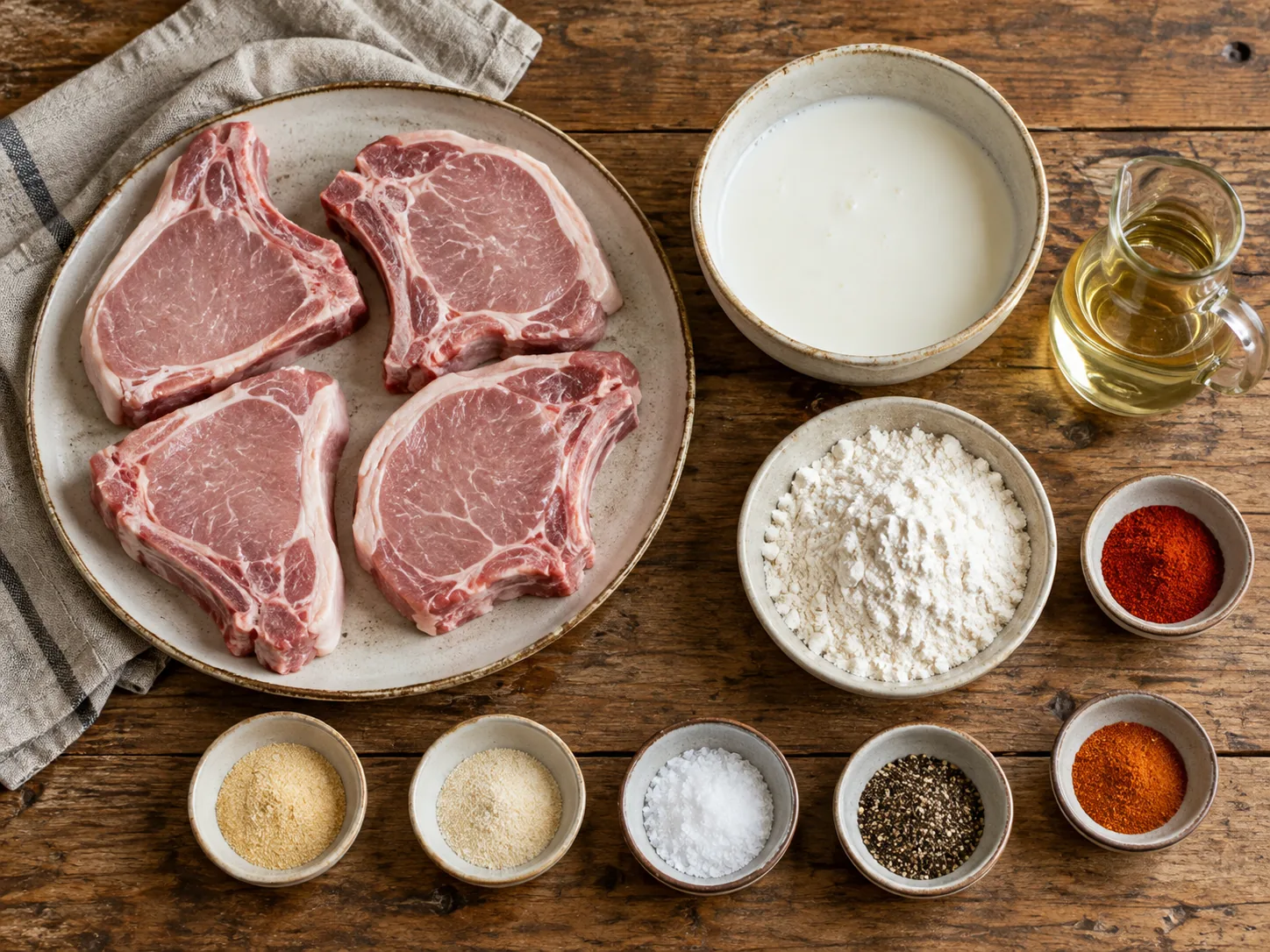
Ingredients
- 4 bone-in center-cut pork chops, about ¾-inch thick
- 1 cup buttermilk
- 1 1/2 cups flour
- 1 teaspoon paprika
- 1 teaspoon garlic powder
- 1 teaspoon onion powder
- 1 teaspoon salt
- ½ teaspoon black pepper
- ¼ teaspoon cayenne pepper, optional
- Neutral frying oil
Instructions
- Pat the chops dry, season lightly, coat with buttermilk, and refrigerate for 20–30 minutes.
- Whisk the flour and seasonings in a shallow dish. Heat ½ inch of oil in a cast-iron skillet to 350°F.
- Press each drained chop firmly into the flour on both sides, shake off loose flour, and rest for 5 minutes.
- Fry without crowding for 4–6 minutes per side, keeping the oil near 325–350°F, until deeply golden and 145°F inside.
- Transfer to a wire rack and rest for 5 minutes so the crust stays crisp.
Calculate
Calculate
Calculate
Calculate
Nutrition values should be calculated from the final tested recipe quantities before publication.