Why Pinto Beans Belongs on a Southern Table
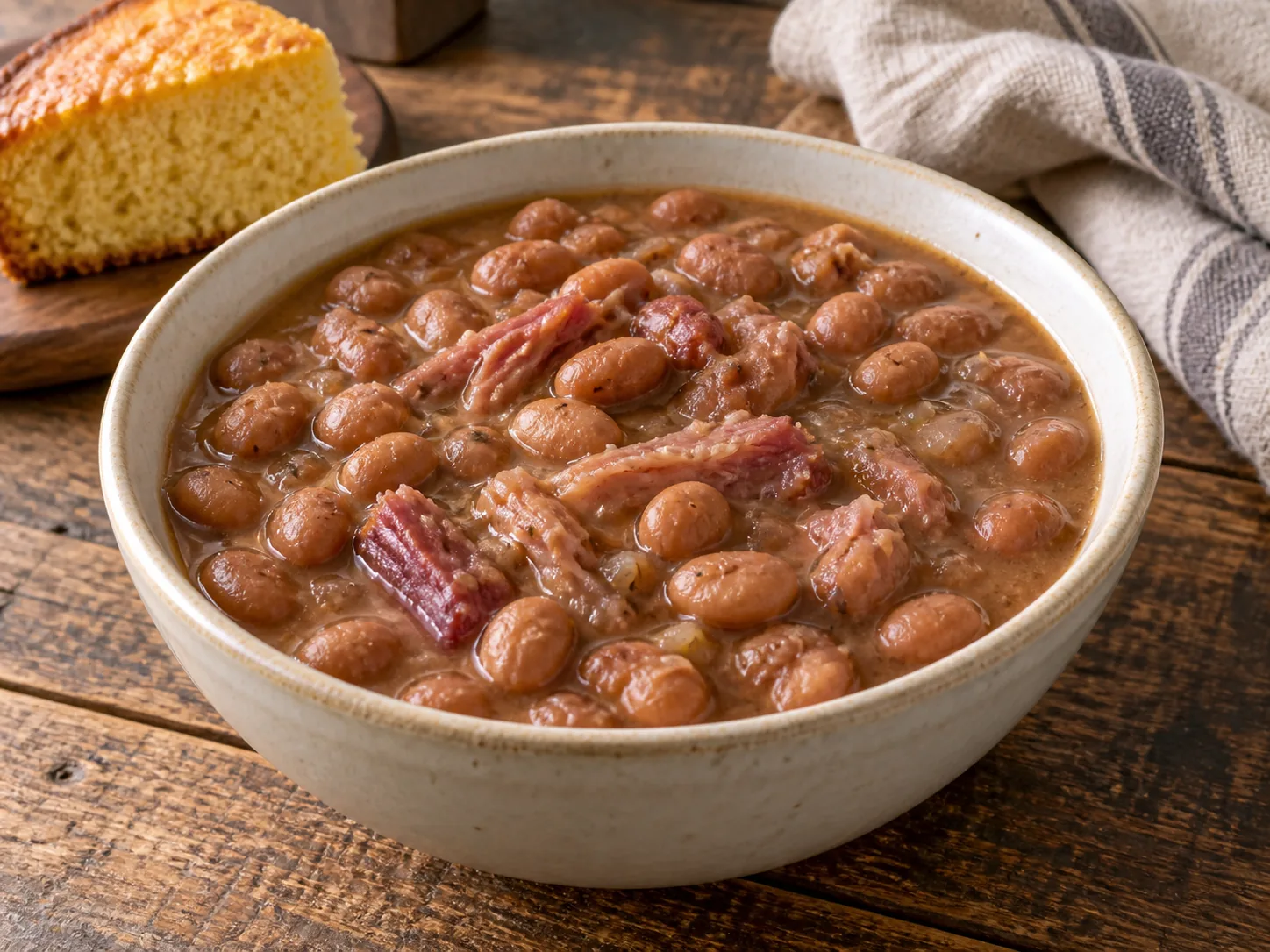
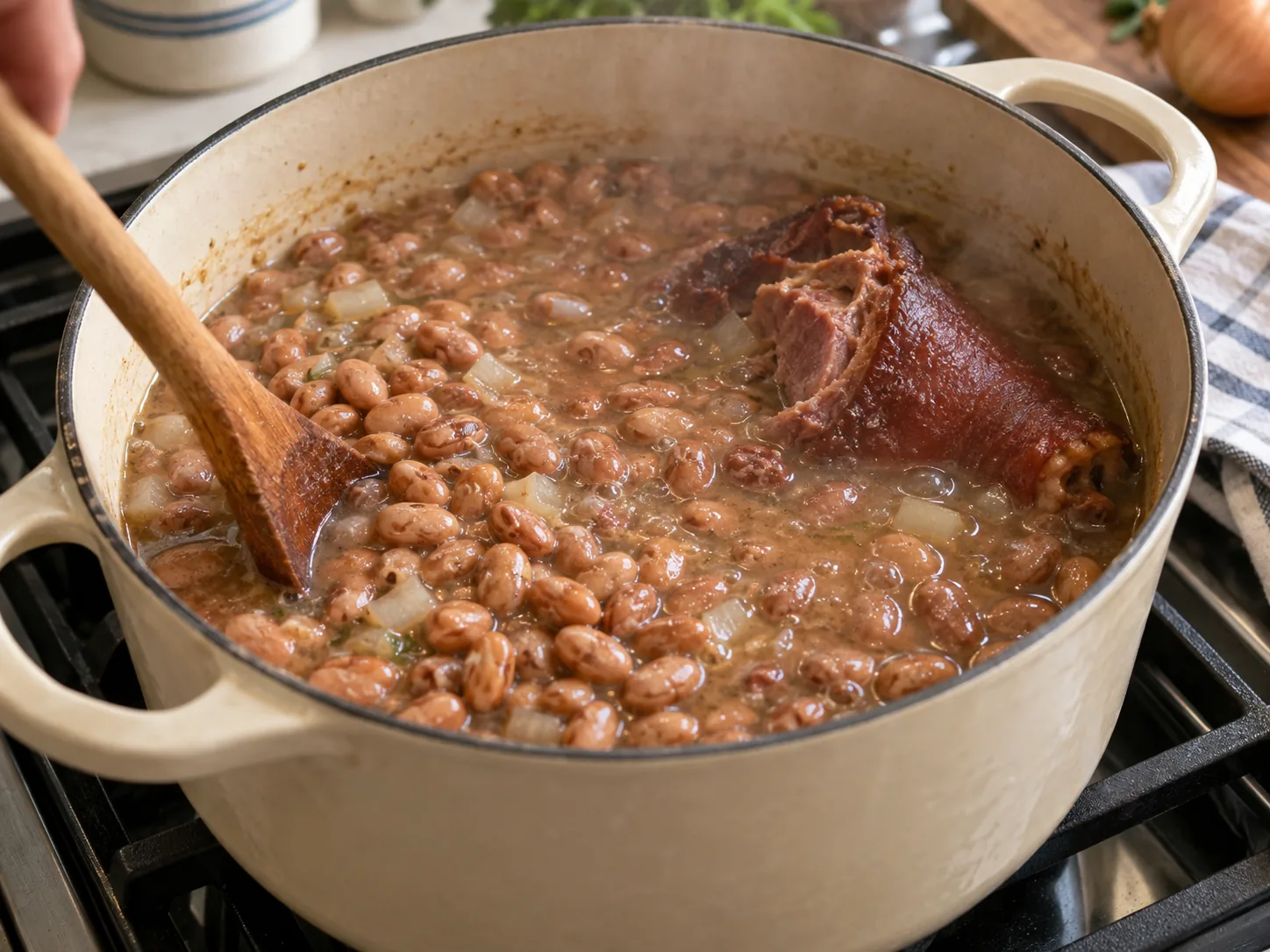
A pot of pinto beans turns an inexpensive pantry staple into a satisfying Southern supper. Gentle heat makes the beans creamy without breaking them apart, while a smoked ham hock seasons the broth as it cooks. Cornbread alongside transforms the beans and their savory pot liquor into a complete, comforting meal. The ingredients are simple, which makes good technique especially noticeable.
This recipe aims for whole, tender beans suspended in a naturally thickened broth—not watery beans and not a heavy paste. Onion, bay leaves, mild chili powder, and black pepper support the earthy flavor without turning the pot into chili. The ham hock slowly releases smoke, salt, and gelatin, giving the broth body as the beans soften.
Sorting, Rinsing, and Choosing Beans
Dried beans are an agricultural product, so spread them across a light-colored tray before cooking. Remove shriveled or badly discolored beans along with any tiny stones or field debris, then rinse under cool running water. Freshly purchased beans from a store with good turnover generally cook more evenly than a forgotten bag that has sat in a pantry for years.
Bean age matters because very old beans can remain firm even after hours of cooking. Store dried pintos in an airtight container in a cool, dry cupboard and try to use them within a year. Never mix a new bag with an old partial bag in the same pot; their cooking times may be very different.
Should Pinto Beans Be Soaked?
An overnight soak is helpful but not mandatory. Cover sorted beans with at least three inches of cool water, refrigerate for 8 to 12 hours, then drain and rinse. Soaked beans usually cook faster and more evenly. Refrigeration is important in a warm kitchen because beans left soaking at room temperature too long may ferment.
For a quick soak, cover the beans with water, boil for two minutes, remove the pot from the heat, cover, and let stand for one hour. Drain and continue with fresh cooking liquid. Unsoaked beans can go directly into the recipe, but expect them to take longer and keep extra hot broth or water ready. The stated cooking range is a guide; the bean itself decides when it is done.
How to Build a Flavorful Bean Broth
A smoked ham hock does more than add pieces of meat. Its bone, skin, and connective tissue enrich the liquid during the slow simmer. Choose low-sodium broth—or plain water—because the hock’s salt level is unpredictable. It is easy to add salt near the end but difficult to rescue an oversalted pot after the liquid has reduced.
Add onion at the beginning so it almost dissolves into the broth. Bay leaves provide a quiet herbal background, black pepper adds warmth, and a teaspoon of chili powder contributes gentle depth rather than obvious heat. Garlic can be added, but keeping the seasoning restrained allows the pintos and smoke to remain the central flavors.
Control the Simmer and the Liquid Level
Once the pot reaches a boil, skim off any gray foam and immediately lower the heat. Look for a few relaxed bubbles rising to the surface rather than vigorous movement. A hard boil knocks beans against one another, tearing their skins while their centers may still be firm. Partially covering the pot limits evaporation while allowing enough steam to escape.
Check every 20 to 30 minutes, stirring gently from the bottom to prevent sticking. Keep the beans covered by roughly an inch of liquid during most of the cook. Add hot water or broth instead of cold liquid so the simmer does not repeatedly stop. Near the end, let the level fall slightly so the broth can concentrate.
How to Tell When Pinto Beans Are Done
Do not judge only by appearance. Taste several beans from different parts of the pot. Each should be creamy all the way through with no pale, chalky center, and it should crush readily against the roof of your mouth. If some are tender and others remain firm, continue simmering and check again in 10 to 15 minutes.
Remove the ham hock when the beans are tender enough to avoid shredding them during vigorous stirring. When cool enough to handle, pick away usable meat and discard the bone, skin, and large pieces of fat. Return the chopped meat to the pot. Mash about half a cup of beans against the side and stir them back in for a silkier broth without flour or cornstarch.
What to Watch For
If beans remain stubbornly hard, the likely causes are age, hard mineral-rich water, or acidic ingredients added too soon. Continue with gentle heat and fresh hot liquid; a small pinch of baking soda can help in very hard water, but too much produces a soapy flavor and mushy texture. Wait to add tomatoes, vinegar, or other acidic ingredients until the beans are already tender.
If the broth is thin, simmer uncovered for 10 to 15 minutes and mash a small portion of beans. If it becomes too thick, loosen it with hot broth. Season with salt only after the ham meat returns to the pot, then rest the beans for 10 minutes so the broth settles into its final consistency.
Serving Ideas
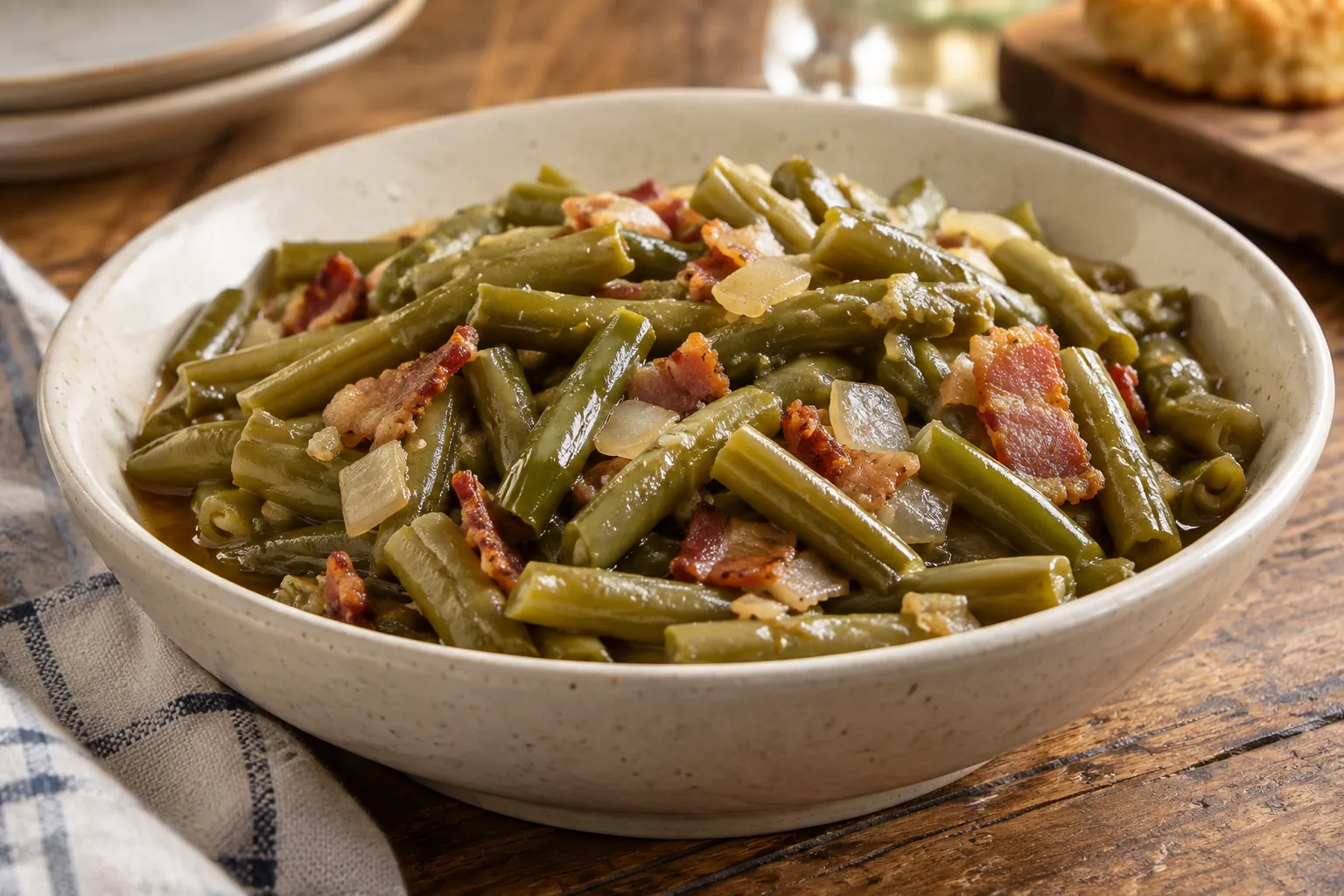
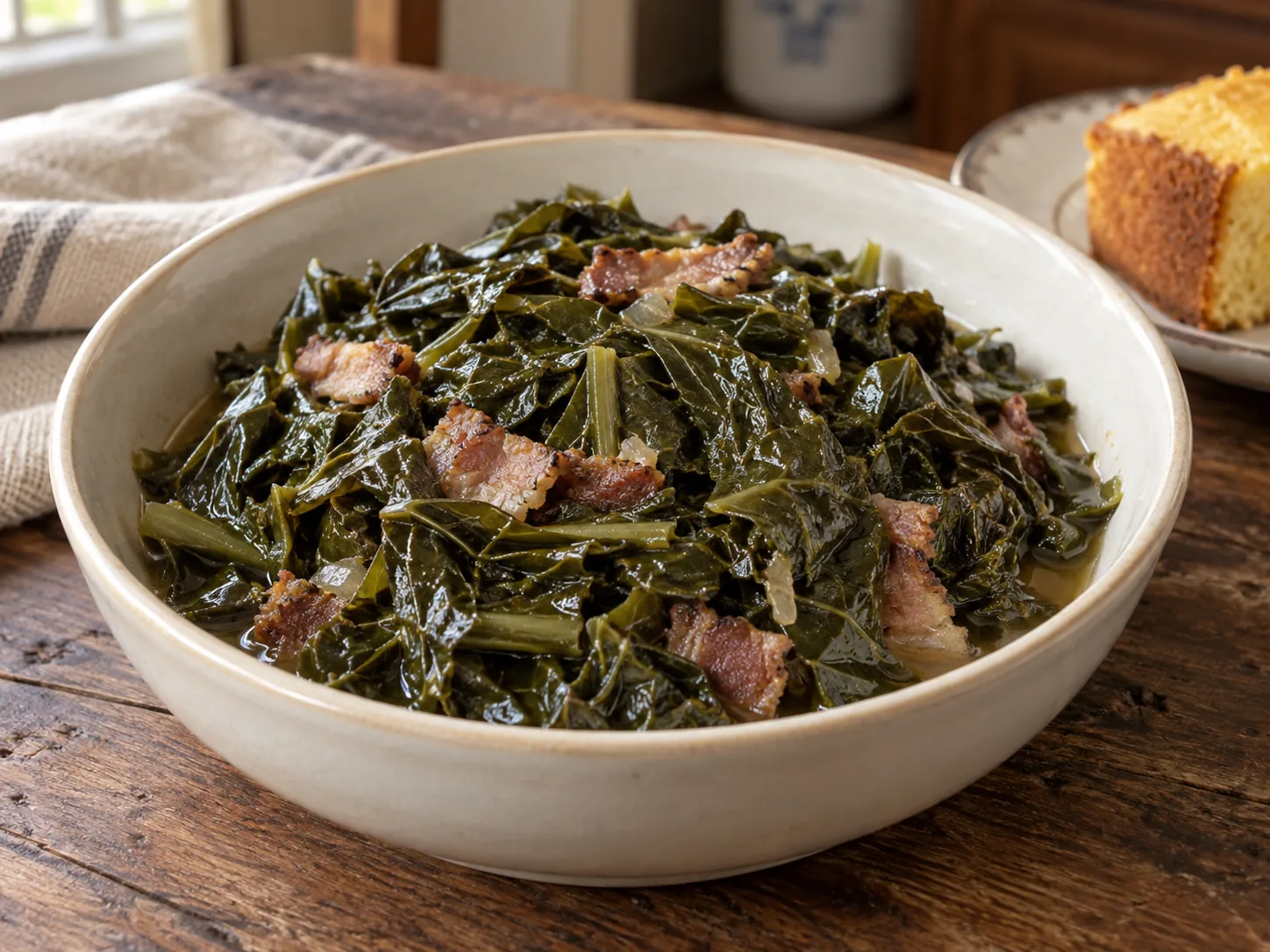
Ladle the beans into warm bowls with plenty of broth and serve with skillet cornbread. Chopped raw onion, pepper vinegar, hot sauce, or chow-chow add crisp, tangy contrast. For a larger supper, pair them with collard greens, fried potatoes, coleslaw, or sliced garden tomatoes. Leftovers also make a hearty base for a rice bowl topped with greens and a fried egg.
Make It Your Own
Use a smoked turkey leg or wing instead of ham hock for a lighter smoky flavor. For meat-free beans, choose vegetable broth, sauté the onion in olive oil, and add smoked paprika plus a small dash of soy sauce for savory depth. For more heat, include cayenne or chopped jalapeño. Keep those additions modest so the final pot still tastes like pintos rather than heavily spiced chili.
Make Ahead, Store, and Freeze
Beans improve after a night in their broth, making them ideal for advance cooking. Cool them within two hours in shallow containers and refrigerate for up to four days. The beans absorb liquid as they sit, so reheat slowly on the stove with a splash of water or broth. Stir carefully to preserve their shape and heat until steaming throughout.
Freeze cooled beans in meal-size airtight containers with enough broth to keep them moist, leaving a little room for expansion. They keep their best quality for about three months. Thaw overnight in the refrigerator or warm gently from frozen in a covered saucepan. Add final salt, pepper, and acidic garnishes only after reheating and tasting.
Jump-to-Recipe Card
Ingredients
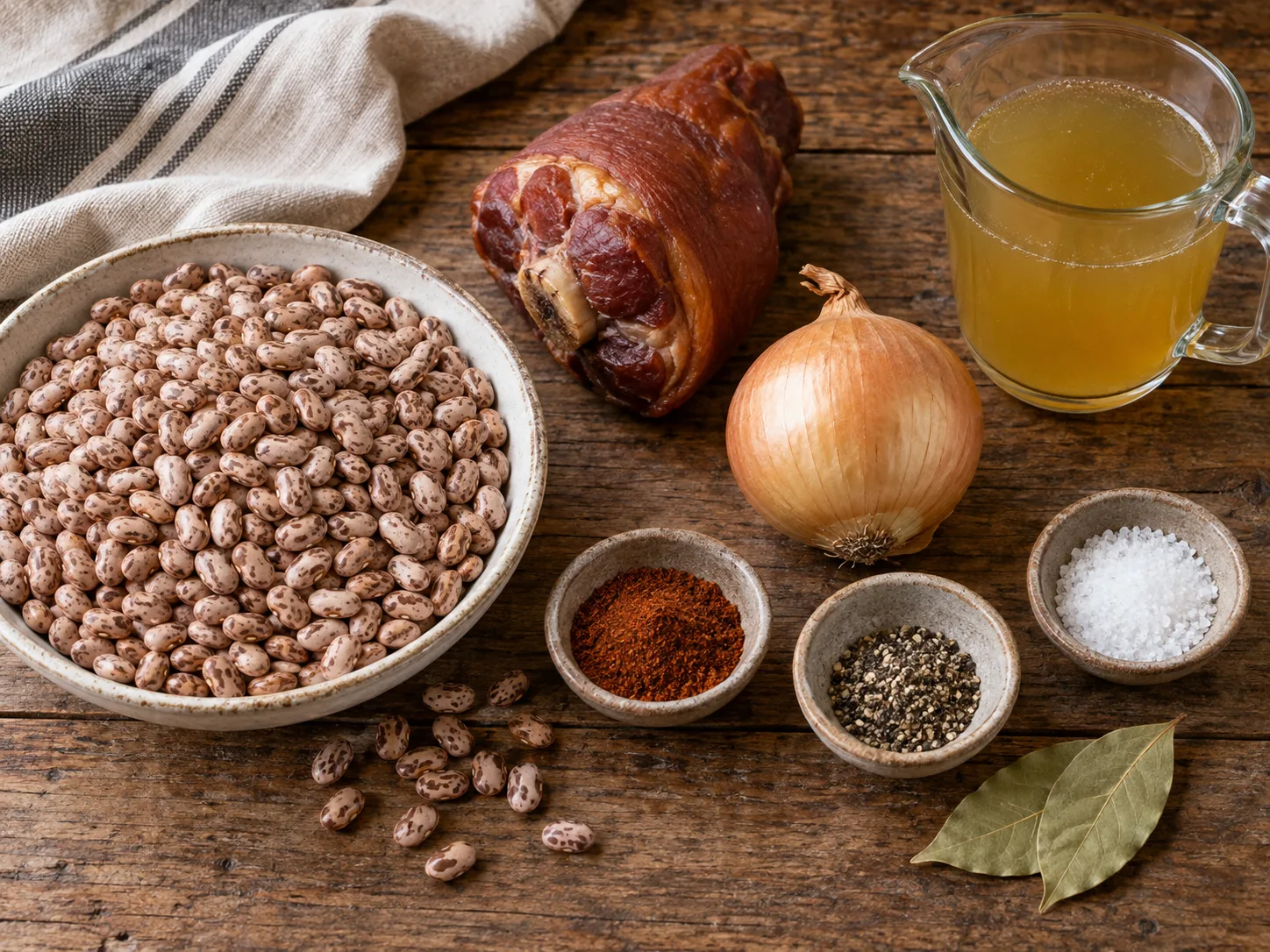
- 1 pound dried pinto beans
- 1 smoked ham hock
- 1 medium yellow onion, diced
- 7 cups low-sodium chicken broth or water, plus more as needed
- 1 teaspoon chili powder
- 2 bay leaves
- ½ teaspoon freshly ground black pepper
- Salt, to taste
Instructions
- Spread the dried beans on a tray, discard any stones or damaged beans, and rinse well. For a shorter, more even cook, cover with water and soak overnight; drain and rinse before cooking.
- Place the beans, ham hock, onion, bay leaves, chili powder, black pepper, and 7 cups of broth or water in a large heavy pot. The liquid should cover the beans by about 1 inch.
- Bring to a boil, skim any foam, then immediately reduce to a gentle simmer. Partially cover and cook for 1½–2¼ hours, stirring every 20–30 minutes. Add hot liquid as needed to keep the beans just covered.
- When the beans are fully creamy and tender, remove the ham hock and bay leaves. Pull off the usable meat, discard the skin and bone, chop the meat, and return it to the pot.
- For a thicker broth, mash about ½ cup of beans against the side of the pot and stir them back in. Simmer uncovered for 5–10 minutes, then taste and add salt only as needed. Rest for 10 minutes before serving.
Calculate
Calculate
Calculate
Calculate
Nutrition values should be calculated from the final tested recipe quantities before publication.