Why Collard Greens Belongs on a Southern Table
Collard greens turn a sturdy leaf into a deeply comforting side dish. Slow simmering softens the leaves while smoky bacon, sweet onion, and savory broth build the flavorful cooking liquid traditionally called pot liquor. A little cider vinegar at the end keeps the finished dish rich but balanced. It is humble food, but every part of the method matters: clean leaves, patient heat, enough seasoning, and a final taste before the pot reaches the table.
This version is designed for cooks who want tender greens without boiling away their character. Bacon provides smoke and savory depth, onion brings sweetness, and low-sodium broth leaves room to control the salt. The result is substantial enough for Sunday supper yet practical for an ordinary weeknight when it is prepared ahead.
How to Choose and Prepare Collard Greens
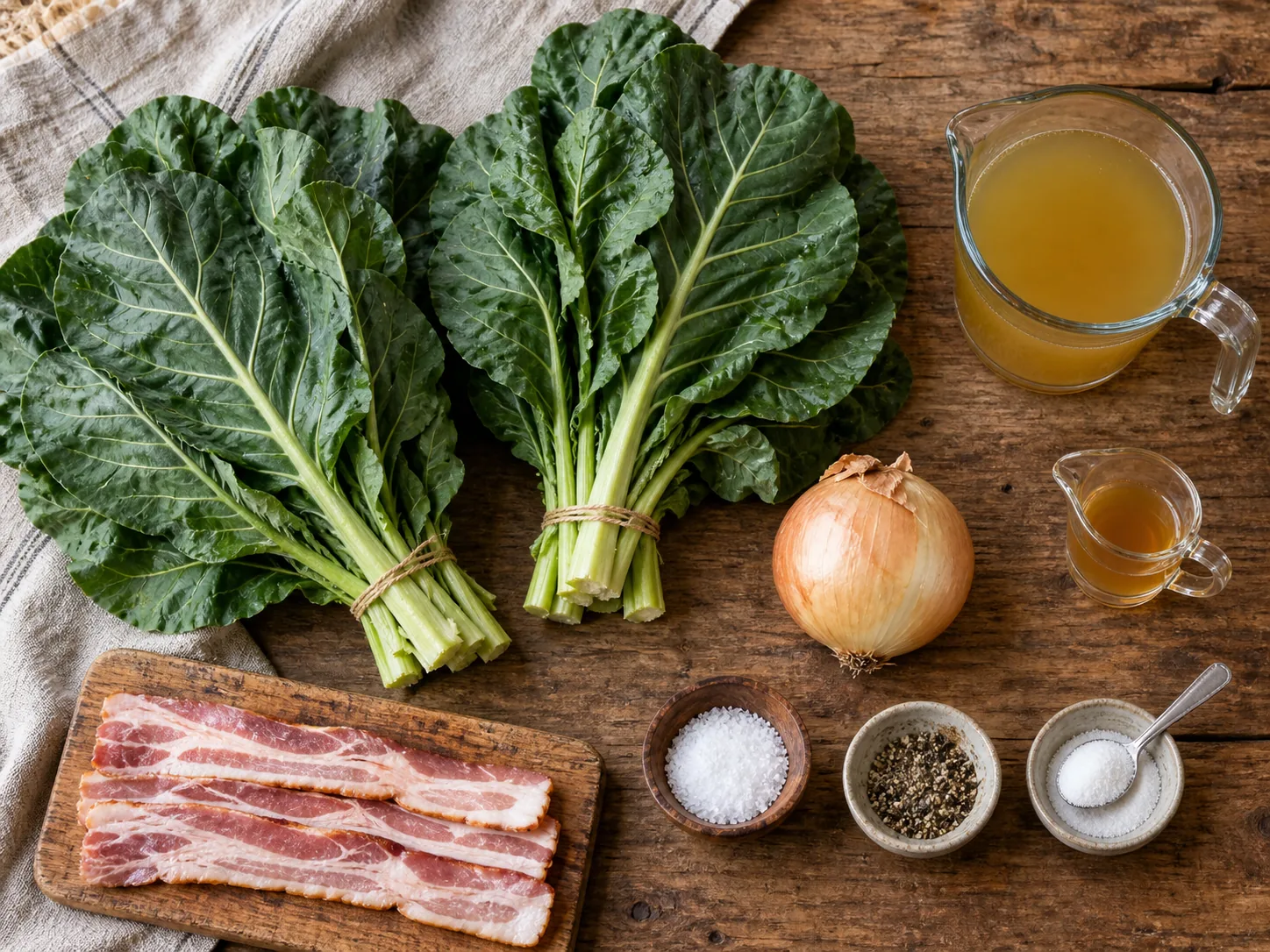
Look for bunches with broad, firm leaves that are deep green rather than yellow at the edges. Smaller young leaves generally become tender faster, while mature leaves have a stronger flavor and may need the full cooking time. Two large bunches look enormous on the counter, but the leaves collapse considerably once heated, so resist the temptation to reduce the quantity.
Grit is the quickest way to spoil an otherwise beautiful pot. Separate the leaves and swish them in a deep bowl or clean sink of cold water rather than rinsing only their tops. Lift the leaves out so the sand remains on the bottom, drain the water, and repeat until the bowl is clean. Do not pour the sandy water over the leaves again. Fold each leaf lengthwise and pull or slice away the hard central rib; tender upper stems can remain.
Stack several cleaned leaves, roll them loosely, and cut them into ribbons about an inch wide. Uniform pieces cook at approximately the same rate and are easier to eat. The leaves can be washed and cut a day ahead, dried well, and refrigerated in a covered container lined with a clean towel.
Building Flavor Before the Greens Go In
Begin bacon in a cool or moderately warm heavy pot so its fat renders instead of scorching. Brown pieces on their edges, but do not take them all the way to brittle; they will continue cooking during the long simmer. The rendered fat carries the onion flavor throughout the broth. Let the onion soften until translucent and lightly golden, scraping the pot so none of the flavorful brown bits burn.
Adding broth loosens those browned bits and creates the foundation of the pot liquor. Low-sodium broth is important because bacon can vary greatly in saltiness and the liquid concentrates during cooking. Sugar is not meant to make the greens sweet. A teaspoon simply rounds off their natural bitterness. Black pepper supplies gentle warmth, while vinegar is held until the end so its brightness remains distinct.
The Secret Is a Gentle Simmer
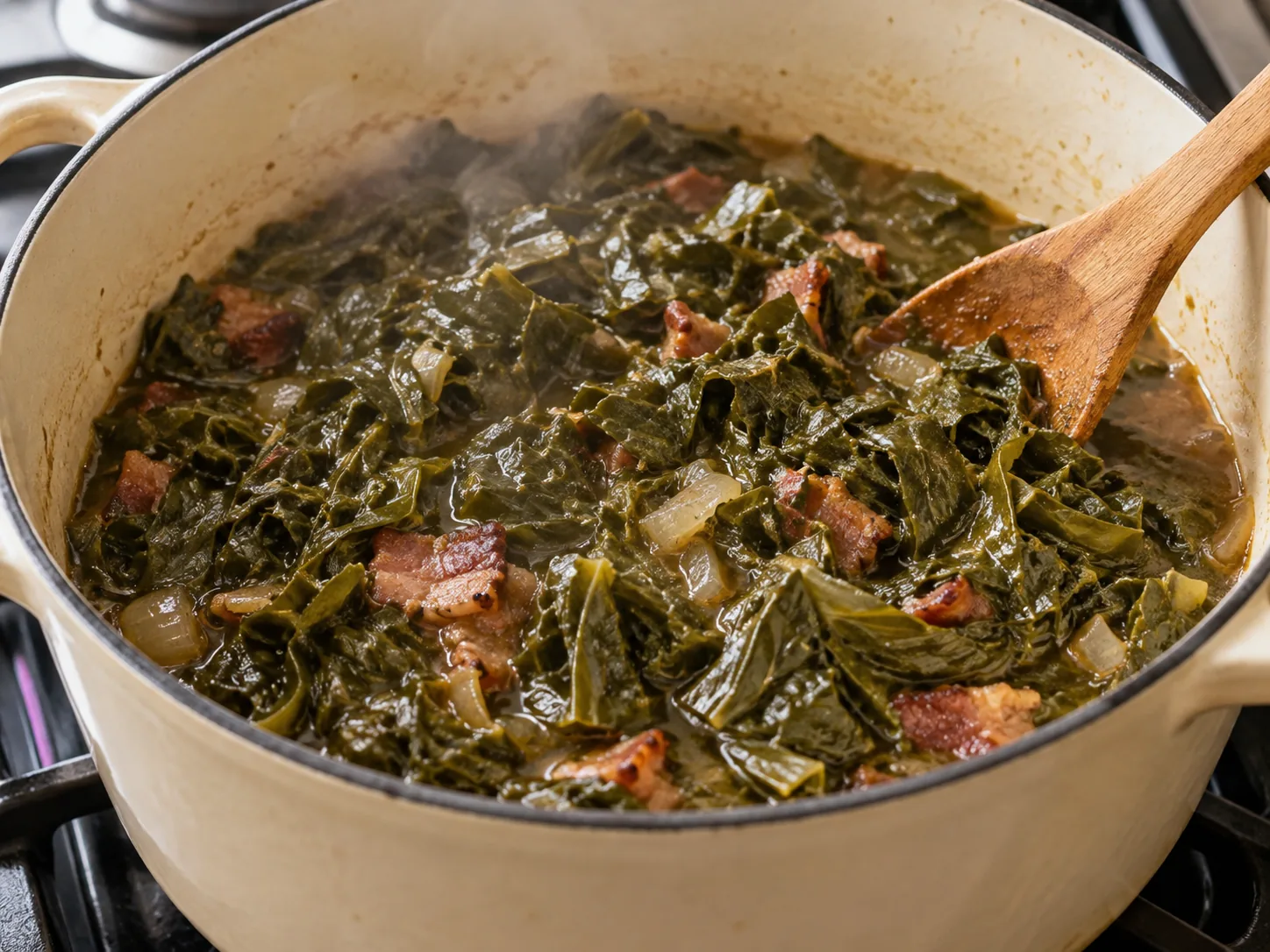
Add the collards in several handfuls, turning them through the hot liquid as they wilt. A pot that appears overfilled at first will soon become manageable. Bring the liquid only to a quiet simmer, partially cover, and keep the heat low. A hard rolling boil can shred the leaves, evaporate the broth too quickly, and leave the greener flavors tasting flat.
Stir about every 15 minutes, moving the leaves from the top toward the liquid. If the bottom looks dry, add broth a few tablespoons at a time; the greens should braise in a shallow pool rather than float in soup. Start checking younger leaves near 50 minutes. Mature greens may need 75 minutes or slightly longer. They are ready when a stem piece yields easily to a bite and the leaves feel silky but still hold their shape.
Balancing the Pot Liquor
Taste the cooking liquid before adding salt. It should be smoky and savory, with a pleasant green depth rather than aggressive bitterness. Stir in the cider vinegar, wait a minute, and taste again. Add more by the teaspoon if the pot still seems heavy. If it tastes too sharp, a splash of broth and a few more minutes of gentle cooking will soften the acidity.
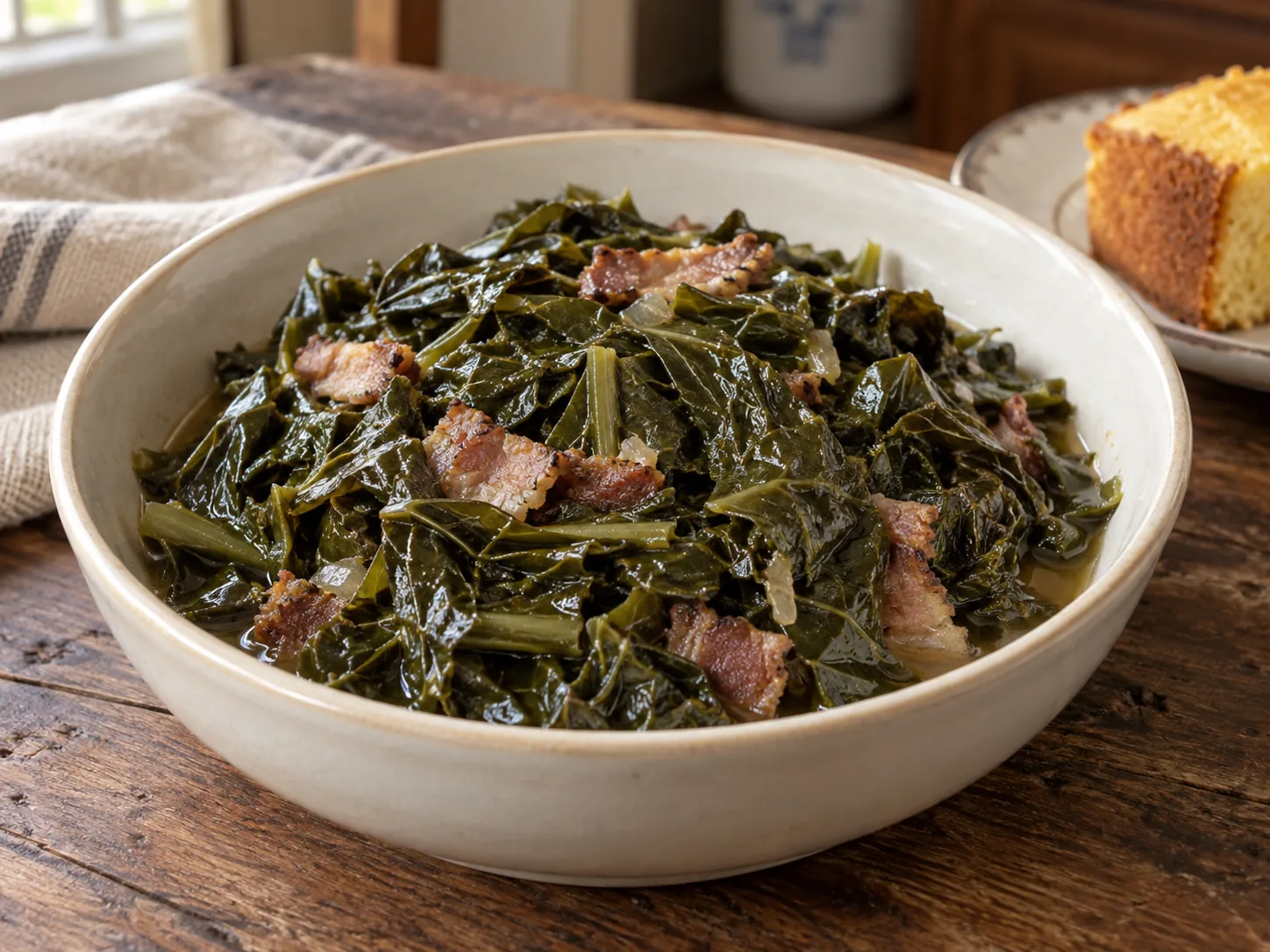
Pot liquor is part of the dish, not waste to be drained away. Spoon a little over every serving and offer cornbread for soaking it up. For a lighter plate, use less bacon and skim any excess fat from the surface after cooking, but retain enough liquid to keep reheated greens moist.
What to Watch For
Bitterness usually means the greens need more cooking, a better salt balance, or a small amount of acid—not a large dose of sugar. Tough leaves need additional simmering time. Mushy greens are usually the result of excessive heat or cooking far beyond tenderness. If the finished pot is too salty, add unsalted broth and another handful of prepared greens if available, then simmer until those leaves are tender.
Serving Ideas
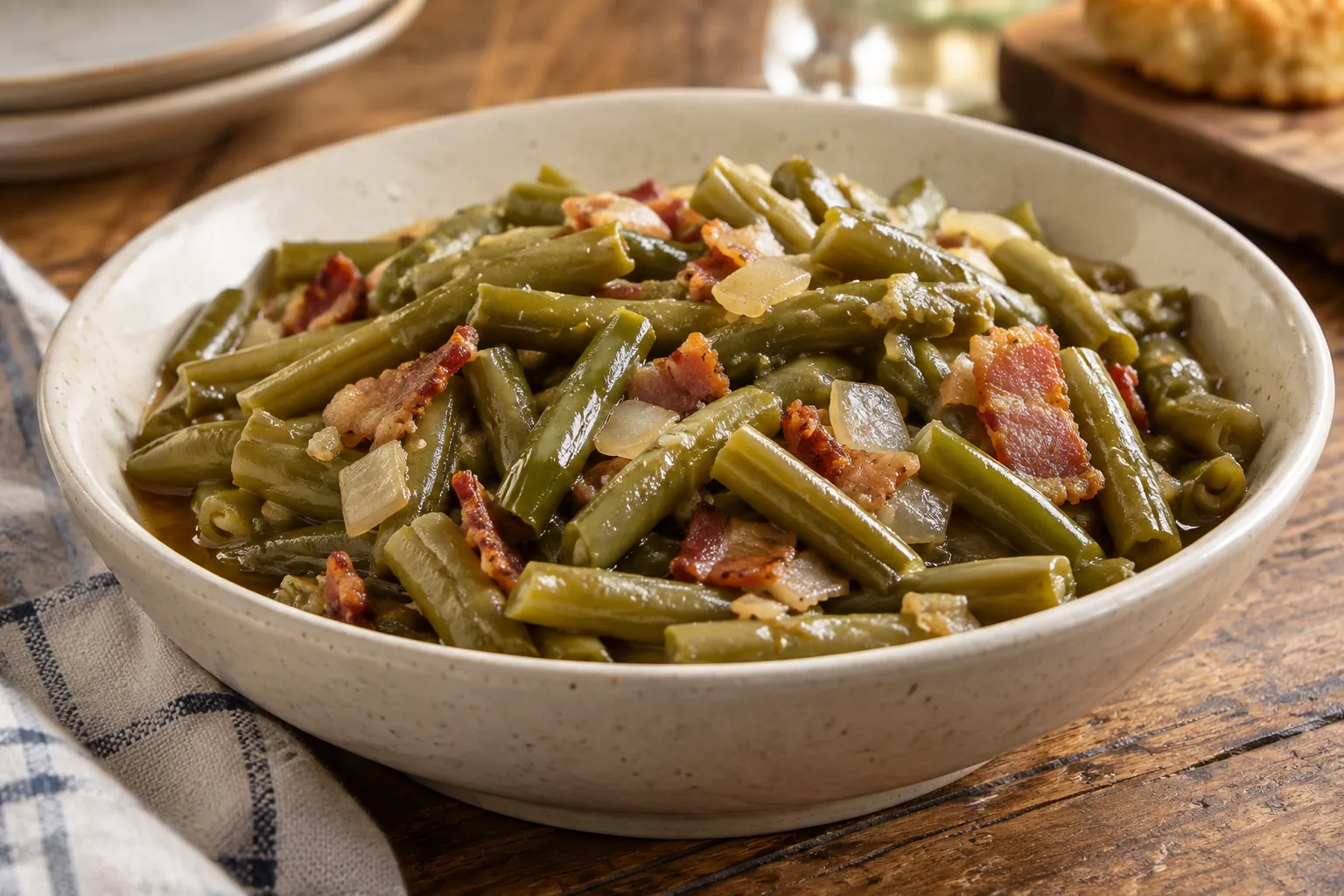
Serve collard greens warm with skillet cornbread so none of the pot liquor goes to waste. They pair naturally with fried chicken, meatloaf, pork chops, black-eyed peas, baked sweet potatoes, or a simple Sunday supper. A bottle of pepper vinegar or hot sauce at the table lets each guest add extra brightness and heat.
Make It Your Own
For deeper smoke, replace the bacon with a smoked turkey wing or small ham hock. Simmer the smoked meat in the broth until tender before adding the greens, then remove bones and skin and return the picked meat to the pot. For a meat-free version, use vegetable broth, a spoonful of olive oil, smoked paprika, and a dash of soy sauce or tamari for savory depth. Add red-pepper flakes with the onion for heat, but make final vinegar and salt adjustments only after the greens have cooked down.
Make Ahead, Store, and Reheat
Collard greens are one of the rare vegetables that can taste even better the following day because the leaves rest in their seasoned liquid. Cool leftovers within two hours, transfer the greens and pot liquor to a shallow covered container, and refrigerate for up to four days. Reheat only the portion needed in a covered saucepan over low heat, stirring occasionally, until steaming throughout. Add a spoonful of broth if the liquid has reduced.
For longer storage, freeze cooled greens with enough pot liquor to cover them in airtight portions for up to three months. Thaw overnight in the refrigerator and warm gently. The texture will be a little softer, but the flavor remains excellent. Avoid repeatedly cooling and reheating the entire batch.
Jump-to-Recipe Card
Ingredients
- 2 large bunches collard greens
- 4 ounces thick-cut smoked bacon, chopped
- 1 medium yellow onion, diced
- 3 cups low-sodium chicken broth, plus more if needed
- 1 tablespoon apple cider vinegar, plus more to taste
- 1 teaspoon granulated sugar
- ½ teaspoon freshly ground black pepper
- Salt, to taste
Instructions
- Fill a clean sink or large bowl with cool water. Swish the collard leaves well, lift them out, and repeat with fresh water until no grit remains. Remove the tough center ribs, stack the leaves, and cut them into 1-inch ribbons.
- Place the bacon in a large heavy pot over medium heat. Cook for 6–8 minutes, stirring occasionally, until browned and some fat has rendered. Add the onion and cook for 4–5 minutes, until soft and translucent.
- Pour in the chicken broth and scrape up the browned bits from the bottom. Add the collards by handfuls, stirring between additions until the leaves wilt enough to fit in the pot.
- Stir in the sugar and black pepper. Bring just to a simmer, partially cover, and reduce the heat to low. Cook for 60–75 minutes, stirring every 15 minutes, until the leaves and stems are silky and tender. Add a splash of broth if the pot becomes dry.
- Stir in the cider vinegar. Taste the greens and pot liquor before adding salt, since bacon and broth vary in saltiness. Add more vinegar or pepper if desired, then serve warm with some cooking liquid spooned over each portion.
Calculate
Calculate
Calculate
Calculate
Nutrition values should be calculated from the final tested recipe quantities before publication.