Why Hush Puppies Belongs on a Southern Table
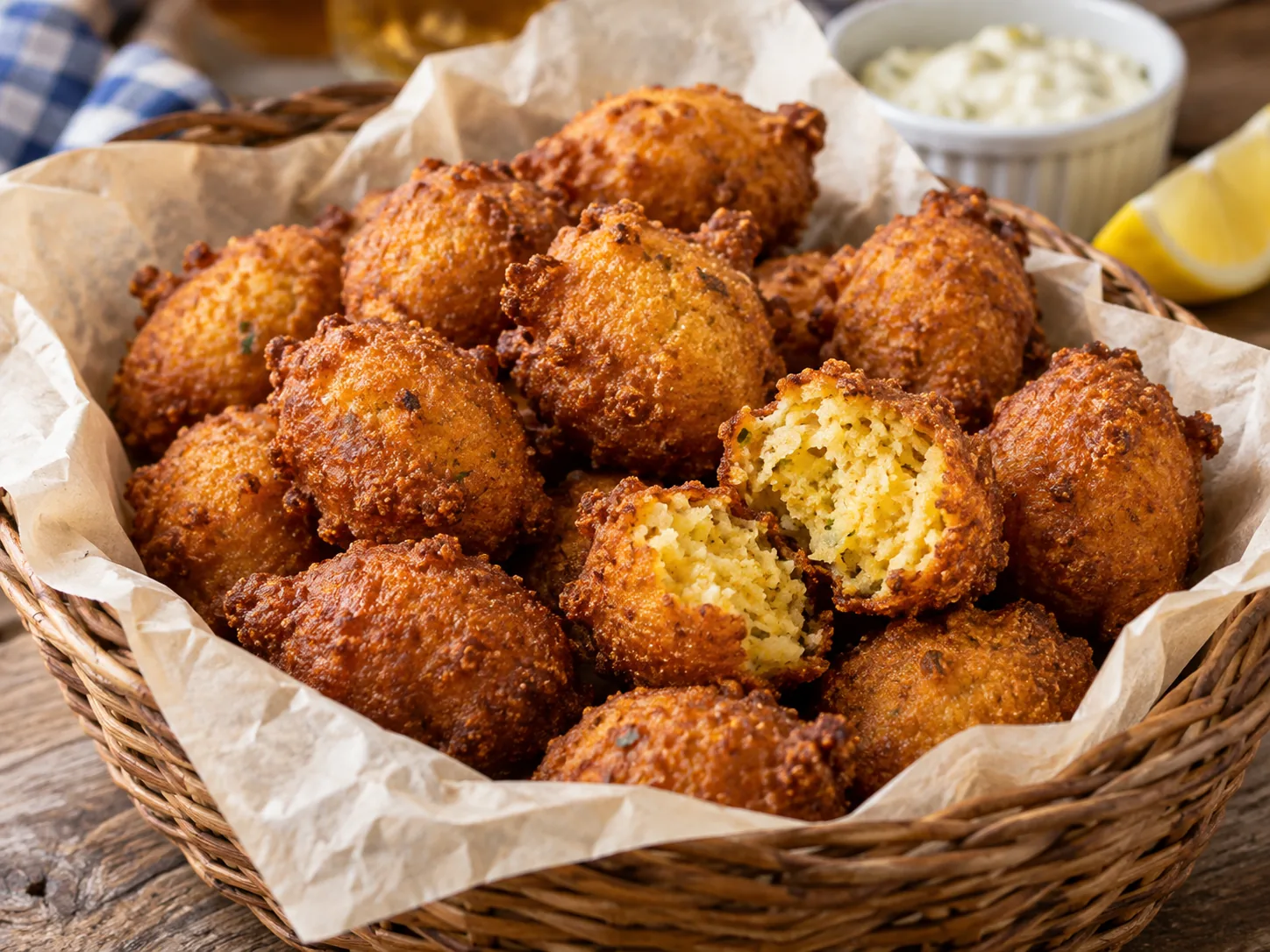
Hush puppies are small cornmeal fritters with a crisp golden shell and a tender, onion-scented center. They are closely associated with Southern fish fries, where their mild sweetness and warm corn flavor balance salty seafood, tangy slaw, and pickles. Because they cook in only a few minutes, they are often the last item fried and arrive at the table piping hot.
A good hush puppy should feel light for its size, not dense or saturated with oil. That depends on fresh leavening, properly hydrated cornmeal, a batter that holds its shape, and steady frying temperature. The ingredients are simple, so small technique improvements make an obvious difference.
Choosing Cornmeal for the Right Texture
Yellow cornmeal gives the fritters a warm color and recognizable corn flavor. Medium or regular grind creates a pleasantly rustic crumb; very coarse stone-ground meal may remain gritty during the short fry. If using coarse meal, allow the batter to rest a few additional minutes so it can absorb buttermilk.
Use plain cornmeal rather than self-rising cornmeal because this recipe supplies its own flour, baking powder, baking soda, and salt. A small portion of flour softens the crumb and supplies enough structure to keep the rounds intact. Too much flour makes hush puppies bready and masks the corn.
Fresh Leavening Matters
Baking powder and baking soda create lift in different ways. Baking powder activates with moisture and heat, while baking soda reacts with acidic buttermilk. Together they produce a tender center that cooks before the exterior becomes too dark. Check expiration dates: old leavening often causes heavy, compact fritters.
Whisk the dry ingredients thoroughly so no pocket of soda or salt remains. A tablespoon of sugar rounds the corn and onion flavors rather than creating a dessert. It can be reduced for a more savory hush puppy, but omitting it entirely changes browning as well as sweetness.
Prepare the Onion Properly
Finely grated onion is preferable to large diced pieces. Grating releases juice that seasons the entire batter, and the soft strands cook through during the brief fry. Large chunks can stay sharp and may break the surface, allowing extra oil into the center.
Measure the onion after grating and include its flavorful juice. Yellow onion provides traditional sweetness; a sweet onion creates an even milder result. If the onion is especially wet, begin with one or two tablespoons less buttermilk and adjust after mixing.
Mix the Batter Without Overworking
Whisk egg and buttermilk together before adding them to the cornmeal mixture. Fold only until no dry flour remains. Vigorous mixing develops gluten in the flour and can make the interior rubbery. The batter should be thicker than pancake batter: it should mound on a tablespoon but slide off with a gentle push.
Let it stand for five minutes while the oil finishes heating. Cornmeal absorbs moisture during this rest and the batter becomes slightly firmer. If it spreads flat on the spoon, fold in cornmeal one tablespoon at a time. If it is dry and crumbly, add buttermilk one tablespoon at a time. Judge after resting rather than correcting immediately.
Select a Safe Pot and Frying Oil
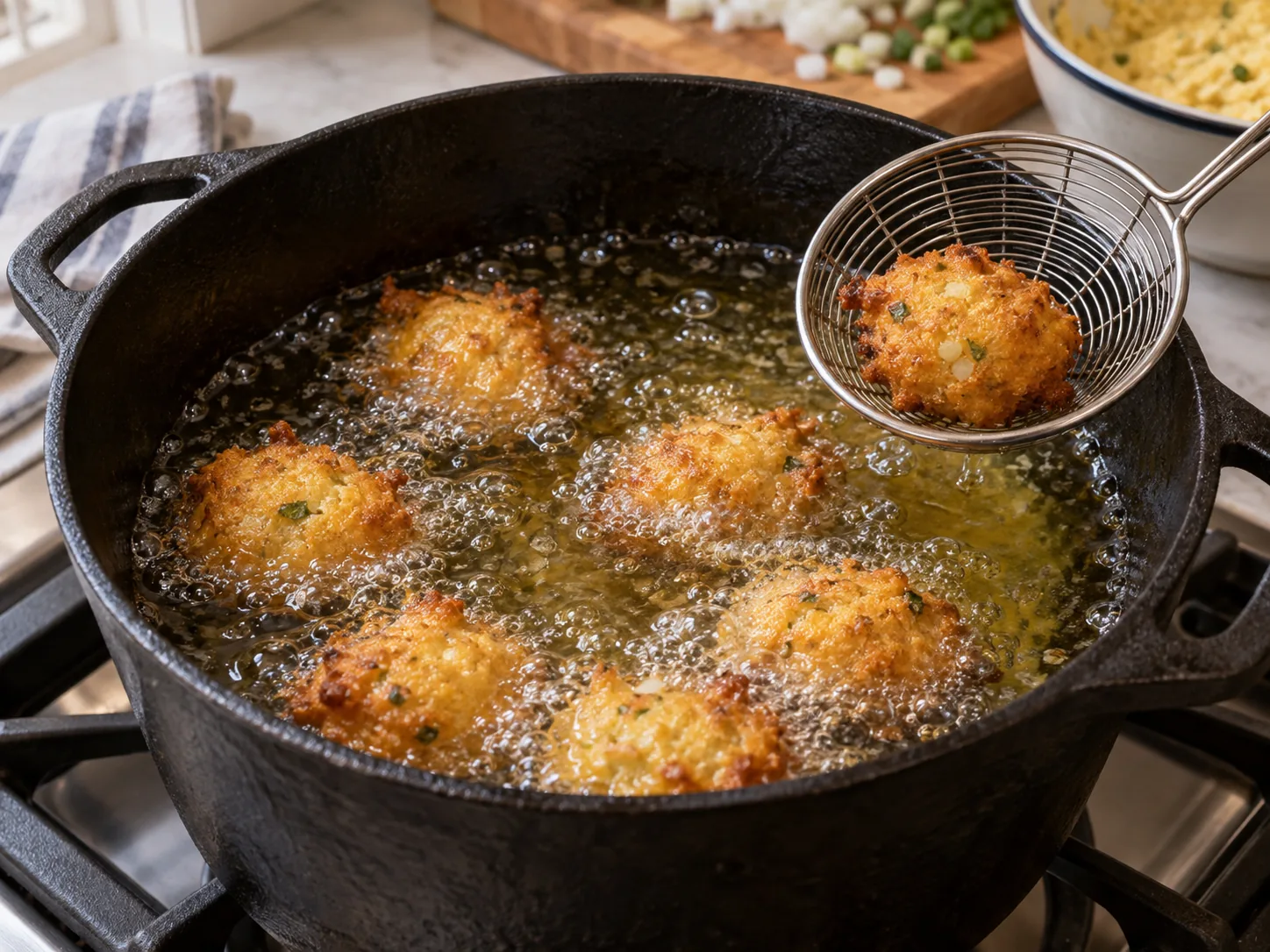
A deep, heavy Dutch oven is safer than a shallow skillet because its high sides contain splashes and help stabilize temperature. Add about two inches of neutral, high-heat oil such as peanut, canola, or vegetable oil, leaving several inches of empty space at the top. Never fill the pot more than halfway.
Heat the oil to 350°F and use a thermometer if possible. Keep a lid nearby for safety, turn pan handles inward, and never add water near hot oil. If the oil smokes, remove the pot from the heat. Do not attempt to extinguish an oil fire with water.
Portion for Even Cooking
Use a level tablespoon or small cookie scoop to create pieces of consistent size. Dip the spoon briefly in the hot oil, drain it, then scoop batter; this helps the mixture release. Lower each portion close to the surface instead of dropping it from a height.
Fry only five or six at a time, depending on pot size. Crowding lowers the temperature and prevents the fritters from moving freely. Most hush puppies turn themselves as one side becomes buoyant, but use a spider or slotted spoon to rotate any that brown unevenly.
Watch Temperature, Color, and Time
Maintain 340–350°F after the batter enters. Each batch should take approximately two to three minutes and become a deep, even golden brown. Color alone is not enough if portions are large; split the first hush puppy to confirm the center is set, airy, and free of wet batter, then adjust portion size or frying time.
Let the oil return to 350°F before beginning another batch. Scoop out loose crumbs because they continue darkening and can give later batches a bitter flavor. Transfer finished hush puppies to a wire rack rather than a pile of paper towels so steam cannot soften their undersides.
What to Watch For
Greasy hush puppies usually mean the oil was too cool or the pot was crowded. A dark shell with a raw center indicates excessive heat or portions that were too large. Fritters that break apart need a slightly thicker batter, while dense centers may come from expired leavening or overmixing.
If the first batch develops long tails or irregular spikes, smooth each scoop slightly before dropping it. Perfect spheres are not necessary—small craggy edges become especially crisp. Keep cooked batches on a rack in a 200°F oven for no more than about 20 minutes while finishing the meal.
Serving Ideas
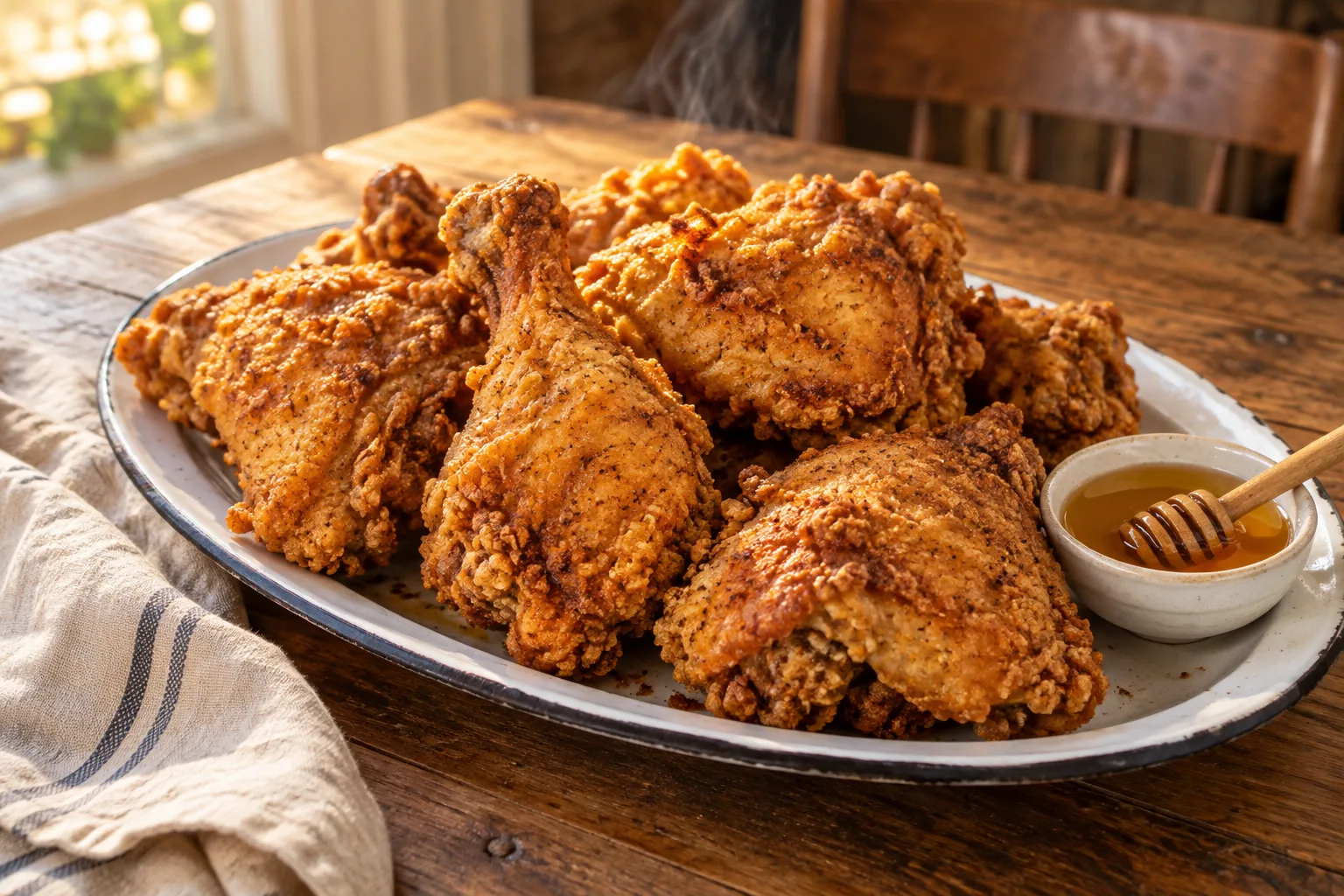
Serve warm with fried catfish, shrimp, fried chicken, barbecue, coleslaw, baked beans, or collard greens. Tartar sauce, remoulade, honey butter, or a little hot sauce all make good accompaniments. Their crispness is best during the first few minutes after frying.
Make It Your Own
Add finely minced jalapeño, sliced scallion, or a pinch of cayenne for heat. A small handful of corn kernels adds sweetness but also moisture, so drain them thoroughly. Shredded sharp cheddar can be folded in sparingly. Keep additions finely cut and limited so the batter holds together and cooks evenly.
Make Ahead, Store, and Reheat
Whisk the dry mixture one day ahead and keep it airtight. Grate the onion and combine wet ingredients shortly before frying; once wet and dry ingredients meet, the leavening begins working, so do not refrigerate mixed batter for later.
Refrigerate cooked hush puppies within two hours for up to four days. Reheat on a rack in a 375°F oven for 8 to 10 minutes, or in an air fryer at 350°F until crisp and hot. The microwave softens the crust. Freeze fully cooled pieces in an airtight container for up to two months and reheat directly from frozen, allowing a few extra minutes.
Jump-to-Recipe Card
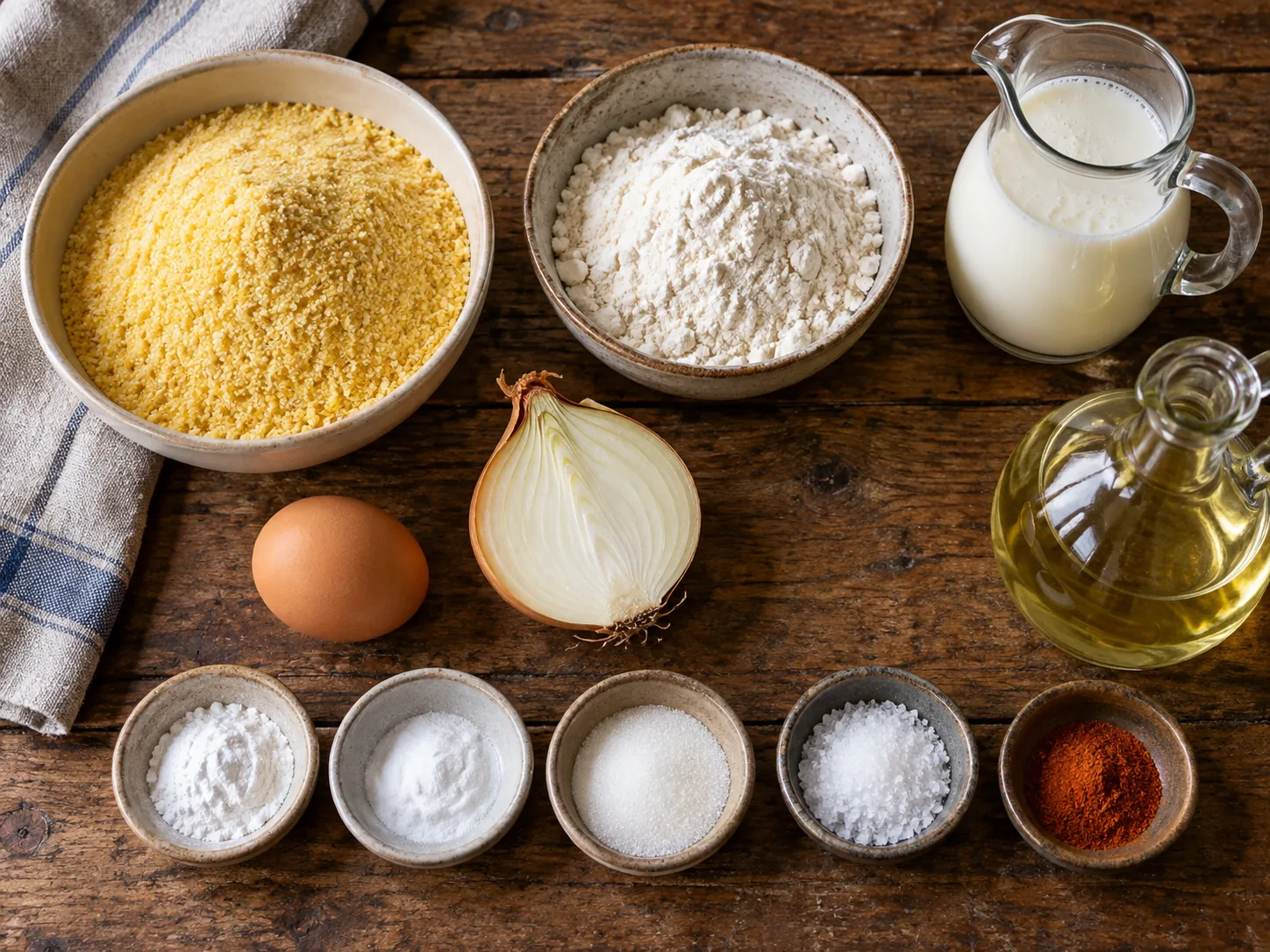
Ingredients
- 1 cup yellow cornmeal
- 1/2 cup flour
- 1½ teaspoons baking powder
- ¼ teaspoon baking soda
- 1 tablespoon sugar
- 1/2 teaspoon salt
- 1/2 cup finely diced onion
- 1 egg
- 3/4 cup buttermilk
- Frying oil
Instructions
- Heat 2 inches of neutral oil in a heavy pot to 350°F. Set a wire rack over a sheet pan.
- Whisk cornmeal, flour, baking powder, baking soda, sugar, salt, and a pinch of cayenne; stir in the finely grated onion.
- Whisk the egg and buttermilk separately, then fold into the dry mixture just until combined. Rest for 5 minutes; the batter should hold a rounded spoonful.
- Drop level tablespoon portions into the oil in small batches. Fry for 2–3 minutes, turning as needed, until evenly deep golden and cooked through.
- Lift out with a spider, drain on the rack, return the oil to 350°F between batches, and serve warm.
Calculate
Calculate
Calculate
Calculate
Nutrition values should be calculated from the final tested recipe quantities before publication.