Why Chicken and Dumplings Belongs on a Southern Table
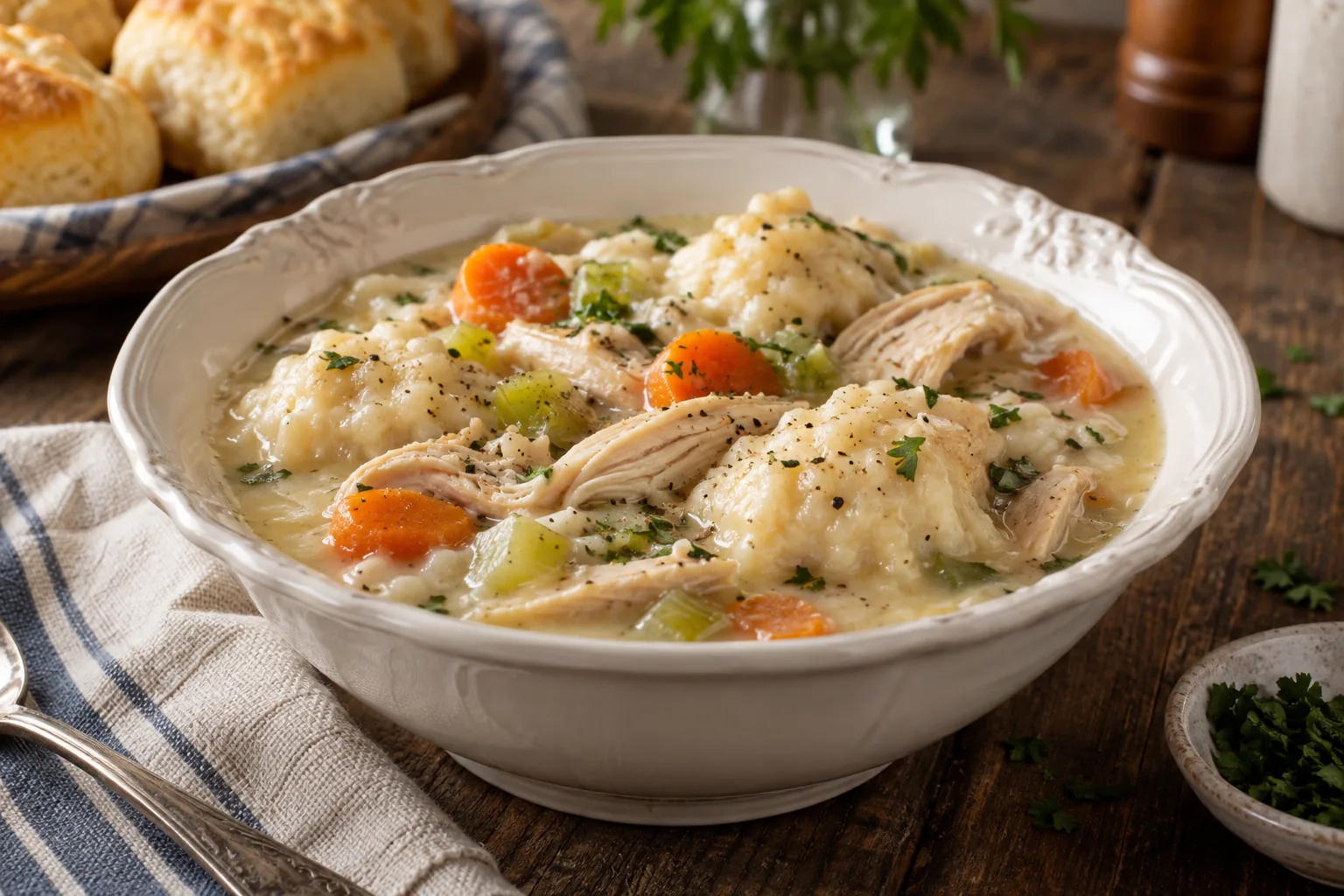
Chicken and dumplings turns a pot of broth, tender chicken, and a handful of pantry staples into a complete supper. The pleasure is in the contrast: savory broth thick enough to cling to a spoon, vegetables cooked until tender, and soft dumplings that steam above the liquid. It is generous comfort food without requiring an elaborate presentation.
This independent Southern-inspired Gantt Fans recipe is not an official Brenda Gantt recipe. It uses fluffy drop dumplings and explains the visual cues that matter more than a rigid timer.
Build Flavor Before Adding Broth
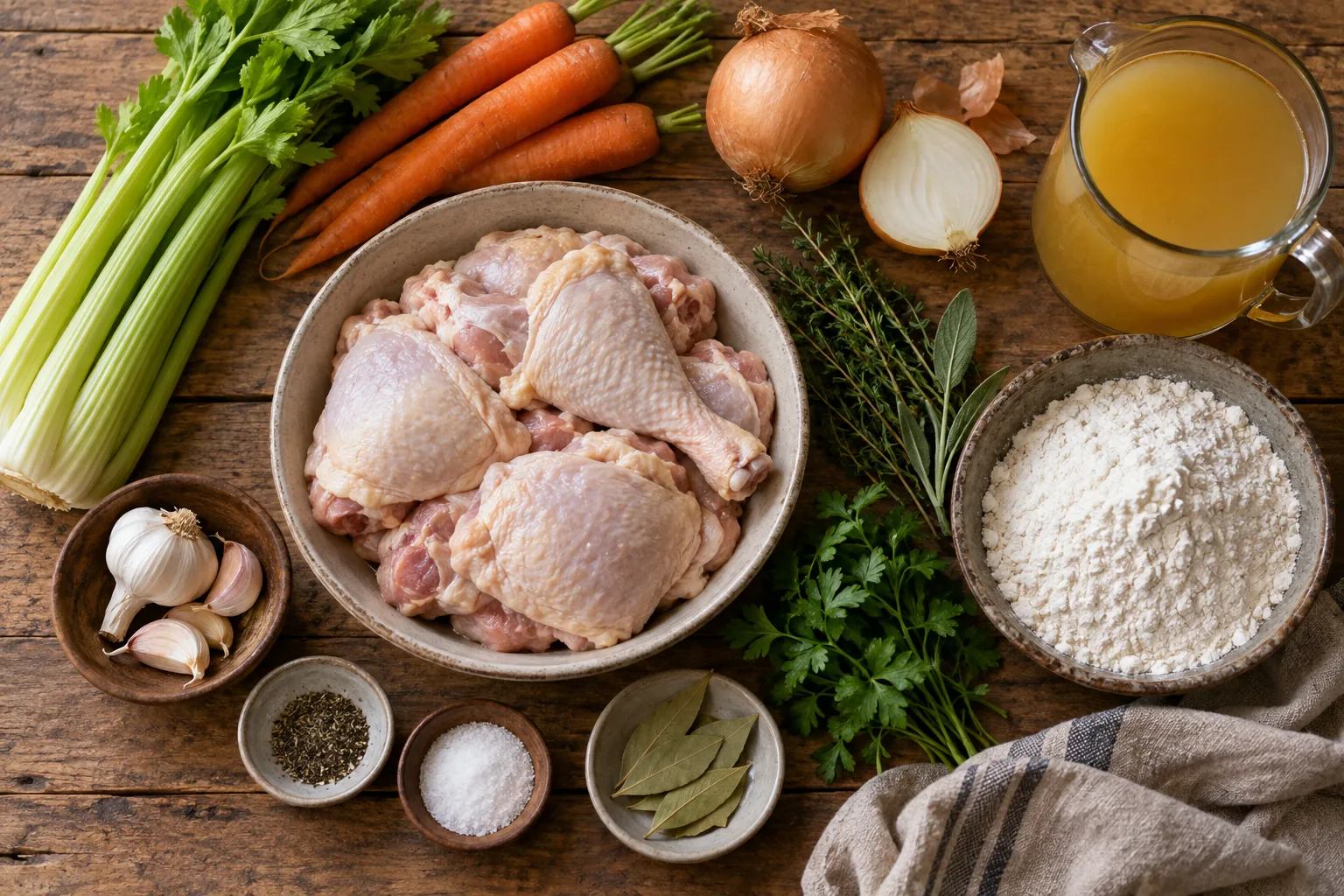
Chicken thighs remain juicy during simmering and contribute more flavor than very lean breast meat. Season and brown them lightly in butter; they do not need to cook through at this stage. The browned film left in the pot dissolves into the broth. Cook onion, celery, and carrots until the onion turns translucent, then add garlic only for the final minute so it does not scorch.
Low-sodium broth lets the cook control seasoning as liquid reduces. Thyme and a bay leaf add background aroma without turning the dish herbal. Keep the pot at a gentle simmer—small bubbles around the edge—because a hard boil toughens chicken and clouds the broth.
Cook and Shred the Chicken
Return the browned thighs and any juices to the pot. Simmer until the thickest piece reaches 165°F, usually 20 to 25 minutes depending on size. Remove the chicken, discard the bay leaf, and shred the meat into generous bite-size pieces. Very fine shreds disappear into the broth, while large chunks make serving awkward.
Return the chicken to the pot and taste the broth before adding dumplings. It should be well seasoned but not overly salty, since the dumplings absorb liquid. If it seems thin, simmer uncovered for a few minutes; if too concentrated, add broth.
Make Tender Drop Dumplings
Whisk flour, baking powder, and salt so the leavener is evenly distributed. Cut cold butter into the flour until pea-size pieces remain, then fold in milk or buttermilk just until a soft, shaggy dough forms. Overmixing develops gluten and produces rubbery dumplings. The dough should be moist enough to scoop but not pour.
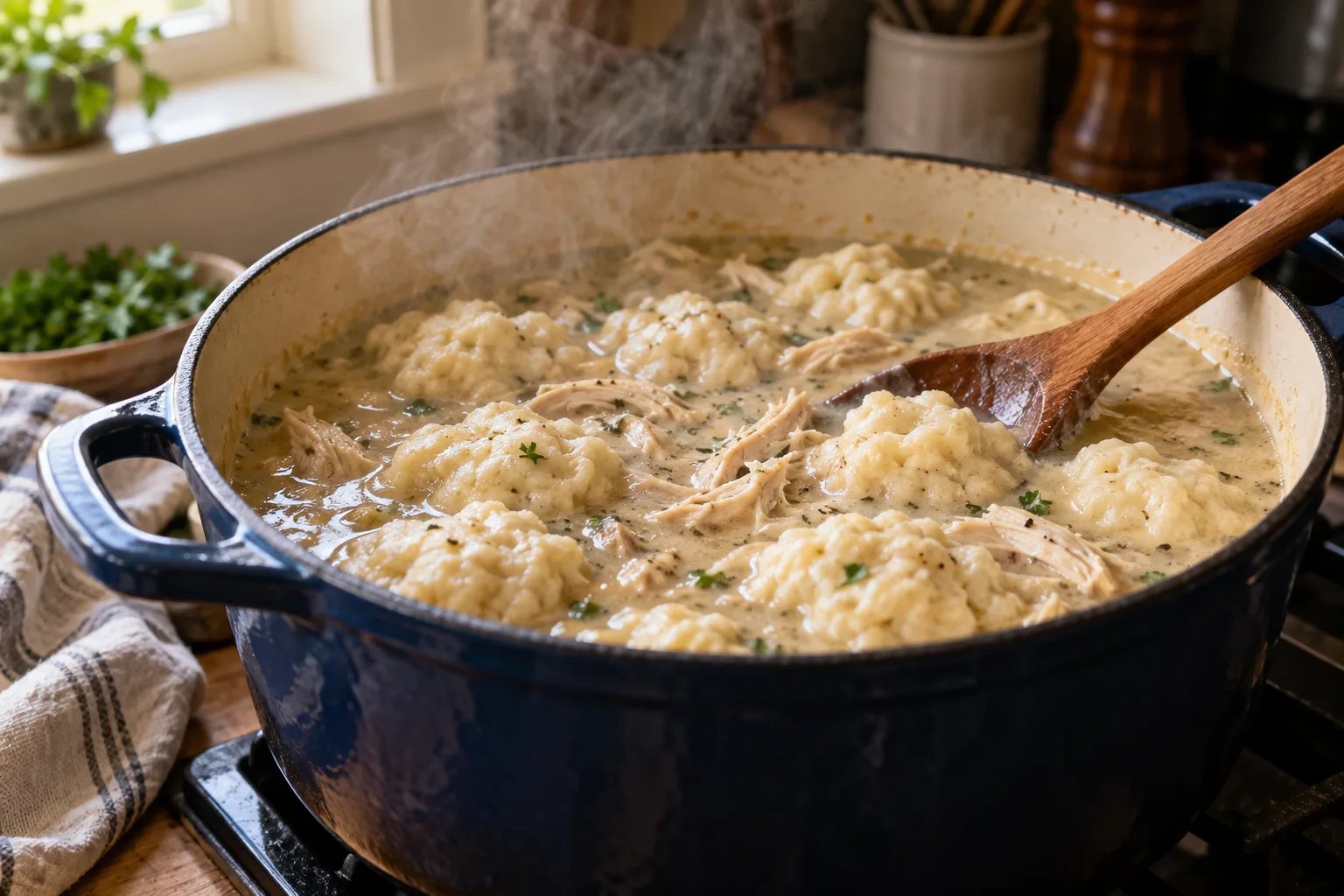
Use a small scoop or two spoons to drop portions about two tablespoons in size onto the surface. Leave a little room because they expand. Keep the broth gently simmering before the dough enters; violent bubbling can break dumplings apart, while liquid below a simmer may leave their centers raw.
Keep the Lid Closed
Cover the pot tightly and cook for 15 minutes without lifting the lid. Trapped steam cooks the tops while hot broth cooks the bottoms. Opening repeatedly releases that steam and lengthens the process. When checked, a dumpling should be puffed and dry-looking inside rather than glossy with raw dough. Split the largest one to be certain.
Stir around rather than through the dumplings. Add cream after they are cooked if a richer broth is desired, then warm gently without returning to a hard boil. Parsley and a final grind of pepper brighten the finished pot.
What to Watch For
If dumplings dissolve, the broth was boiling too hard or the dough was too wet. Dense centers usually come from overmixing, oversized scoops, weak baking powder, or lifting the lid early. A gluey broth can result from stirring the dumplings aggressively. Thin broth may simply need a short uncovered simmer before the dough is added.
The dish thickens as it stands because flour on the dumplings releases starch. Stop cooking while the broth is slightly looser than the desired serving texture. Add warm broth when reheating rather than water so flavor remains full.
Serving Ideas
Serve in wide bowls so every portion receives chicken, vegetables, broth, and two or three dumplings. A crisp green salad, vinegar-dressed greens, or green beans provides freshness. This is already a starch-rich main course, so extra bread is optional rather than necessary.
Make It Your Own
Replace part of the thyme with sage, add peas after the dumplings cook, or use leftover roasted chicken. With cooked chicken, make the vegetable broth first and add shredded meat shortly before the dumplings. For flatter “slick” dumplings, the dough and method must change; do not simply roll this soft drop dough.
Make-Ahead and Storage
The chicken-and-vegetable broth can be prepared two days ahead and refrigerated. Reheat it to a simmer before mixing fresh dumpling dough. Fully cooked leftovers keep refrigerated for up to four days, although dumplings soften as they absorb broth. Reheat gently on the stove with extra broth and stir as little as possible.
Freezing the broth and chicken without dumplings works well for up to three months. Freshly mix and cook dumplings after thawing. Freezing assembled leftovers is safe when cooled promptly, but the dumpling texture will be noticeably softer.
Jump-to-Recipe Card
Ingredients
- 2 lb boneless, skinless chicken thighs
- 1 teaspoon kosher salt
- 1/2 teaspoon black pepper
- 2 tablespoons unsalted butter
- 6 cups chicken broth
- 1 small onion, diced
- 2 celery ribs, diced
- 2 carrots, diced
- 2 garlic cloves, minced
- 2 cups all-purpose flour
- 1 tablespoon baking powder
- 3/4 teaspoon salt
- 3/4 cup whole milk or buttermilk
- 4 tablespoons butter
- Fresh parsley
- 1/2 cup heavy cream, optional
Instructions
- Season chicken. Brown lightly in butter, then remove. Soften onion, celery, and carrots; add garlic for one minute.
- Add broth, thyme, bay leaf, and chicken. Simmer gently until chicken reaches 165°F. Shred and return it to the pot.
- Whisk flour, baking powder, and salt. Cut in cold butter, then fold in milk only until a soft dough forms.
- Drop two-tablespoon portions onto gently simmering broth. Cover tightly and cook 15 minutes without lifting the lid.
- Split the largest dumpling to confirm its center is dry and fluffy. Stir in optional cream and parsley; season and serve.
Calculate
Calculate
Calculate
Calculate
Nutrition values should be calculated from the final tested recipe quantities before publication.