Why Buttermilk Pie Belongs on a Southern Table
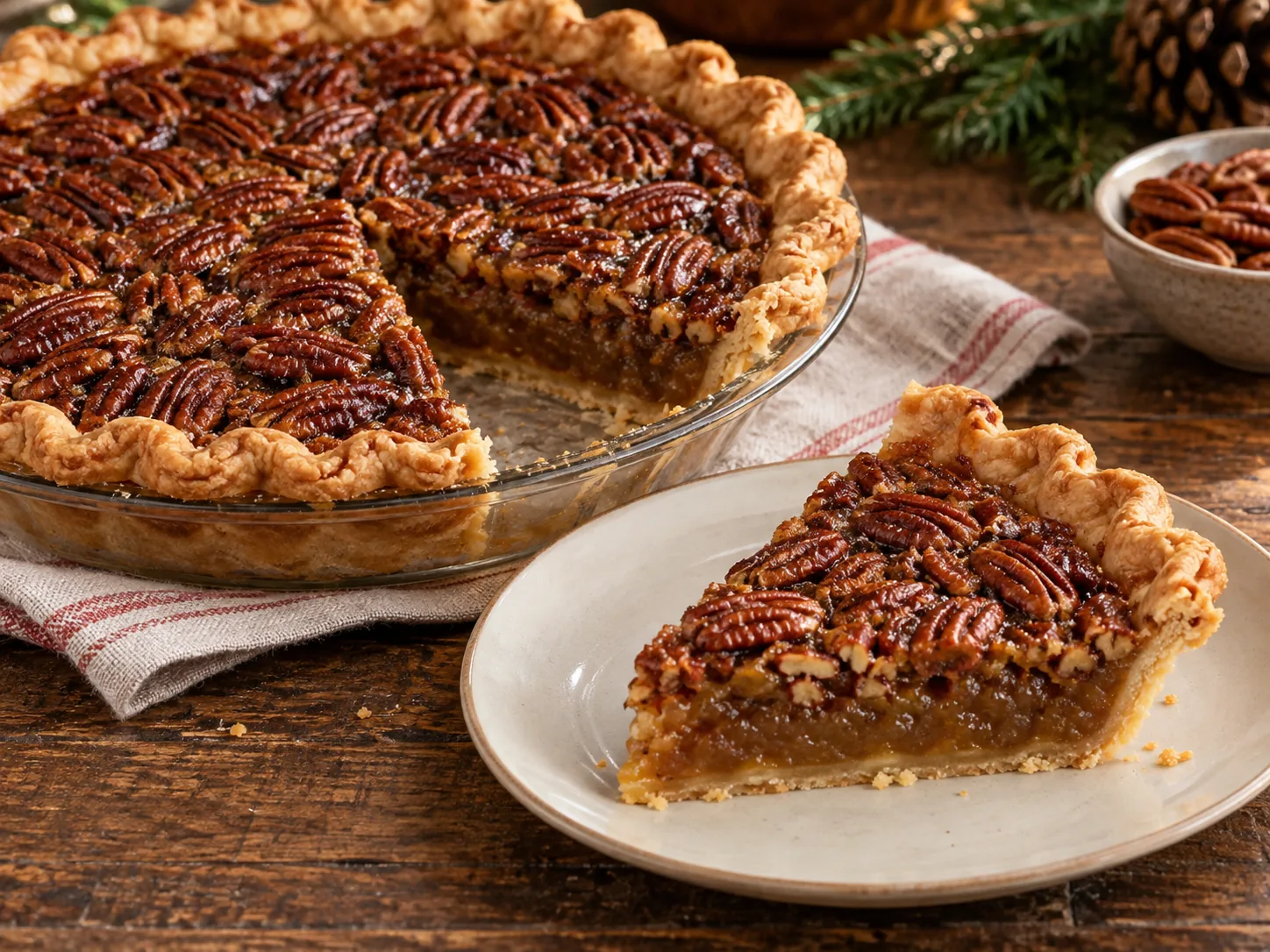
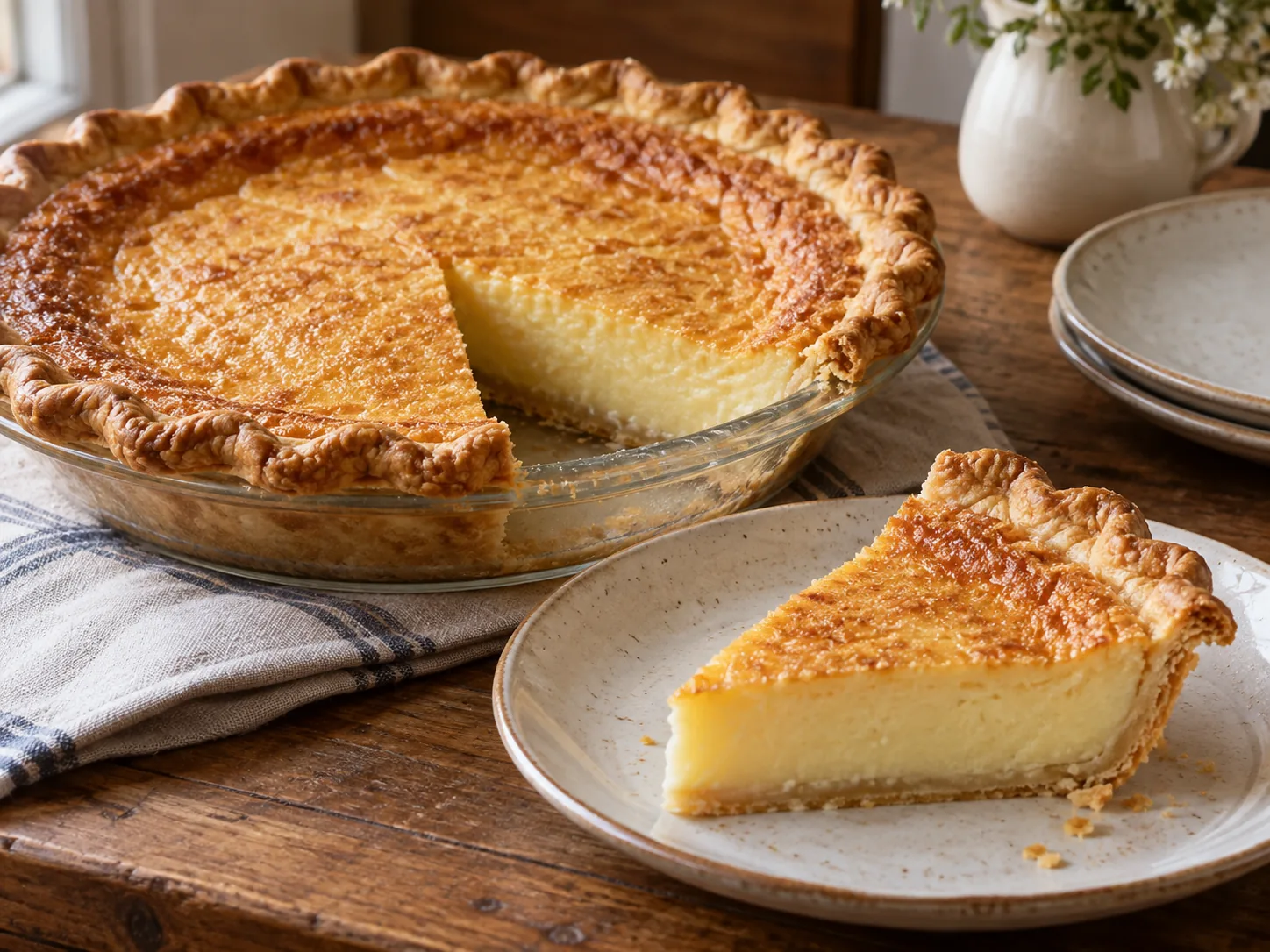
Buttermilk pie is a pantry-minded Southern dessert: eggs, sugar, butter, flour, and cultured milk become a custard that tastes far more special than its short ingredient list suggests. It is sweet but not flat, because buttermilk and lemon bring a clean tang that balances the richness. As it bakes, the top develops a thin golden skin while the filling underneath remains smooth and delicate.
Unlike a cream pie cooked on the stovetop, this filling sets entirely in the oven. That makes temperature and timing more important than vigorous mixing. A good slice should hold its shape after cooling yet yield easily to a fork; it should never feel rubbery or resemble a dense cheesecake.
Why This Custard Method Works
A small amount of flour supports the eggs and helps stabilize the custard without turning it cakey. Melted butter supplies richness and encourages the golden surface. Adding buttermilk last makes it easier to whisk the flour smoothly into the richer egg mixture before the thinner liquid is introduced.
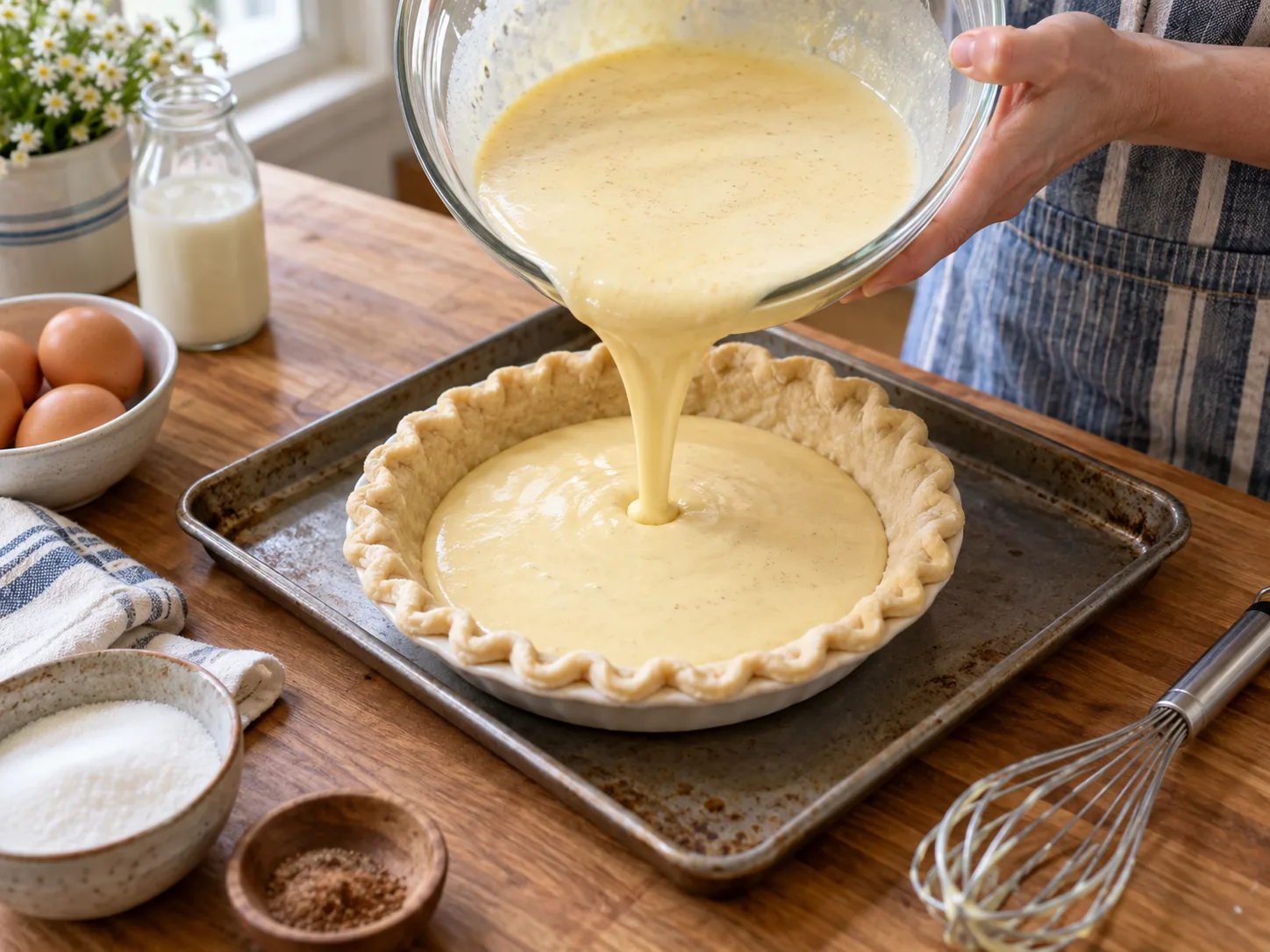
Use room-temperature eggs and buttermilk when possible so the melted butter stays fluid and the ingredients combine evenly. Whisk until smooth, but do not beat in excessive air. A foam-covered filling can rise dramatically, crack, and then sink. Any bubbles on the surface can be skimmed with a spoon before baking.
Preparing the Crust
A homemade or refrigerated 9-inch pie shell works. Keep it chilled while mixing the filling; cold fat in the pastry creates a flakier edge. Set the pie plate on a rimmed baking sheet before pouring so the liquid-filled crust can be moved safely. A metal pie plate browns the bottom efficiently, while glass makes it easier to check the color.
This recipe does not require a fully blind-baked crust, but a pale, soggy bottom can be prevented by placing the pie on a preheated lower oven rack or baking steel. If your favorite crust recipe tends to remain pale beneath custard, partially blind-bake it for about ten minutes and cool it before filling.
What to Watch For
The outer two inches should look puffed and set, while the center still moves as one soft circle when the pan is nudged. A liquid wave means it needs more time; no movement at all often means it has gone too far. An instant-read thermometer inserted near the center should register about 175–180°F.
The pie continues cooking from retained heat after leaving the oven. Cool it completely for at least two hours before slicing. The custard settles, firms, and becomes silkier during that rest. If the crust edge browns before the filling is ready, protect only the rim with foil or a pie shield.
Ingredient Notes and Substitutions
Buttermilk: Full-fat cultured buttermilk gives the roundest flavor, though low-fat works. A milk-and-lemon substitute provides acidity but lacks some body. Butter: Let melted butter cool until warm so it does not scramble the eggs. Flavoring: Vanilla, lemon zest, and nutmeg should remain gentle; the buttermilk should still be recognizable.
Serving Ideas
Serve buttermilk pie at room temperature for the softest texture or chilled for cleaner slices. It needs no topping, but lightly whipped cream, sliced strawberries, blackberries, or a dusting of nutmeg are welcome. Its bright tang makes it especially good after a rich Sunday supper.
Make It Your Own
Use orange zest instead of lemon, add a tablespoon of bourbon, or replace nutmeg with a small pinch of cinnamon. Avoid loading the filling with wet fruit, which changes how the custard sets. Serve fruit alongside the finished pie instead.
Common Buttermilk Pie Problems
Curdled texture: the pie baked too hot or too long. Cracked center: it was baked until completely rigid. Filling leaked under the crust: the pastry had a tear or the filling was poured before the plate was on its baking sheet. Slices slump: the pie was cut while warm; allow a full cooling period.
Storage and Make-Ahead
Buttermilk pie is ideal for making one day ahead. Cool completely, cover, and refrigerate for up to four days. Let slices stand at room temperature for 20 minutes before serving if you prefer softer custard. Freeze well-wrapped individual slices for up to one month, then thaw overnight in the refrigerator.
Planning the Baking Schedule
For a noon meal, bake the pie the evening before and refrigerate it after it has cooled. For supper, bake it early in the afternoon so the custard has the full two-hour rest it needs. The hands-on work is short; most of the schedule is unattended baking and cooling, which makes this dessert convenient when the oven is also needed for other dishes.
Set out the eggs and measured buttermilk about 30 minutes before mixing. While they warm slightly, prepare the crust and measure the dry ingredients. Once the filling is combined, bake it promptly rather than letting the unbaked custard sit in the shell. This orderly sequence protects the crust and gives the filling the smoothest texture.
Jump-to-Recipe Card
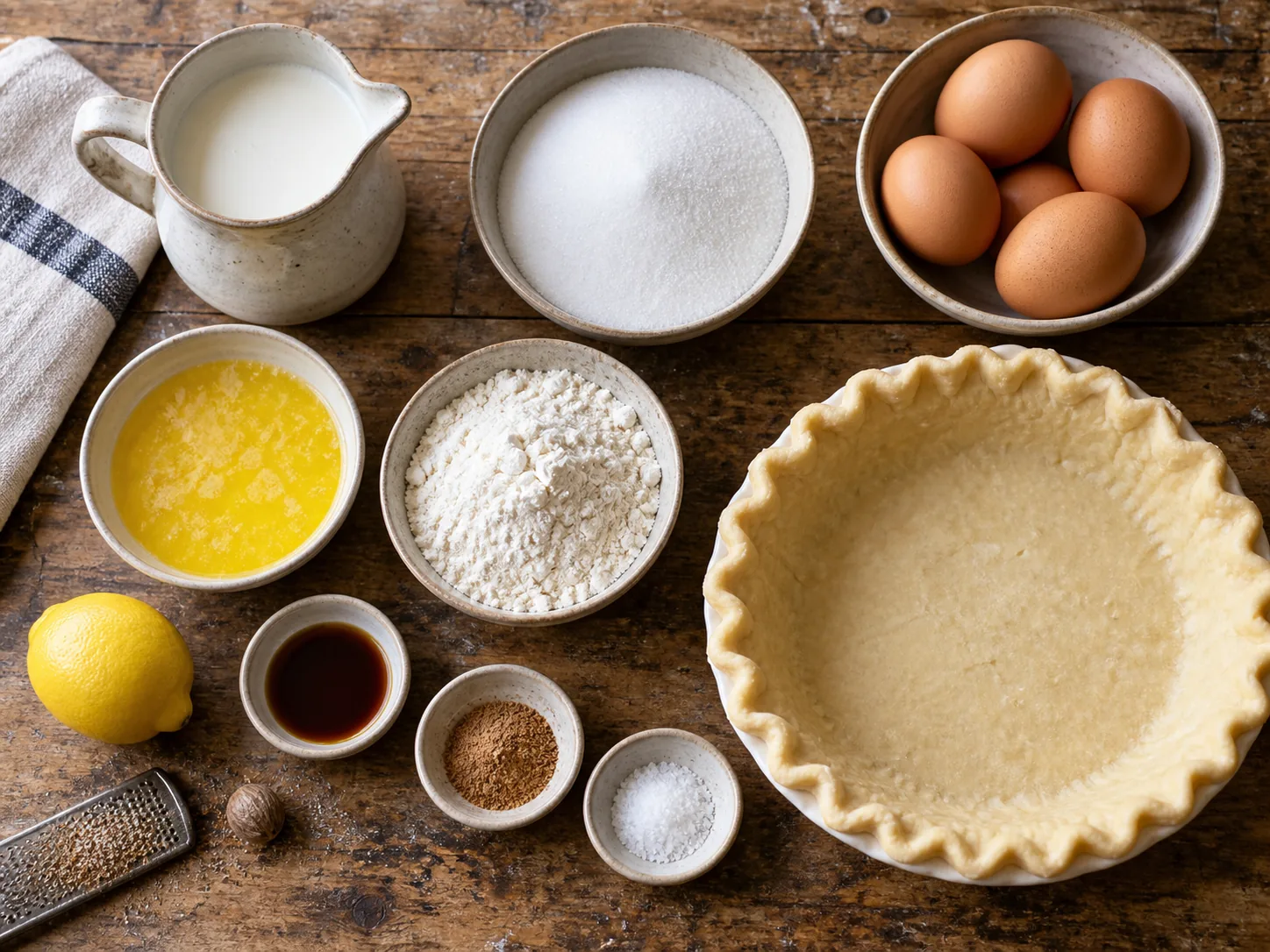
Ingredients
- 1 unbaked 9-inch pie crust
- 1 1/2 cups granulated sugar
- 1/2 cup unsalted butter, melted and cooled slightly
- 3 large eggs, at room temperature
- 1 cup cultured buttermilk, at room temperature
- 3 tablespoons all-purpose flour
- 1 teaspoon vanilla extract
- 1 teaspoon finely grated lemon zest
- 1/4 teaspoon freshly grated nutmeg
- 1/4 teaspoon kosher salt
Instructions
- Heat the oven to 350°F with a rack in the lower third. Place the chilled pie shell on a rimmed baking sheet.
- Whisk sugar and flour in a large bowl until no flour lumps remain. Whisk in the eggs one at a time.
- Add the cooled melted butter, vanilla, lemon zest, nutmeg, and salt. Whisk gently until smooth.
- Slowly whisk in the buttermilk without creating excess foam. Skim off large bubbles, then pour into the crust.
- Bake 45 to 55 minutes. Shield the crust edge if needed. The edges should be set and the center should retain a soft, unified wobble.
- Transfer the pie to a rack and cool completely for at least 2 hours before slicing. Serve at room temperature or chilled.
Calculate
Calculate
Calculate
Calculate
Nutrition values should be calculated from the final tested recipe quantities before publication.