A Table Full of Food
A generous meal is not measured only by how many dishes fit on the table. Its real abundance appears when plates are filled, people settle in and nobody feels the need to hurry away.
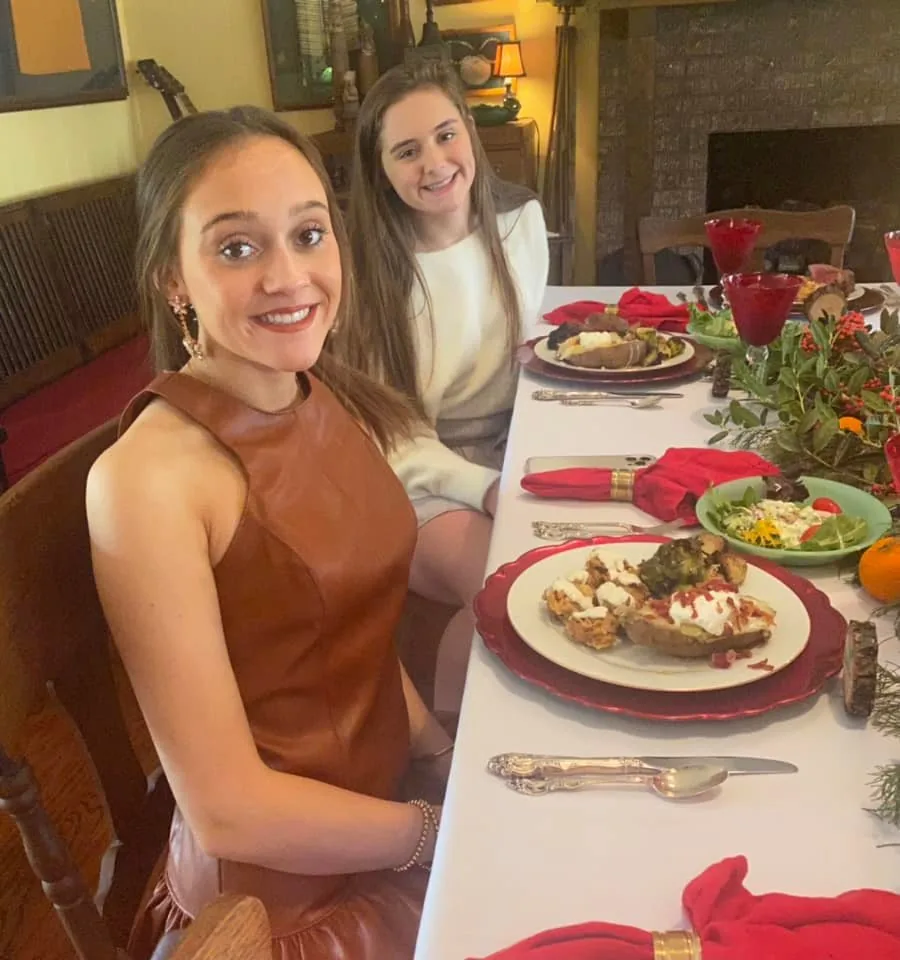
The table after serving begins
The opening photograph shows a long table at the happy point between presentation and appetite. Two young women smile toward the camera while full plates wait in front of them. Red chargers, folded napkins and deep red glasses repeat along the white cloth. Greenery, berries and small orange fruit run through the center, creating a seasonal path between the place settings.
The plates themselves carry variety. A baked potato is opened and generously topped. Several vegetables and savory portions sit nearby, each occupying its own patch of color and texture. Farther down the table, another plate holds a different combination. The meal looks coordinated without making every serving identical.
This is what a table full of food looks like in use. The centerpiece remains attractive, but it no longer demands attention. The food has reached the plates, serving has begun and the purpose of all the earlier preparation is finally visible. A decorated table becomes hospitable only when people are comfortable eating at it.
Abundance comes from contrast
A satisfying shared meal often feels plentiful because the dishes answer one another. Something rich is balanced by something fresh. A soft casserole sits beside a crisp vegetable. A salty main dish makes a sweet or tangy side more noticeable. Warm bread offers a familiar pause between stronger flavors.
Color performs the same work visually. Green vegetables, golden toppings, pale potatoes and darker roasted foods make the plate readable before the first bite. The cook does not need a restaurant-style arrangement; the natural differences among well-chosen dishes create their own appeal.
This balance also gives guests freedom. One person may build a plate around vegetables, another prefers the main dish and someone else leaves room for bread. Family-style food welcomes those differences because abundance is offered as choice rather than obligation.

When the meal stops posing
The second photograph turns toward another seat. A young man looks down at his plate as he eats, no longer performing for the camera. Tall candles burn beside him, and the greenery now appears close enough to touch. A small bowl of pale sauce and a red glass wait near the plate. The room beyond is softly lit and comfortably full of furniture.
This image completes the story because food is meant to move. The carefully arranged plate changes with every bite. Napkins unfold, glasses empty and conversations begin to overlap. The beauty of a shared meal is not its untouched condition, but its gradual transformation.
A candid eating photograph also returns attention to experience. We can imagine the contrast between crisp and tender textures or the warmth rising from the plate, though we should not invent exact recipes the image cannot confirm. What we can see is concentration—the quiet moment when a guest meets the work that happened in the kitchen.
Many dishes require a plan
A full table can look effortless after everyone sits down, but its timing is a practical puzzle. Ovens have limited space. Some dishes need to be served immediately, while others improve after resting. Vegetables finish quickly; large mains may require hours. The cook succeeds by arranging the work rather than attempting everything at once.
A useful menu begins with dependable anchors. Choose one or two dishes that need close attention near serving time, then surround them with foods that can wait. Cold sides, make-ahead desserts and breads that reheat well protect the final hour from becoming crowded.
Serving pieces should be chosen before the cooking reaches its busiest stage. A bowl that fits the vegetables, a platter large enough for the main dish and spoons that actually reach the bottom prevent small delays. These details are invisible in the final photograph, but they help the table feel calm.
The cook should have a place too
Hospitality loses something when the person who prepared the meal remains standing through all of it. A well-planned table leaves the cook a chair, a plate and permission to stop. Guests can pass bowls, refill glasses and help bring the last items from the kitchen.
Sharing the work after serving is part of receiving hospitality graciously. It acknowledges that generosity required effort. A guest who notices what is needed allows the cook to hear the stories, enjoy the food and become part of the memory rather than merely its unseen organizer.
Why the table changes conversation
Sitting around food gives conversation a natural pace. Questions can pause while a dish is passed. Silence feels comfortable when everyone is tasting. A new topic begins when someone compliments a recipe or asks how it was made.
The table also creates a shared center. People who arrived from different routines now look toward the same dishes and participate in the same small actions. They reach, offer, divide and make room. These gestures establish cooperation before anyone names it.
Younger guests learn by watching. They see that the last roll is offered before it is taken, that serving bowls continue around the table and that gratitude belongs to both the cook and the person washing dishes afterward. Manners become meaningful when understood as attention to other people.
Leave room for seconds and stories
A table full of food should not create pressure to overload the first plate. Part of its pleasure is knowing that more is available. Guests can begin with smaller portions, discover a favorite and return. The meal unfolds instead of becoming a single hurried decision.
Seconds also extend conversation. Someone stands, asks whether anybody else wants more and brings a bowl back within reach. Dessert may wait until plates are cleared and coffee appears. Time becomes one of the meal’s offerings.
This slower rhythm is especially valuable during a family gathering. People need enough time to move beyond updates and into real stories. A generous table makes that possible by giving everyone a reason to stay seated together.
The evidence of a successful meal
At the beginning, abundance appears as full plates, bright glasses and an orderly centerpiece. By the end, it looks different: serving dishes partly empty, crumbs on the cloth and chairs turned slightly toward the most interesting conversation.
That disorder is not a failure of presentation. It is evidence that the food was welcomed. Every changed plate represents a choice made, a flavor enjoyed or a dish someone wants to remember.
The two photographs preserve both the visual promise and the lived experience of the table. One invites us to notice variety, color and preparation. The other reminds us that a meal reaches completion only when someone takes a bite. A table is truly full when it holds not just food, but attention, appetite and enough time to share both.