Old Photographs, New Memories
An old photograph does not stay still. Each time it is opened, shared or placed beside a newer image, another person notices a detail—and the past begins a fresh conversation with the present.
A newspaper clipping that survived
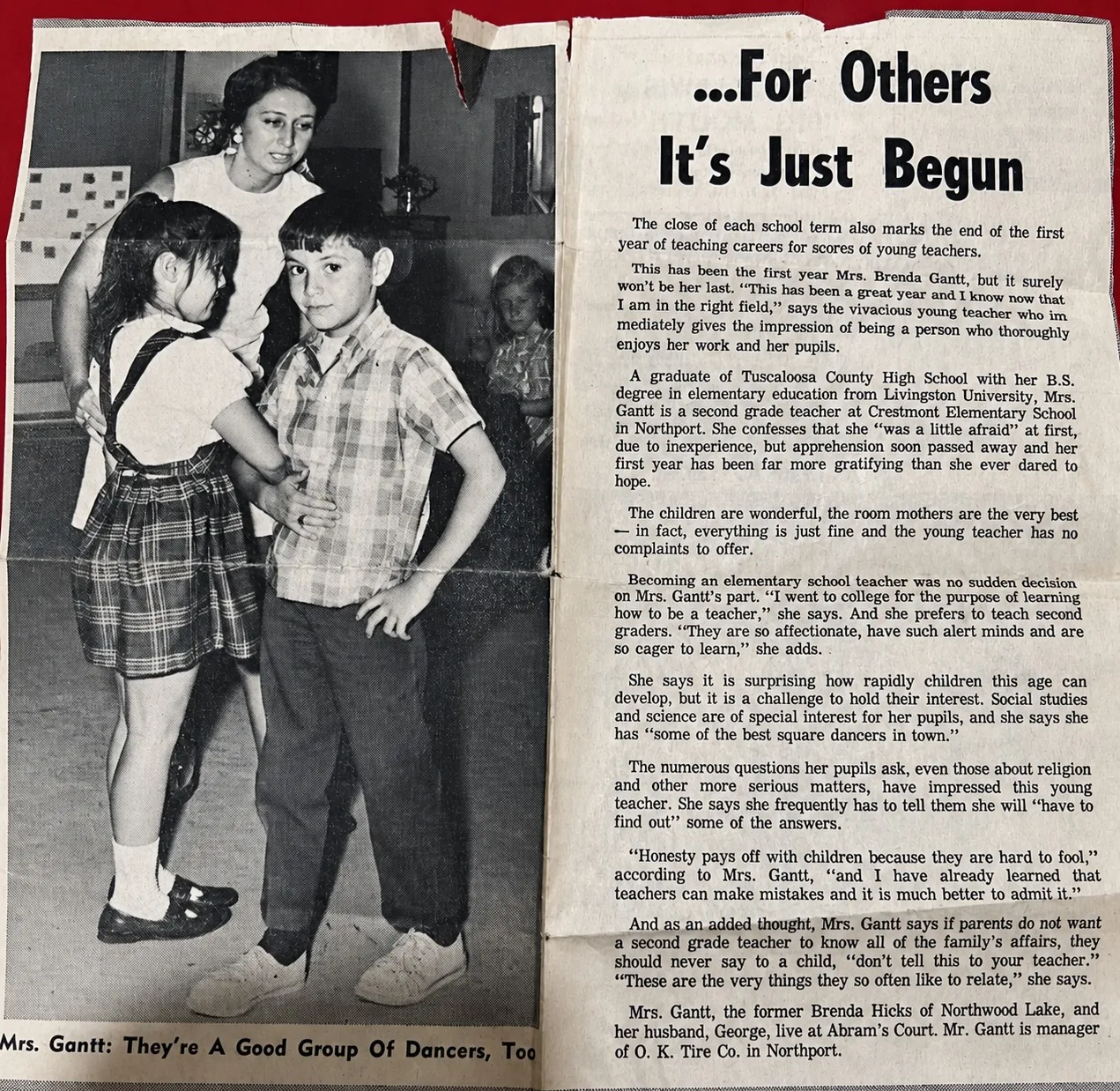
The first object is more than a photograph. It is a full newspaper clipping, creased, torn at the top and softened by age. On the left, a young Brenda stands with elementary-school children during a classroom activity. On the right, columns of type describe the beginning of her teaching career. The paper’s wear tells us that someone considered it worth folding, storing and carrying forward.
The visible article identifies Brenda as a second-grade teacher and describes her early experience in the classroom. It presents a young educator discovering both the rewards and the uncertainties of her work. The language belongs to its period, but the central impression feels current: she values children’s curiosity, admits that a teacher keeps learning and approaches the classroom with energy.
This artifact adds something a portrait alone could not. It places a face inside a vocation. Before later audiences knew Brenda through a kitchen, the clipping recorded her among pupils, responding to questions and building the patient confidence required to teach. The setting differs, but the habit of explaining a process clearly has a recognizable connection to the instructional warmth found in cooking.
Why the damaged edges matter
Digital images arrive clean and endlessly repeatable. A clipping carries evidence of its physical journey. The central fold suggests storage in a drawer or album. Small tears show where the paper weakened. Changes in tone mark years of light, air and handling. These imperfections are not distractions from the history; they are part of it.
Someone had to decide not to discard this page. Perhaps it was moved from one envelope to another or brought out when a story was told. We cannot know its complete path from the image alone, but its survival reveals an act of preservation. Memory often depends on such ordinary decisions.
Today the clipping can be photographed and shared without further handling. The digital copy does not replace the original texture, but it gives more people a chance to read and study it. Preservation creates a bridge: the fragile object stays protected while its story continues traveling.
A bridal portrait made for remembering
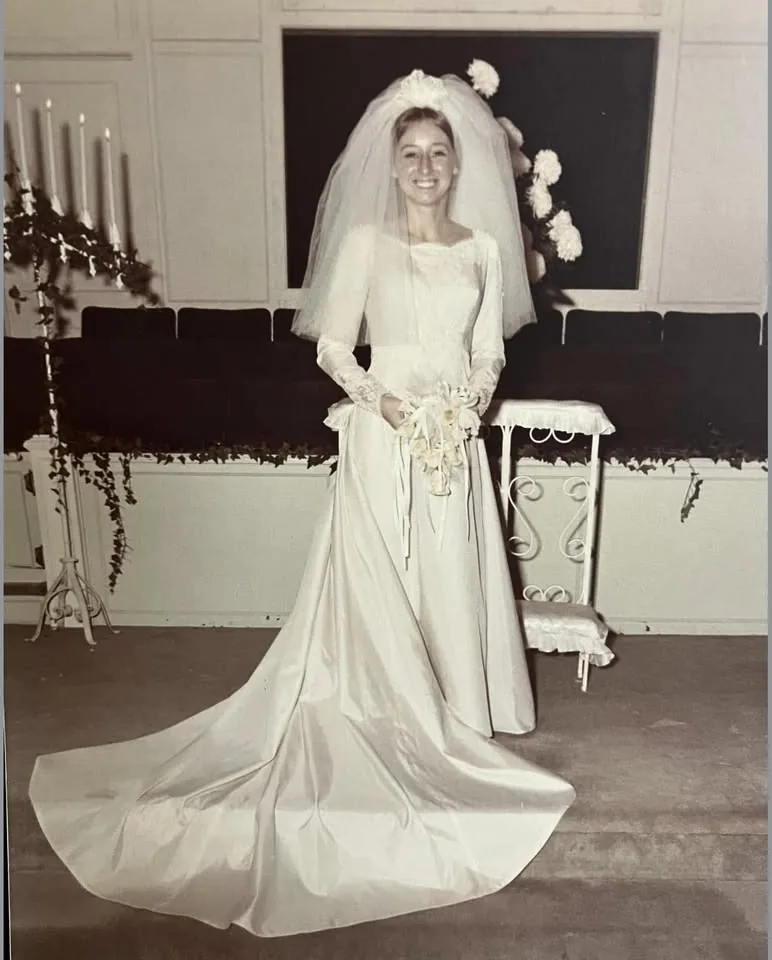
The second photograph shifts from public record to personal milestone. Brenda stands alone in a long wedding gown, holding flowers at her waist. The veil rises softly around her hair, and the train spreads toward the camera across the floor. Candles, greenery and simple furnishings establish a ceremonial setting without pulling attention from the bride.
Unlike a candid snapshot, a bridal portrait is intentionally made for the future. The pose slows the day and gives fabric, flowers and expression a chance to be remembered clearly. At the time, the photograph may have documented a beautiful dress. Decades later, it also preserves posture, youth and the atmosphere of expectation before a new household begins.
A picture like this often becomes connected to family objects outside the frame. A relative may remember the texture of the gown, the meal served afterward or where a copy of the portrait hung. One visible image can unlock a network of sensory memories carried by different people.
Friendship made visible across time
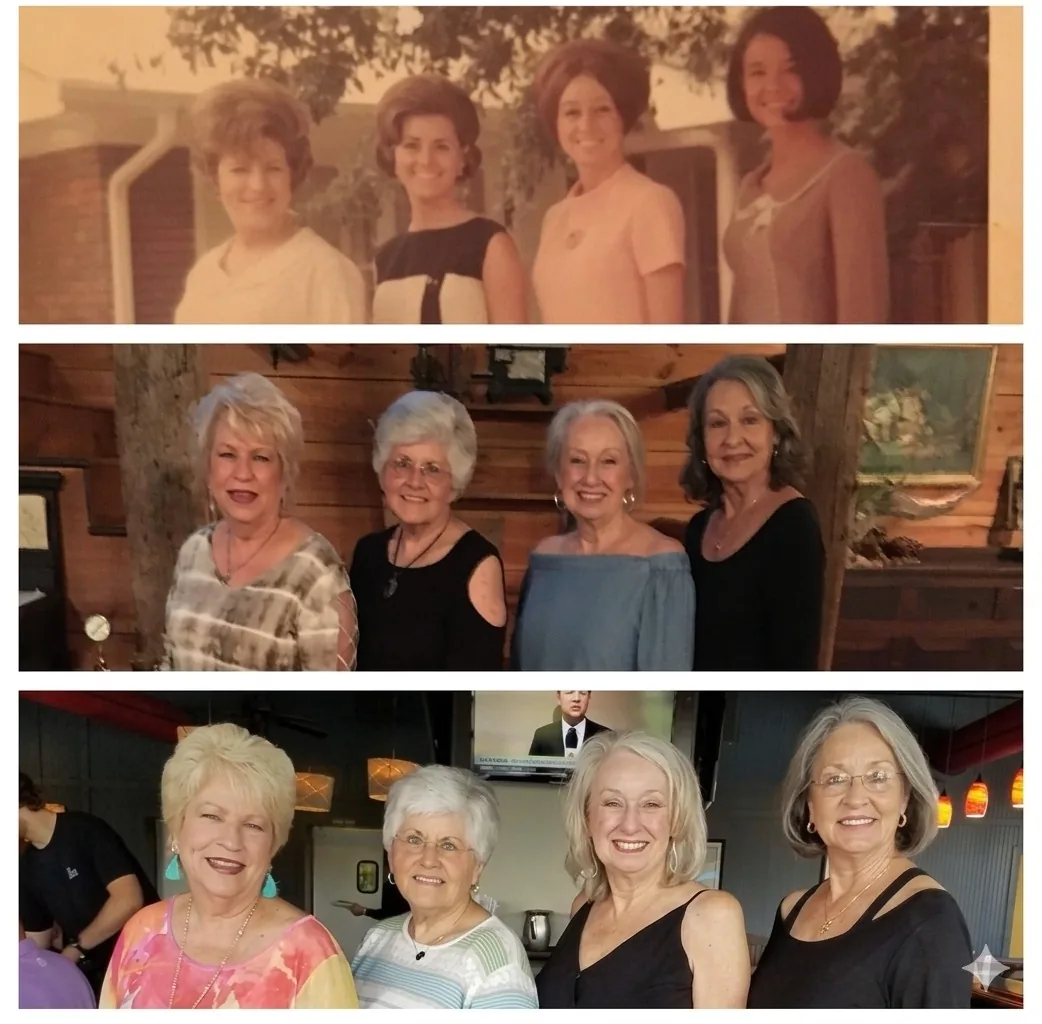
The final image is itself a small archive. Three photographs are stacked into a collage, and the same four women appear in each. At the top, they stand outdoors as young women with hairstyles and clothing that immediately signal an earlier era. In the middle and lower frames, they gather again many years later, still arranged side by side and smiling toward the camera.
This collage makes time visible without turning age into loss. Faces mature, hair changes and settings move from outdoors to warm interiors, but the group remains intact. The repeated arrangement creates its own rhythm: here we were, here we are, and here we are again.
The most moving detail may be the decision to keep taking the photograph. Friendship across decades depends on effort—calls made, visits planned and changes accepted. Each later image implies many unphotographed years during which four separate lives continued. Gathering again allows those lives to touch the same frame.
Old photographs need careful captions
An archive becomes more valuable when the known facts are recorded and uncertainty is respected. Names, approximate dates, locations and occasions should be added only when a reliable source confirms them. A confident but invented caption can travel farther than the correction that follows it.
Useful description begins with what can be seen: clothing, setting, number of people, objects and photographic style. Documents visible in the image, such as the newspaper clipping, may provide additional context. Family members can also contribute memories, but those recollections should be identified as recollections rather than presented as unquestionable records.
This care does not make a story cold. On the contrary, honest limits protect the people inside the images. Readers can still respond to affection, pride, work and continuity without being given a fictional private history.
What food adds to family memory
None of these three images centers on a finished dish, yet each belongs naturally beside a collection of recipes. Teaching, marriage and long friendship all create occasions for food to move between people. Classroom celebrations, wedding tables, reunions and ordinary visits develop their own menus and remembered flavors.
Recipes often function like photographs. They preserve a method from an earlier time, but each new cook activates it in the present. A handwritten card may carry stains instead of creases. A familiar cake may bring back a room more quickly than a written description. Both food and photography store memory through material details.
When an old photograph is placed beside a family recipe, each gives the other context. The recipe suggests what may have been served through the years; the photograph reminds us who was doing the serving, learning and gathering.
Preserving an archive for the next reader
Physical photographs benefit from simple care: clean hands, archival sleeves, a dry location and protection from direct sunlight. Digital copies should keep the highest available resolution and meaningful filenames. Notes about the source and permission to publish are as important as visual quality.
Most of all, preservation should include conversation. Show the image to people who may recognize a face or place. Record what they know while making clear where memories differ. A photograph kept silently can survive, but a photograph discussed becomes connected to living knowledge.
The newspaper, bridal portrait and friendship collage each hold a different kind of time: a public beginning, a personal threshold and a relationship renewed across decades. Together they show why an archive is never merely old. When handled with curiosity and care, it continues making new memories for everyone who opens it.