A Morning in the Garden
The garden asks for attention in small portions: one branch clipped, one change noticed, one basket carried home. A quiet morning outdoors can be useful without ever feeling hurried.
Begin by noticing what changed
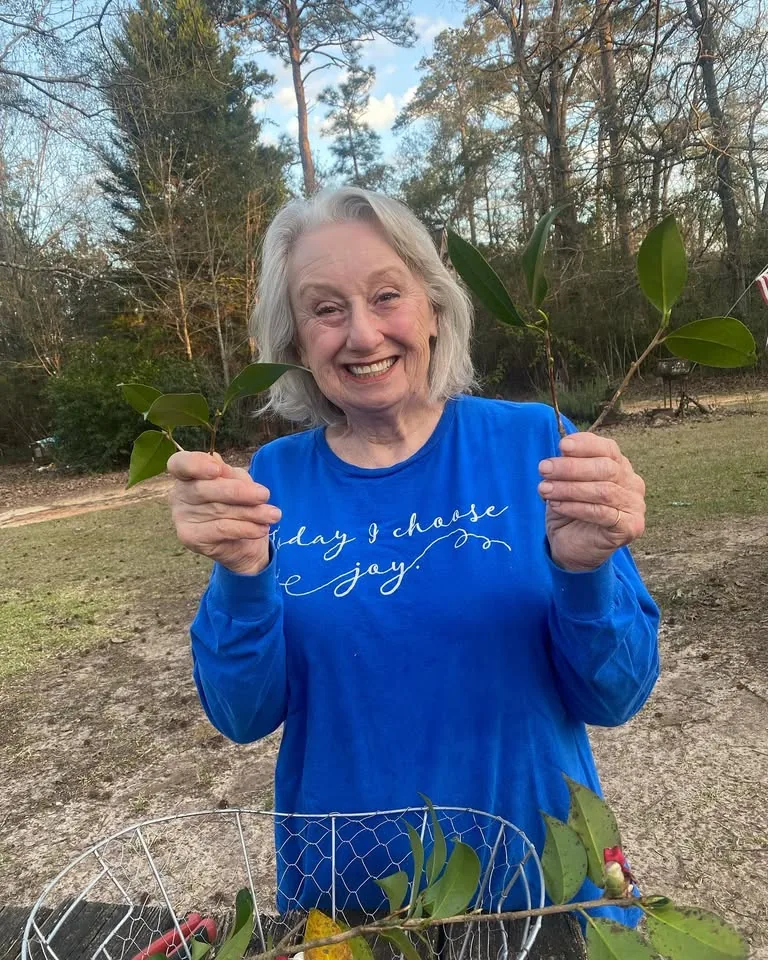
The first photograph places Brenda directly in the yard beneath tall trees and a clear blue sky. She wears a bright blue shirt with a cheerful message across the front and holds up two leafy cuttings. A wire basket rests below her hands, already carrying branches and splashes of color. Her smile turns a modest garden task into a small morning victory.
Gardening begins with observation long before any tool is lifted. A person who walks the same ground regularly learns its quiet signals: a bud that opened overnight, a stem bent after wind, new growth reaching toward the light or a patch of soil drying sooner than the rest. The changes are rarely dramatic, but together they determine what needs doing.
Morning is a generous time for this work. The air is cooler, shadows reveal texture and the day has not yet become crowded with other demands. A short walk can become both inspection and welcome—a way of asking the garden what happened while the household slept.
Small tools, deliberate choices
A basket and hand pruners are simple equipment, yet they encourage thoughtful work. The basket limits how much can be gathered at once. The pruners ask the gardener to choose the exact place to cut. Neither tool rewards haste.
Pruning is an act of removal performed for the sake of future growth, shape or usefulness. That makes it different from simply taking whatever looks attractive. A careful gardener looks at the whole plant, considers which branch is crowded or damaged and leaves enough healthy growth for the next season.
The same attention applies when gathering flowers for the house. A few blooms can brighten a kitchen table without stripping the shrub of all its color. The goal is not conquest. It is a continuing exchange: tend the plant, enjoy what it offers and leave it able to flourish.
Rest is part of the work
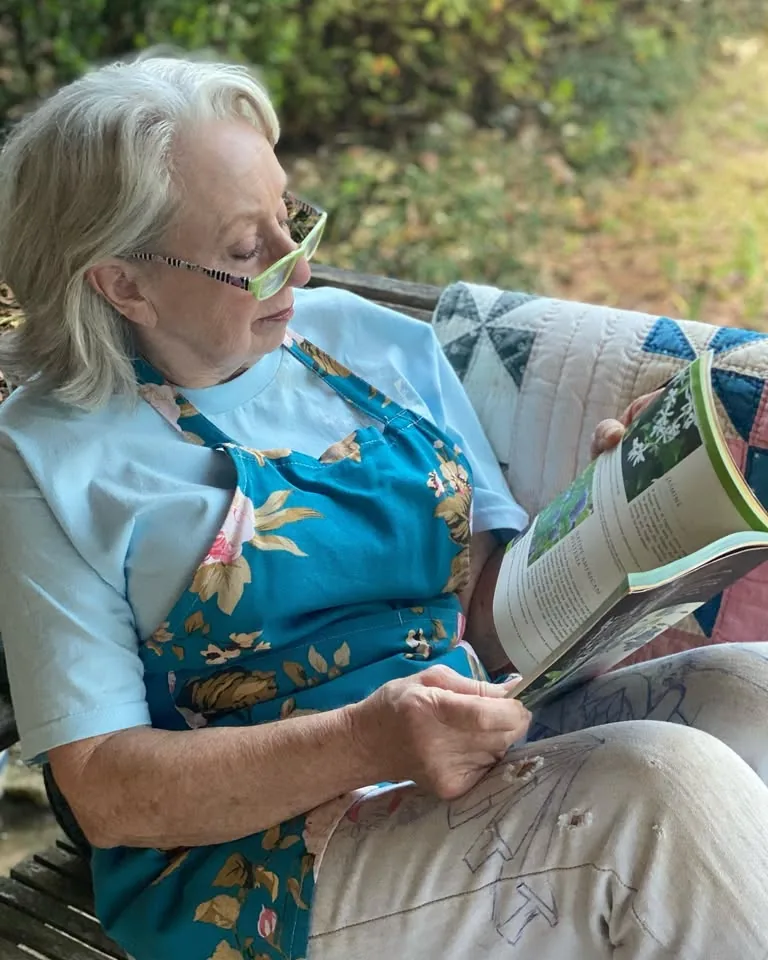
The next image slows the morning. Brenda sits outdoors in a floral apron, reading a garden publication through bright glasses. A pieced quilt rests behind her, softening the seat and adding a handmade pattern to the green background. Her work clothes remain on, but the tool in her hands is now information.
This photograph offers an honest view of gardening: knowledge matters as much as energy. Plants do not respond to determination alone. They have particular needs for light, water, soil and timing. When something fails to bloom or begins to struggle, the useful response is often to sit down, look closely and learn.
A pause also gives the body time to catch up. Garden work uses the back, hands and knees in ways that are easy to ignore while a task feels urgent. Ten quiet minutes in the shade can protect the pleasure of the whole morning. Rest is not the opposite of productivity; it helps make steady work possible.
A garden is a lifelong classroom
Experience teaches patterns, but no two growing seasons are identical. Rain arrives differently. Temperatures shift. A plant that thrived last year may respond poorly to a new location, while a volunteer seedling appears where nobody planned it. The garden keeps even confident people curious.
Reading, asking questions and comparing observations are natural extensions of hands-on work. Printed guidance may explain a technique, but the gardener still tests it against local soil and weather. Knowledge becomes practical only after it passes through attention.
This rhythm resembles cooking. A recipe provides direction, while experience interprets what is happening in the bowl or pan. The written word and the practiced hand support one another. In both garden and kitchen, learning continues because ingredients are alive with variation.
Carrying the morning toward home
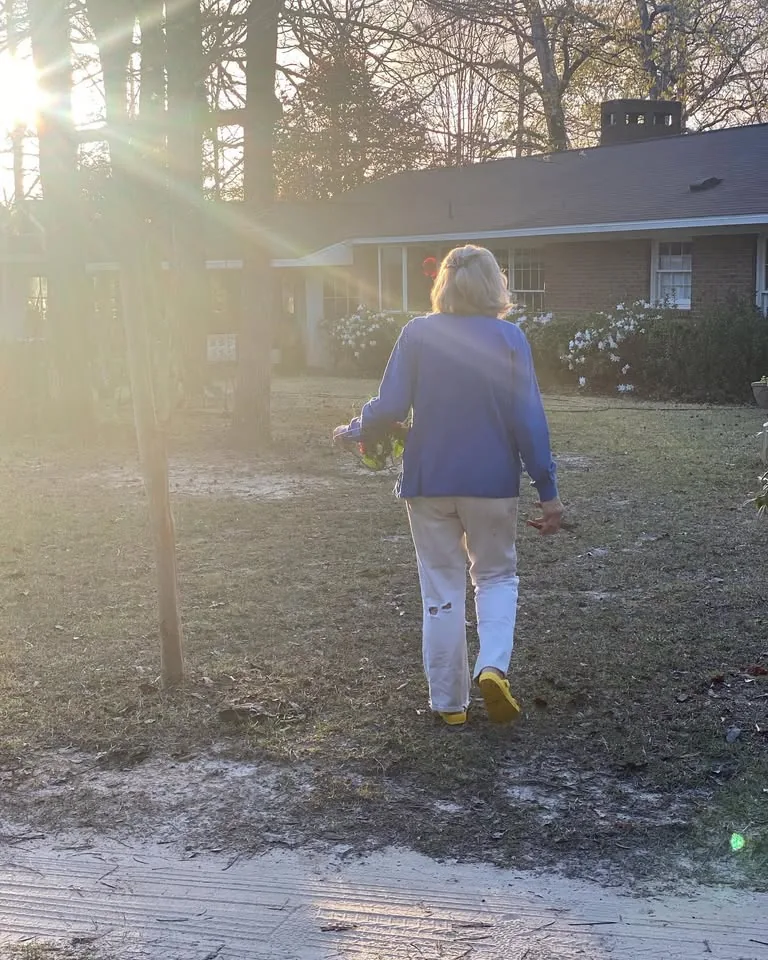
The final photograph is taken from behind as Brenda crosses the yard. Low sunlight streams through the trees, turning the air golden and casting long shadows across the ground. She carries the wire basket in one hand and walks toward a brick house edged with blooming shrubs.
This image gives the story a natural ending. The garden work does not remain separate from domestic life. What has been gathered travels back toward the rooms where the rest of the day will unfold. Flowers may find water and a place on the table. Useful cuttings may be sorted. Gloves and tools will be set down until another walk calls for them.
The view from behind makes the moment feel unperformed. Brenda is no longer presenting the morning’s work to the camera. She is simply carrying it home. That quiet transition captures the relationship between yard and household better than an elaborate posed photograph could.
The pleasure of a repeatable routine
A satisfying garden morning does not need a dramatic harvest. Its reward may be a cleared path, a basket of flowers or the discovery that a plant is recovering. Because the tasks are modest, they can be repeated. Tomorrow will offer another branch, another weed and another reason to look closely.
Repetition creates familiarity, and familiarity creates stewardship. The gardener begins to know not only the plants, but the movement of shade, the places water gathers and the order in which blossoms tend to arrive. The yard becomes less like scenery and more like a community of living things under care.
What the garden brings to the kitchen
Even when the basket contains flowers rather than vegetables, garden work shapes the kitchen. It teaches seasonality, patience and respect for what is available now. A cook who watches plants grow understands that freshness is not an abstract quality. It is the brief result of soil, weather, timing and labor meeting at the right moment.
Flowers on a table can nourish a gathering in their own way. They bring the outdoors inside, mark the season and remind everyone eating nearby that beauty can come from the same patch of ground that demands raking, pruning and patience.
By the time Brenda reaches the house in the last photograph, the morning has produced more than a basket. It has offered movement, study, sunlight and a small visible result. That is enough. A garden does not ask us to finish it; it asks us to return.