A Life Measured in Family Moments
Family history is rarely captured in one perfect portrait. It appears across years—in an unplanned selfie, a gathering dressed for an occasion, and a quiet chair crowded with children.
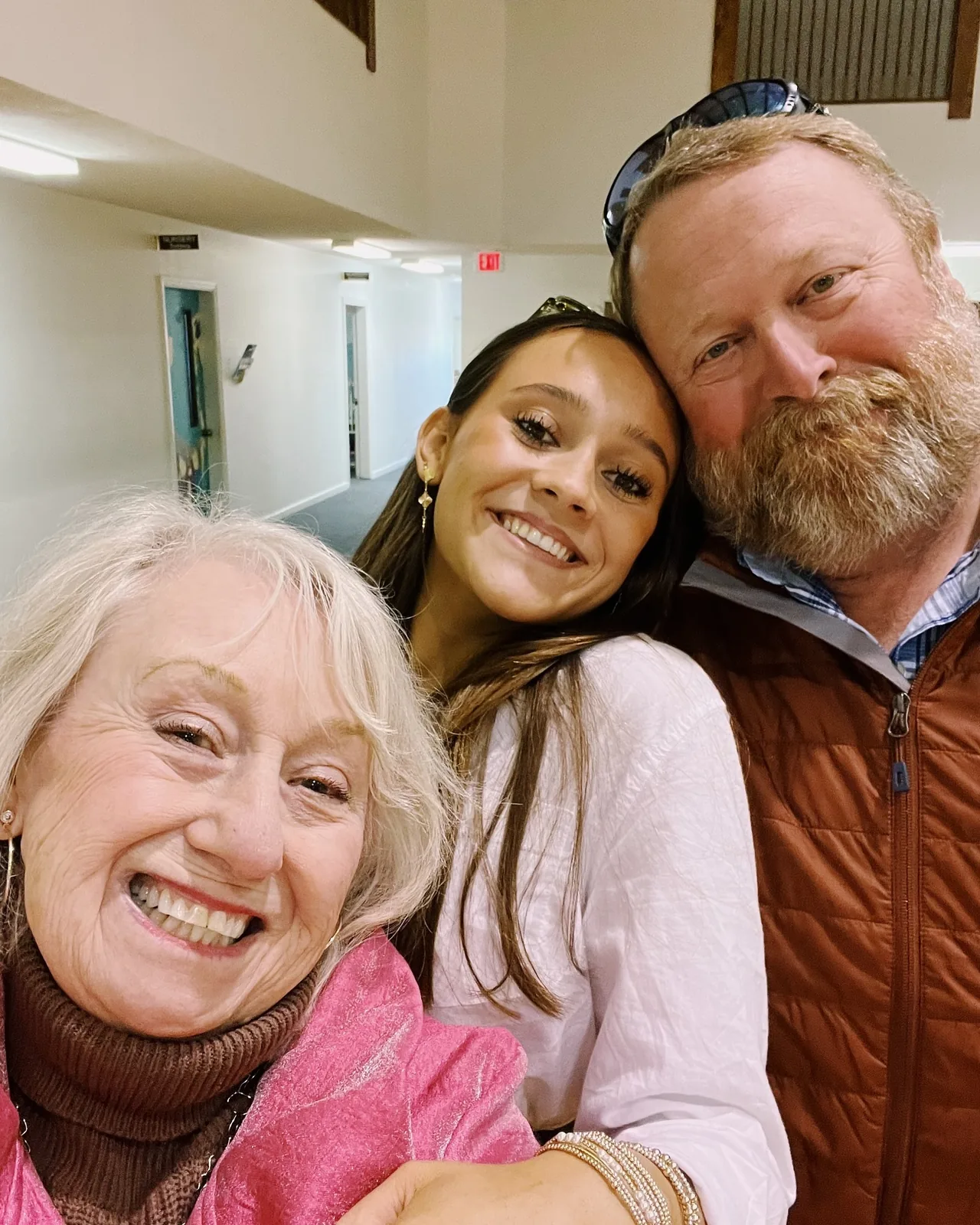
The closeness of an ordinary selfie
The opening image feels immediate because everyone leans into the same small frame. Brenda appears in front, smiling broadly, while two younger family members and a man gather behind her. The cropped edges and close faces are not flaws; they are evidence of people choosing closeness over formality.
A photograph like this preserves more than appearance. It keeps the feeling of being together in a particular place, with no elaborate arrangement required. Years later, the hallway and casual clothes may become as evocative as the faces. Ordinary backgrounds often hold the strongest memories because they resemble life as it was actually lived.
When a family pauses for a milestone

The second photograph changes the mood. Four people stand in a green garden, dressed for a special occasion. There is more distance between camera and subjects, more attention to posture and clothing, and a sense that someone deliberately asked the group to stop for a picture.
Milestone portraits mark graduations, weddings, birthdays, reunions, and other turning points, but their lasting value is often simpler: they show who stood together. We do not need to invent the exact event to understand what the image contributes. It records a family configuration that will continue changing.
The chair that holds several generations
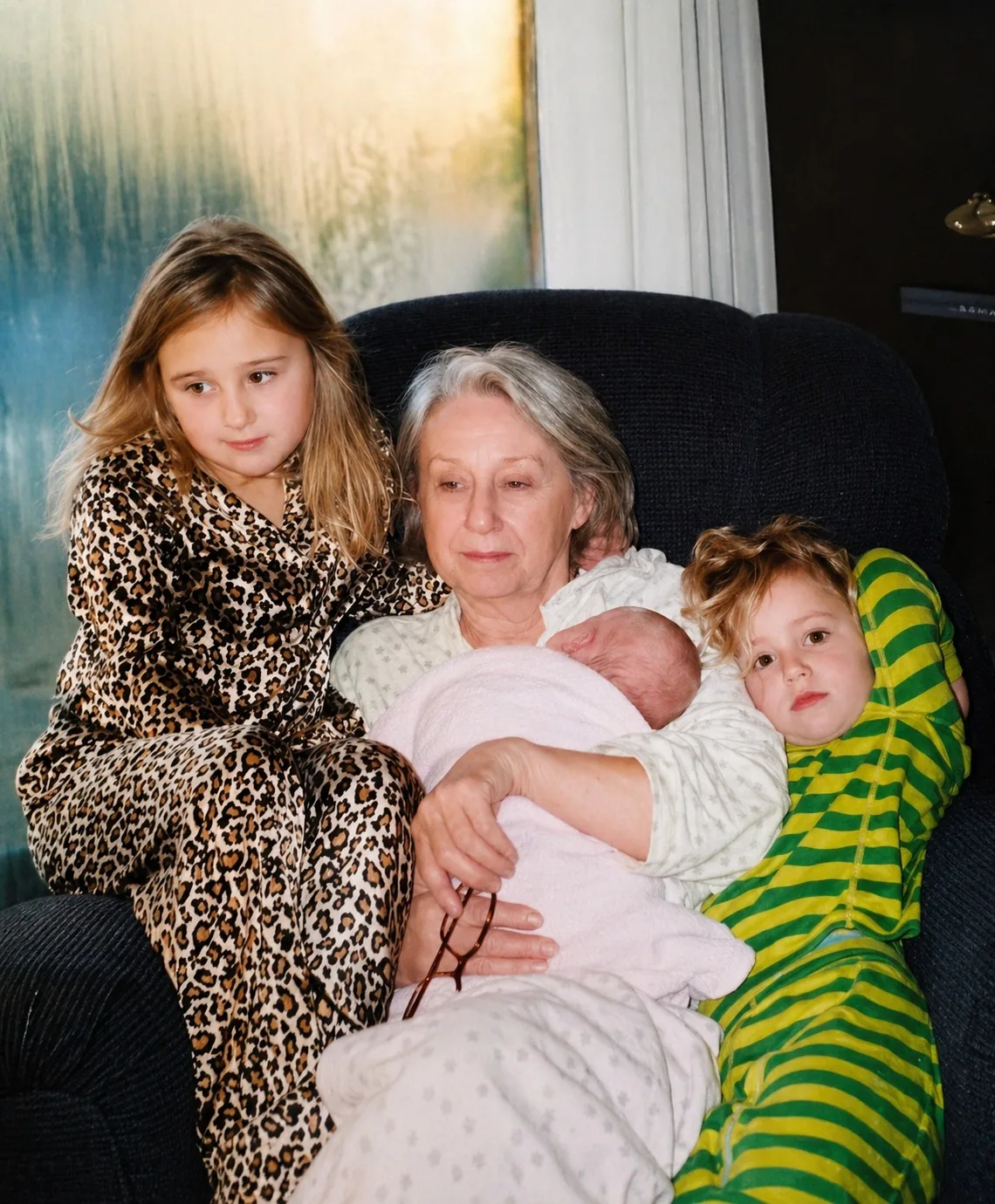
The final image is quieter and more intimate. A seated grandmother cradles a sleeping newborn while two children in bright patterned pajamas press close on either side. Their poses are not perfectly matched: one looks away, one looks toward the camera, and the baby sleeps through the moment. That unevenness gives the photograph life.
The chair becomes the center of the story. It is large enough for everyone to crowd onto, familiar enough for pajamas, and steady enough to hold several stages of childhood at once. A newborn introduces change, while the older children show the life already in motion around that arrival.
Why food belongs in a family photo story
None of these three frames needs to show a full dinner table to connect with a recipe site. Family food traditions are carried by the same relationships visible here. A dish is remembered because someone made it repeatedly, served it on certain days, or taught another person what the dough should feel like.
Recipes provide continuity while families change. Children grow, adults age, and gatherings take new shapes, yet familiar biscuits, pies, vegetables, or Sunday suppers can still create a recognizable thread. Cooking becomes a practical way of saying that earlier moments matter enough to repeat.
Three photographs, three kinds of memory
Together, the photographs now perform different jobs instead of repeating one scene. The selfie captures spontaneity. The garden portrait marks an occasion. The chair scene preserves domestic closeness and the arrival of a new generation. Their differences create movement through the story.
That sequence is also a useful way to organize a family archive. Choose images that add a new time, setting, relationship, or emotion rather than several nearly identical frames. Keep alternate versions safely stored, but select the strongest single image for a public story. A shorter, varied sequence usually holds attention better than a long run of duplicates.
What remains after the moment passes
Photographs cannot preserve every conversation or identify every feeling, and responsible storytelling should not pretend that they can. What they do preserve is visible closeness: shoulders touching, people leaning into a frame, a baby held securely, and a family willing to pause together.
Those details are enough to tell an honest and compelling story. A life is not measured only by grand events. It is also measured by who fit into the photograph, what changed by the next one, and which familiar meals brought everyone back together between the pictures.