A Kitchen Table Ready for Company
A welcoming table is never only a display of dishes. It is a promise that there is time to sit down, room to stay awhile and enough food for the conversation to continue.
When the guests have found their places
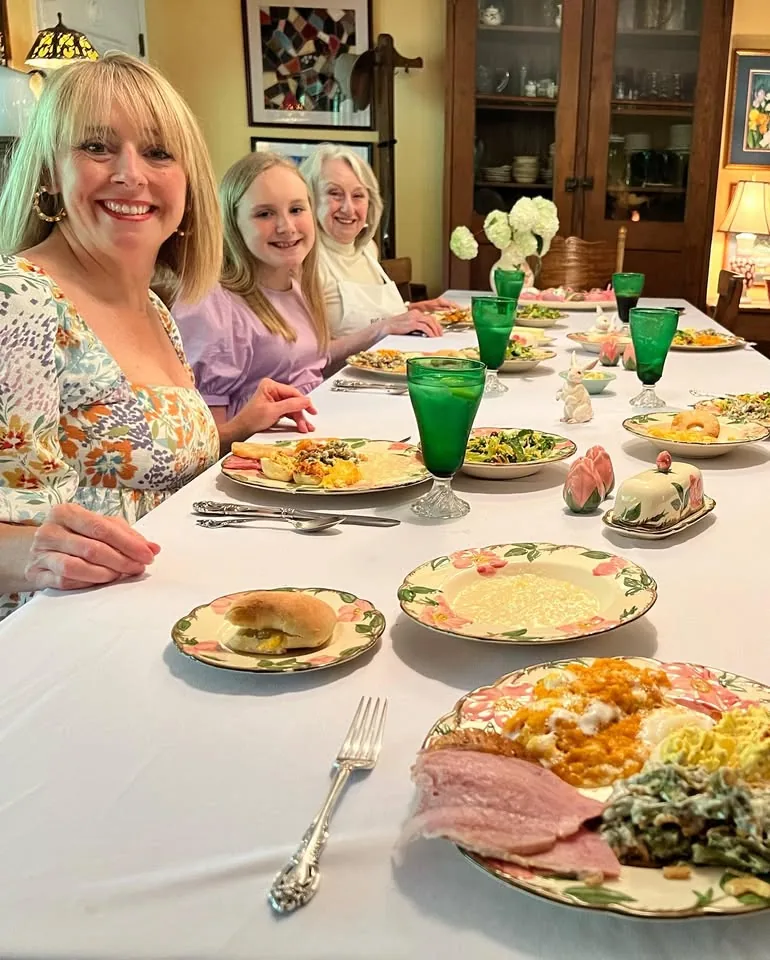
The opening photograph catches the satisfying moment when preparation becomes hospitality. Three generations sit along a long table while plates of food stretch toward the camera. Floral china, polished silverware and deep green glasses make the setting cheerful and traditional. Ham, vegetables, salads, bread and casseroles fill the foreground so generously that the image seems to invite the viewer to take the nearest empty chair.
The room itself adds to the feeling. Wooden cabinets hold familiar dishes, lamps cast a warm glow and flowers rise from the center of the white tablecloth. Nothing separates the meal from daily life. This is not a restaurant dining room designed to impress strangers; it is a home temporarily rearranged around the pleasure of having people together.
At the far end, Brenda’s apron remains visible. That small detail keeps the work of the kitchen inside the story. The cook has come to the table, but the practical rhythm of serving has not entirely ended. Someone may still remember a forgotten spoon, refill a glass or rise to bring in one last warm dish. A family meal is rarely motionless for long.
Hospitality begins before the doorbell
A table ready for company is built in stages. The work may begin days earlier with a menu written around what is in season, what can be made ahead and what particular guests enjoy. A dependable main dish anchors the plan. Vegetables, bread and something sweet are chosen not only for flavor, but for the way they share oven space and serving time.
Good hosts understand that timing matters most where it protects the gathering. A dessert finished the night before leaves more attention for the main meal. A cold side can wait in the refrigerator. A casserole can rest briefly without complaint. The goal is not to prove that every dish is difficult. It is to create a meal that allows the cook to join the people who came to eat it.
Then come the quiet practical details: counting chairs, finding serving utensils, filling water glasses and clearing one more stretch of counter. These actions are easy to overlook once the room is full, yet they are the foundation beneath the effortless welcome guests experience.
The table before the room becomes lively
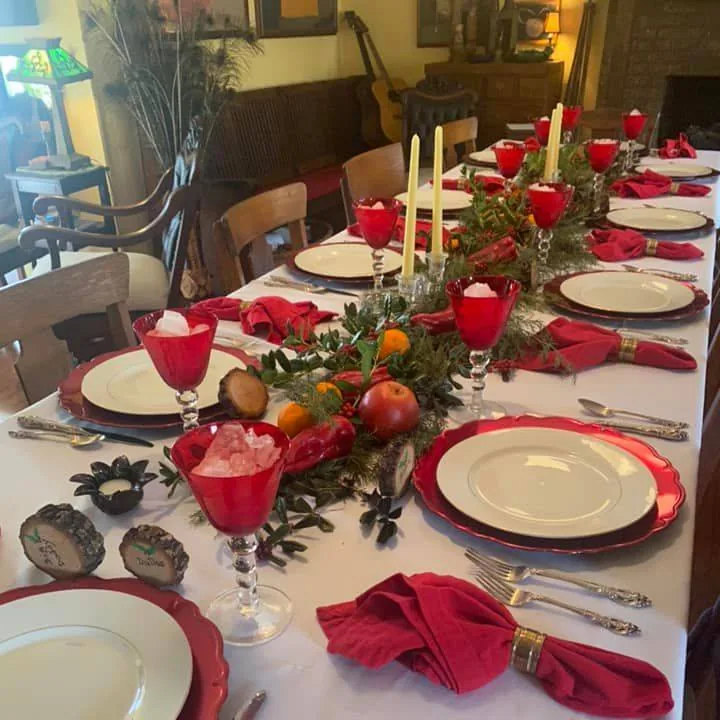
The second photograph shows the scene at an earlier point. No guests have taken their seats, and the plates are still empty. Red goblets and folded napkins repeat along both sides of the white cloth. Tall candles draw the eye down the center, where clipped greenery, fruit and seasonal color create a low, natural arrangement.
This is the table’s moment of anticipation. The chairs wait at slightly different angles, suggesting that the room still belongs to ordinary life. A guitar, lamps, cabinets and familiar furniture remain in view. Instead of hiding the home behind decoration, the setting lets celebration settle comfortably inside it.
The centerpiece is especially instructive because it feels gathered rather than purchased as a complete display. Branches, evergreen textures and pieces of fruit create abundance through repetition. A host can make a table memorable without crowding it with objects that prevent people from seeing one another. Beauty serves the gathering when it leaves room for conversation and passing dishes.
Setting a table people can actually use
An inviting table needs to work after the photograph is taken. Guests should be able to reach a glass without disturbing a decoration. Serving bowls need landing places. Candles should add warmth without blocking faces. Napkins must be ready for real spills, and chairs need enough space for people to sit comfortably.
These practical choices do not diminish beauty; they make beauty generous. The finest table is not the one everyone is afraid to touch. It is the one that becomes more alive as plates are filled, bread is passed and the centerpiece shifts slightly to make room for another bowl.
Mixing everyday pieces with special ones can make the setting more personal. A familiar floral plate, inherited serving dish or set of colored glasses carries its own history. When used instead of merely stored, such objects become part of new memories while honoring the meals that came before.
A generous menu has rhythm
The full table in the opening photograph demonstrates how a shared meal benefits from variety. A rich main dish feels more satisfying beside vegetables with different colors and textures. Bread makes the meal feel complete. A cool salad or tangy side brings contrast. Dessert waits as a gentle reason not to rush away.
Generosity, however, does not require cooking every possible recipe. It comes from understanding the group. A few well-chosen dishes served in ample portions can feel more welcoming than an exhausting menu. When guests recognize something familiar, they relax. When one dish offers a small surprise, conversation begins.
Family-style service strengthens that rhythm. Bowls and platters travel from hand to hand, giving everyone small opportunities to pay attention: offering the potatoes, holding a plate, noticing that someone needs more tea. The meal becomes cooperative instead of merely consumed.
Leave space for the unplanned part
No gathering follows the schedule exactly. Someone arrives late. A child changes seats. One dish cooks faster than expected while another needs ten more minutes. The best hospitality can bend around these interruptions. A small appetizer, a pitcher on the table or a story told in the kitchen keeps delay from feeling like failure.
Often the unplanned moments are the ones people remember. Guests offer to help and begin talking beside the sink. Someone asks for a recipe. An extra place is set for a person who was not certain she could come. The meal’s imperfections become evidence that real people were welcomed into a real home.
What remains after the table is cleared
At the end of the evening, the beautiful arrangement will have changed completely. Glasses move, napkins unfold, serving dishes empty and crumbs collect where bread was passed. That transformation is not a loss of the table’s beauty. It is proof that the welcome worked.
The photograph of the untouched setting preserves care and anticipation. The photograph of people beside the abundant meal preserves the result. Together they tell the whole hospitality story: prepare thoughtfully, serve generously and then let the table belong to the people around it.
A kitchen table becomes memorable not because every place setting was flawless, but because someone left it feeling nourished and included. Long after the dishes are washed and the chairs returned, that feeling is what makes guests want to come back.