Food as a Gift
A homemade dish carries more than ingredients. It carries the time it took to prepare, the memory of who enjoys it and a simple message that rarely needs explaining: I thought of you.
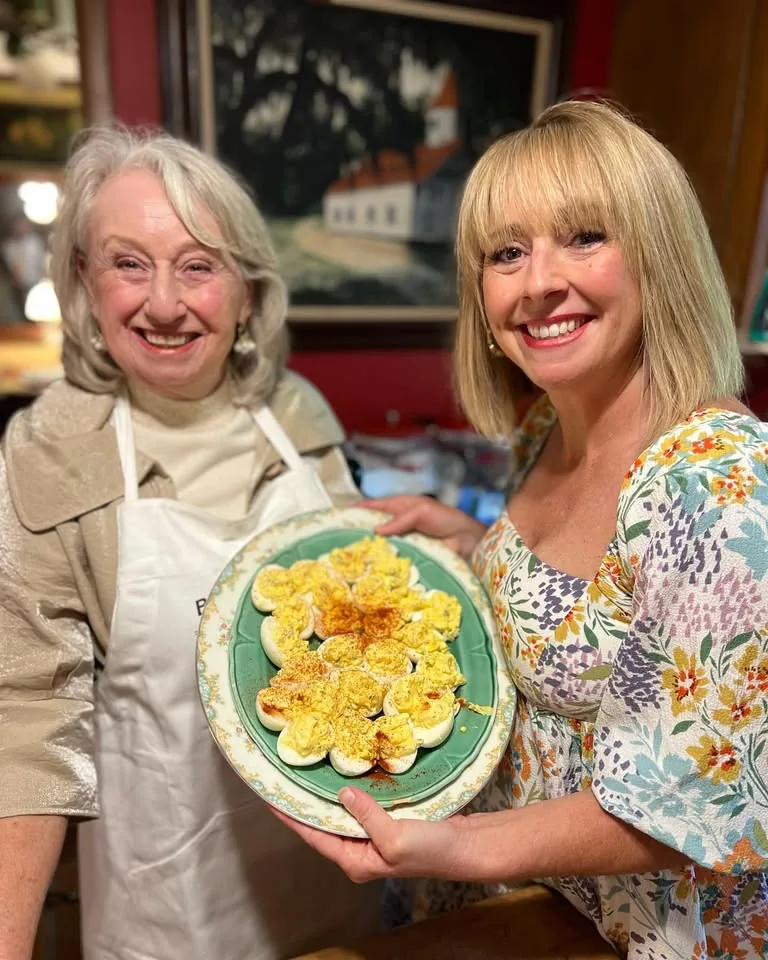
A platter offered with both hands
The photograph is cheerful before we even study the food. Two women stand close in a warm kitchen, smiling as they hold a large floral platter toward the camera. Neat rows of deviled eggs fill the center, their yellow tops finished with a dusting of red seasoning. The plate is generous without being fussy, familiar without looking ordinary.
That is the special beauty of food made to share. It does not have to arrive in an expensive box or wear a perfect ribbon. The gift is already visible in the repetition: eggs boiled, cooled and peeled; yolks mixed into a creamy filling; each white half filled and arranged; the platter chosen because it is large enough and pretty enough for company. Every small step says that someone was worth the trouble.
The hands beneath the plate matter as much as the food. They turn a recipe into an offering. Instead of leaving the dish alone on a counter, the photograph preserves the people who brought it to the table. Their smiles complete the presentation and remind us that hospitality is not performance. It is pleasure shared between the cook, the helper and the guests waiting nearby.
The quiet language of homemade food
There are moments when the right words are hard to find. A neighbor is settling into a new home. A family has had a difficult week. Someone is celebrating good news, recovering from illness or welcoming relatives from far away. In those moments, a prepared dish gives concern a useful form. It can be carried, reheated, placed on a table and enjoyed when the household is ready.
A food gift asks for very little in return. The giver does not need a formal thank-you before leaving the porch. The recipient does not have to invent a task for the visitor. The dish itself takes over: supper is partly solved, dessert is waiting, or there is one more plate to pass around when company arrives.
This is why traditional recipes have such long lives. Their value is not limited to flavor. People remember which cake travels well, which casserole feeds a crowd and which small appetizer disappears first. Over time, a household builds a practical library of dishes for birthdays, church suppers, new babies, holidays and ordinary afternoons when kindness seems especially necessary.
Why deviled eggs belong at the gathering
The platter in the photograph is a perfect example of food designed for community. Deviled eggs arrive already divided into small portions. No one needs to carve, slice or ask how much to take. A guest can reach for one while talking, return later for another and easily make room for the other dishes on the table.
They are also a food of small variations. One cook may prefer a sharper mustard flavor; another adds relish, extra pepper or a favorite finishing spice. The basic idea stays recognizable while each kitchen gives it a personal accent. That balance—familiar enough to feel comforting, individual enough to carry the cook’s touch—is part of what makes a homemade offering memorable.
Presentation adds another layer of care. Here, the green center and flowered rim of the serving plate frame the pale eggs beautifully. The arrangement feels abundant, but not overly styled. It looks ready to travel a few steps from the kitchen to the dining room and then begin disappearing almost immediately.
The gift begins before the door opens
Much of hospitality happens out of sight. It begins with checking the pantry, writing a short list and deciding when to start. It includes wiping the rim of a plate, finding a lid that fits and making room in the refrigerator. If the dish is leaving the house, there is also the careful drive—the slow turn, the steady hand at a stoplight and the hope that everything arrives looking much as it did in the kitchen.
These details may seem small, yet they are precisely what transform good intentions into something another person can receive. Care becomes most meaningful when it is given a practical shape. A pot of soup, a pan of cornbread or a platter of eggs says, “You do not have to do everything today.”
Receiving graciously is part of the tradition
Southern hospitality is often described through the person doing the cooking, but the person receiving also has a role. To accept a dish warmly is to honor the time inside it. That may mean making space on the table, asking how it was prepared, sharing it rather than saving every bite or returning the platter later with a sincere word of thanks.
Sometimes the plate makes another journey home with something new on it. A container that arrived holding supper returns with slices of cake, garden vegetables or another family favorite. No one keeps a formal record, yet the exchange continues across seasons. Food moves from kitchen to kitchen, and with it travels reassurance that people are paying attention to one another.
What the photograph preserves
This image is not merely evidence of a finished recipe. It holds the happy pause between preparation and serving. The work is complete, the platter is full and the meal still lies ahead. Two people stand behind what they have brought, ready to let the food join a larger table and become part of everyone’s evening.
Long after the last deviled egg is gone, that gesture remains worth remembering. Recipes nourish us once; the habit of sharing them can nourish a community for years. Food given freely turns an everyday kitchen into a place from which comfort, celebration and companionship can travel.