Cooking Alongside Family
Kitchen knowledge rarely travels through instructions alone. It moves when several people share a crowded counter, watch what the others are doing, and carry a finished plate toward the table.
Learning happens in the middle of the work
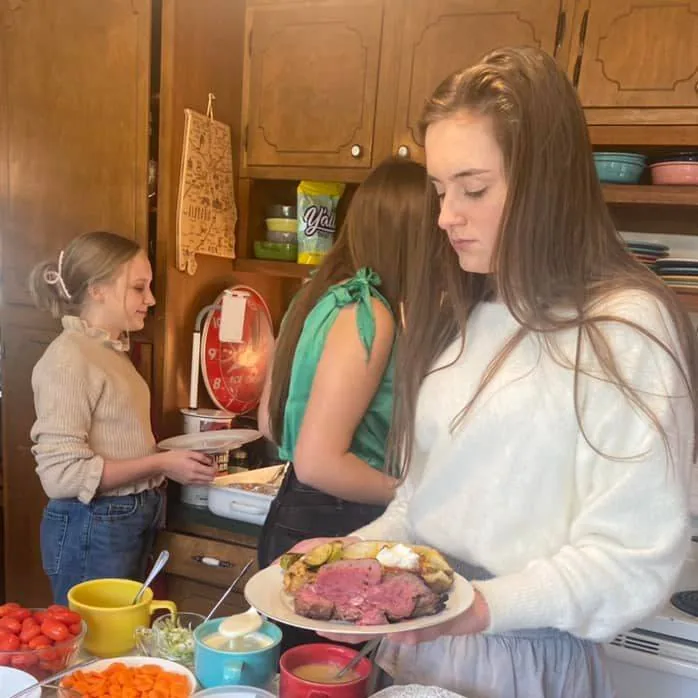
The opening image feels busy in the best way. Three young women occupy different parts of a compact kitchen. One carries a plate with slices of roast and vegetables, another works near the stove, and a third stands beside pans and ingredients. Tomatoes, carrots, cups, and serving pieces fill the foreground.
No one appears to be performing a formal lesson. That is precisely what makes the photograph useful. Family cooking is often learned sideways: by watching how someone plates a roast, noticing when vegetables are added, or being asked to stir while another person handles the oven.
Give every helper a real task
Shared cooking works best when responsibilities are clear. A younger helper can wash vegetables, measure dry ingredients, set out plates, or carry a finished side dish. A more experienced cook can manage hot oil, carve meat, and coordinate oven timing. Real tasks build confidence more effectively than standing nearby as an audience.
The goal is not perfect efficiency. A crowded kitchen may move more slowly, but it gives people a chance to ask questions that a written recipe cannot anticipate. Why is the gravy too thin? How can you tell when the roast is tender? Which platter is large enough? Those practical decisions become part of the lesson.
The kitchen can be serious without being solemn
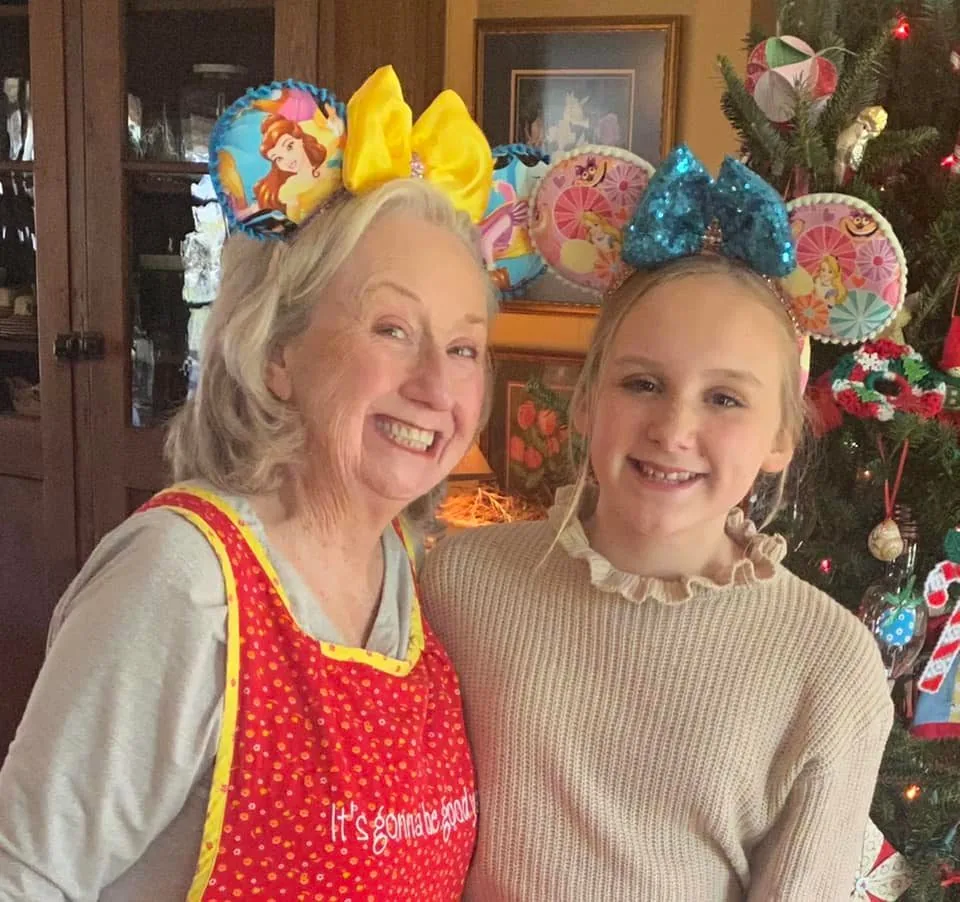
The second photograph pauses the work. Brenda, still wearing a red apron, and a younger family member smile beside a decorated tree in oversized character headbands. The image does not show a dish, yet it captures an important part of cooking together: the room can hold humor alongside responsibility.
Holiday meals carry expectations, and those expectations can make a kitchen tense. Playful traditions—a favorite apron, music, a quick photograph, or a snack reserved for the cooks—help turn preparation into part of the celebration instead of an obstacle before it.
Traditions survive by changing hands
A family recipe remains alive only when another person gains enough confidence to make it. That may mean writing down measurements that an older cook once judged by feel, explaining why a dough should not be overmixed, or allowing a younger cook to alter a seasoning and taste the result.
Passing on a method does not require every generation to reproduce it exactly. Different kitchens, schedules, and ingredients invite adaptation. What matters is preserving the essential lesson—perhaps patience, thrift, generosity, or attention—along with the flavor.
The table explains why the work mattered
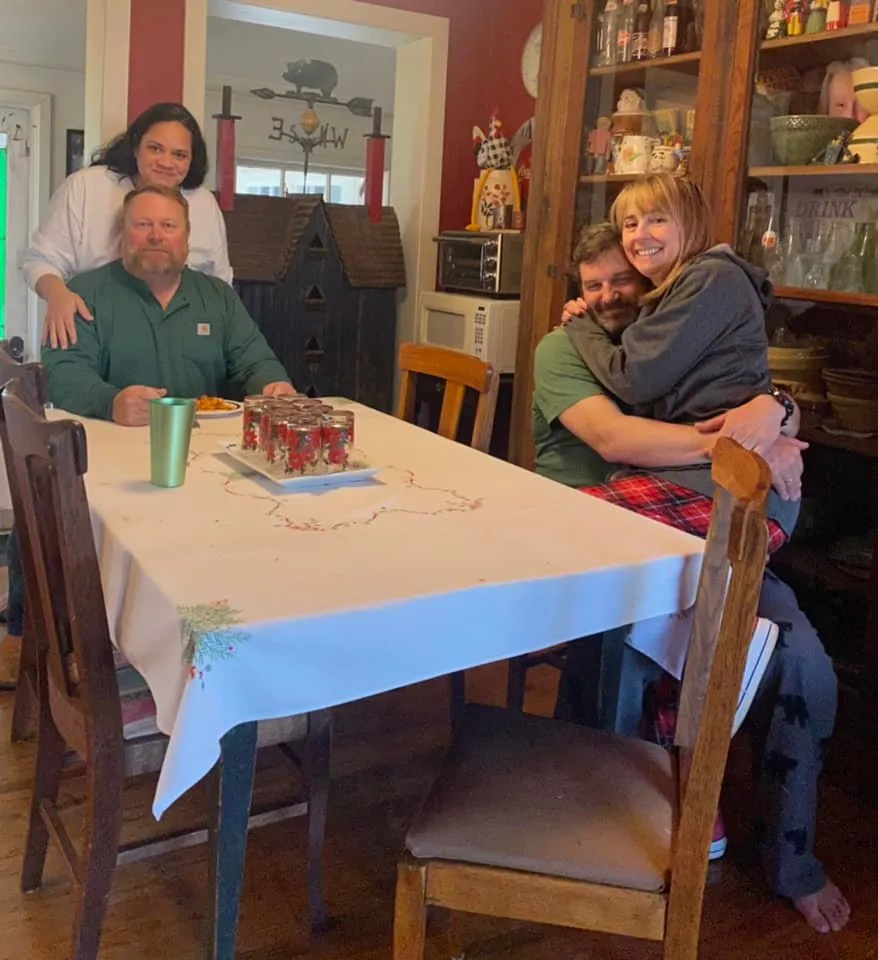
The final image moves from counter to table. Four adults gather in a room lined with familiar objects and wooden furniture. Some sit, some stand, and two lean into an affectionate embrace. The tablecloth is set, but the scene is informal; the people matter more than presentation.
Placed after the cooking photograph, this frame gives the story an ending. A plate carried through the kitchen has somewhere to go. The empty chairs imply that more people may join, while the relaxed posture suggests the demanding part of preparation has passed.
How to make shared cooking easier
Choose a menu with tasks that can overlap safely. Prepare one dish ahead, leave enough counter space for helpers, and explain the order of work before heat and timing become urgent. Keep sharp tools and hot pans with experienced cooks, but let everyone contribute something visible to the meal.
Most importantly, accept variation. A carrot may be cut unevenly and a plate may not match the imagined arrangement. If the food is safely cooked and everyone learned something, the meal has succeeded in more than one way.
A recipe becomes a relationship
The revised sequence uses three distinct images instead of repeating a kitchen portrait already central to another article. It begins with active preparation, pauses for holiday joy, and ends at the family table. Together, the photographs show how cooking moves knowledge from one person to another while giving everyone a reason to remain close.