Cookbooks, Food Stories and a Public Kitchen
A home recipe can begin as a few instructions exchanged across a counter and eventually reach people far beyond that room. These photographs trace that movement from personal memory to printed story and public connection.

When a life story becomes a book
The cover of The Southern Mirror introduces Brenda seated on a weathered porch in bright pink, surrounded by ferns, flowers, and open books. Its subtitle—“Stories and reflections of life in the South”—signals that the pages are meant to hold more than recipes. Food belongs inside a broader record of places, people, habits, and lessons.
A cookbook or memoir gives oral knowledge a more durable shape. A spoken instruction such as “add enough flour until it feels right” may make sense beside an experienced cook, but a reader at home needs measurements, visual cues, and context. Writing asks the storyteller to slow down and identify what practice has made instinctive.
Recipes are also memory devices
Many readers return to a recipe even after they know the steps. The page recalls who first served the dish, when it appeared on the table, and how the kitchen smelled. Notes in margins, stained pages, and substitutions written by hand gradually turn a published book into a household object.
The most memorable food writing preserves both precision and personality. Reliable quantities help a dish succeed, while a short story explains why anyone cared enough to keep making it. Neither part replaces the other.
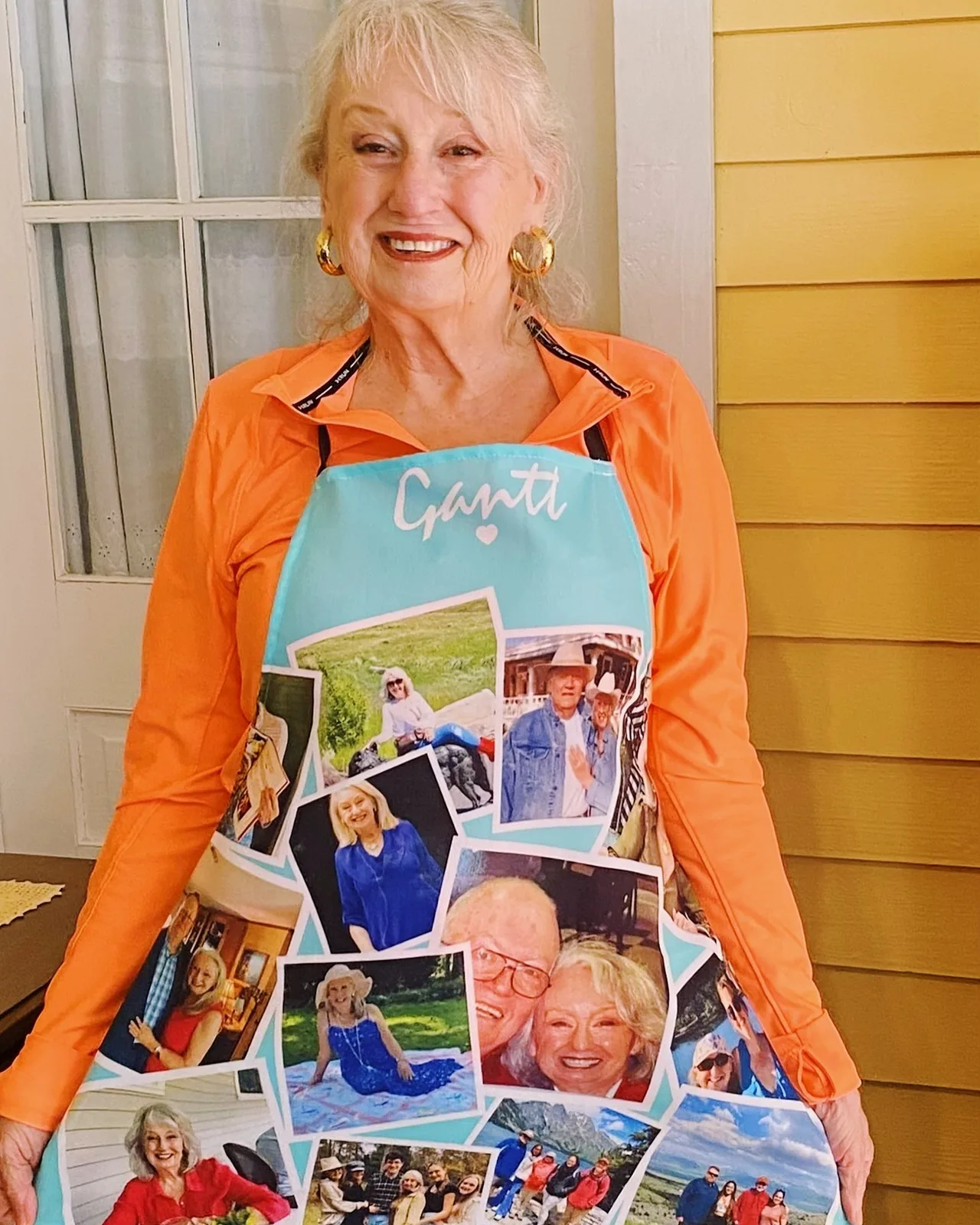
An apron made from photographs
The second image makes the relationship between food and memory literal. Brenda wears a turquoise apron covered with photographs: portraits, outdoor scenes, groups, and moments shared with other people. The apron is functional in shape but commemorative in design.
Worn over a bright orange shirt, it suggests that an archive does not have to remain in a box. Photographs can become part of daily life through albums, framed prints, recipe books, or useful objects. Here, the image-covered apron places remembered people and places at the center of the kitchen role.
From a private kitchen to public connection
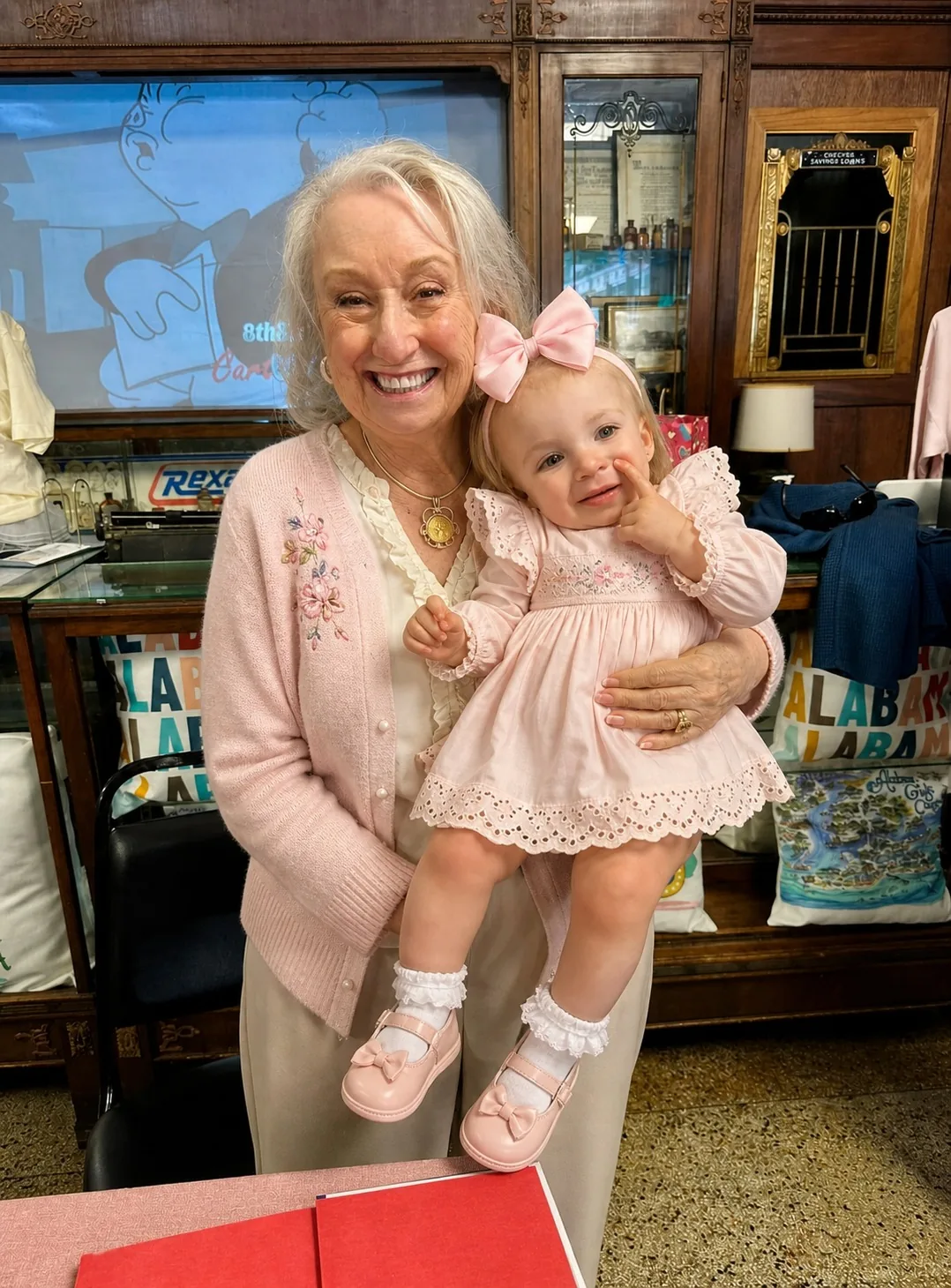
The final photograph moves beyond the home. Brenda stands in what appears to be a shop or public indoor space, holding a baby dressed in pink. Display cases, a projection or screen, and Alabama-themed items occupy the background. A red book lies at the edge of the foreground.
Public attention can sound abstract when described through followers, readers, or sales. This photograph makes it personal. A public kitchen reaches individuals—someone who tries a biscuit recipe, brings a book to be signed, tells a family story, or introduces the youngest person in the room.
What responsible fan storytelling should preserve
A fan site should distinguish observation from biography. The book title and visible setting can be described. The photographs can support themes of memory, publishing, and community. But unnamed people should not be assigned identities, and private conversations should not be invented for dramatic effect.
That restraint does not make a story cold. On the contrary, careful description lets real details carry the emotion: an open book on a porch chair, photographs printed across an apron, a baby’s pink bow, and a smile exchanged in a public room.
The continuing journey of a recipe
A recipe may begin with one cook, but it changes meaning as others use it. A reader adapts it to a different pan. A family serves it at a new celebration. Someone writes a note in the margin and passes the book along. The recipe becomes both instruction and invitation.
The three images now form a focused sequence without the unrelated repeated portrait previously used here. The cover represents a story made permanent, the apron gathers private memory, and the public photograph shows that story meeting another generation. Together they explain how a kitchen can remain rooted at home while its welcome travels much farther.